


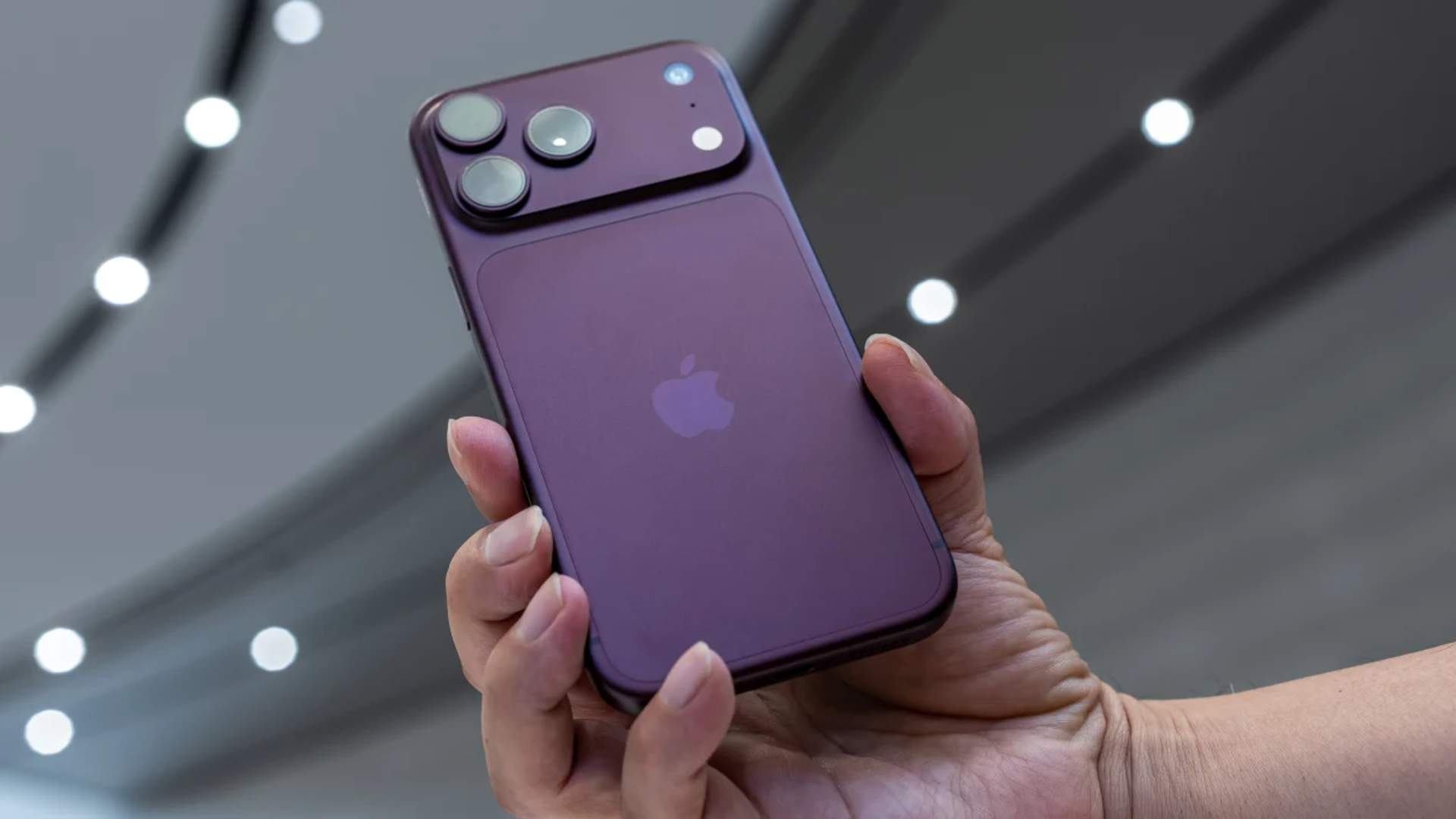
Every autumn, the central question in any iPhone 18 Pro Max review is whether Apple’s latest hardware changes justify a price tag that now starts at $1,299 in the United States and crosses Tk 2,24,000 at retail counters in Dhaka. Following the global launch of the iPhone 18 series in late September 2026, two weeks of independent laboratory testing, synthetic benchmarks, and early owner reports have painted a clear picture of what Apple’s biggest phone gets right and where it stumbles.
Editorial transparency note: BANGLADESHIST has not conducted in-house physical laboratory testing on an iPhone 18 Pro Max unit. In accordance with our review standards, this assessment separates Apple’s official specifications from verified third-party laboratory measurements by GSMArena, PCMag, and CNET, cross-referenced with current retail pricing and regulatory conditions in Bangladesh.
At a glance, the iPhone 18 Pro Max looks nearly identical to last year’s iPhone 17 Pro Max. Underneath the familiar aluminum unibody, however, Apple has made four substantive hardware changes: a 2-nanometer (2nm) A20 Pro processor backed by a palm-sized vapor chamber cooler, a denser 5,391 mAh battery with 60-watt wired fast charging, a 25 percent smaller Dynamic Island, and a mechanical variable-aperture lens on the main 48-megapixel camera.
Together, those internal upgrades make the iPhone 18 Pro Max the longest-lasting and fastest mainstream smartphone tested in 2026. They also push the phone’s weight to a hefty 249 grams and accompany a $100 base price hike that makes older Pro models tempting alternatives.
Official Specifications vs. Competitors
To see how Apple’s top-tier handset stacks up against its closest late-2026 Android rivals, the Samsung Galaxy S26 Ultra and the Google Pixel 11 Pro XL, it helps to compare their official hardware sheets side by side.
Specification | Apple iPhone 18 Pro Max | Samsung Galaxy S26 Ultra | Google Pixel 11 Pro XL |
Display | 6.9-inch LTPO OLED (2,868 x 1,320; 460 ppi; 1-120Hz; 3,000 nits peak) | 6.9-inch Dynamic AMOLED 2X (3,120 x 1,440; 498 ppi; 1-120Hz; 2,600 nits peak) | 6.8-inch Super Actua LTPO OLED (2,992 x 1,344; 1-120Hz; 3,600 nits peak) |
Processor | Apple A20 Pro (2nm; 6-core CPU up to 4.93 GHz; 7-core GPU) | Qualcomm Snapdragon 8 Elite Gen 5 for Galaxy (8-core) | Google Tensor G6 |
RAM & Storage | 12 GB LPDDR5 RAM; 256 GB, 512 GB, 1 TB, or 2 TB storage | 12 GB / 16 GB RAM; 256 GB, 512 GB, or 1 TB storage | 16 GB RAM; 256 GB, 512 GB, or 1 TB storage |
Rear Cameras | 48 MP main (mechanical variable aperture), 48 MP ultrawide, 48 MP 4x/8x telephoto | 200 MP main, 50 MP ultrawide, 10 MP 3x tele, 50 MP 5x tele | 50 MP main, 48 MP ultrawide, 48 MP 5x telephoto |
Front Camera | 18 MP Center Stage (orientation-agnostic sensor) | 12 MP autofocus | 42 MP ultrawide selfie |
Battery & Charging | 5,391 mAh; up to 60W wired (50% in 15 min); 25W MagSafe / Qi2.2 | 5,000 mAh; 45W wired; 15W wireless | 5,100+ mAh; 37W wired; 23W wireless |
Weight & Protection | 249 grams; Aluminum unibody; Ceramic Shield 2; IP68 | 219 grams; Armor Aluminum 2; IP68 | 221 grams; Aluminum frame; IP68 |
US Launch MSRP | $1,299 (256 GB base) | $1,299 (256 GB base) | $1,199 (256 GB base) |
Bangladesh Retail (Oct 2026) | Tk 2,09,990 to Tk 2,59,999 (256 GB, varies by warranty/color) | ~Tk 1,65,000 to Tk 2,15,000 | ~Tk 1,35,000 to Tk 1,65,000 (mostly unofficial) |
Design and Display: Smaller Cutout, Heavier Frame
The first thing early buyers notice when picking up the iPhone 18 Pro Max is its heft. By expanding the internal battery to 5,391 mAh and fitting a larger vapor-chamber thermal plate inside the aluminum unibody chassis, Apple pushed the phone’s weight to 249 grams (8.78 ounces). Even the smaller 6.3-inch iPhone 18 Pro weighs a dense 211 grams. In extended field use, CNET’s review team noted that the 249-gram mass causes noticeable wrist fatigue during one-handed reading or filming.
Cosmetic durability on darker colorways has also drawn early scrutiny. Apple introduced two headline finishes this year, Burgundy and Glacier, alongside Black and Silver. While the front glass uses Ceramic Shield 2 for drop protection, early reviewers reported in Mashable’s autumn roundup that some Burgundy and Black review units showed minor color fading on the rear finish after heavy handling, a complaint that echoes the scratching issues seen on last year’s Cosmic Orange iPhone 17 Pro. Buyers spending over Tk 2 lakh will want to put the phone inside a protective case on day one.
On the front, the most visible engineering change sits at the top of the 6.9-inch Super Retina XDR display. Apple shrank the pill-shaped Dynamic Island cutout by 25 percent by moving the infrared Face ID camera underneath the OLED pixels. As PCMag’s hardware analysis documented, Apple spaced the microscopic sub-pixels slightly farther apart directly over the infrared sensor so light can pass through the screen without leaving a visible patch to the naked eye. Coupled with iOS 27, the slimmer Dynamic Island now tracks up to three simultaneous Live Activities, such as a food delivery timer, a ride-share tracker, and a live cricket score, instead of just two.
Apple also upgraded the anti-reflective coating on the glass, claiming 35 percent lower reflectivity and twice the outdoor contrast compared with the iPhone 16 Pro. While Google’s Pixel 11 Pro XL reaches a higher peak outdoor brightness on paper (3,600 nits versus Apple’s 3,000-nit peak) and Samsung’s Galaxy S26 Ultra offers a specialized Privacy Display mode that blocks side-angle viewing, independent display testers agree that Apple’s reduced glare makes a tangible difference under harsh midday sun.
What Independent Lab Benchmarks Show on the A20 Pro
Apple’s A20 Pro is among the first consumer processors built on TSMC’s 2-nanometer manufacturing node. It pairs a 6-core CPU (featuring two high-clock "Super" cores running up to 4.93 GHz) with a 7-core Apple GPU, a Dual 16-core Neural Engine, and 12 GB of LPDDR5 memory.
In synthetic CPU and GPU tests conducted by independent hardware labs in late September 2026, the A20 Pro established a wide lead over every competing mobile chip on the market:
CPU Speed (Geekbench 6): In GSMArena’s laboratory testing and cross-platform benchmarks, the iPhone 18 Pro Max scored between 4,677 and 4,735 in single-core tasks and between 12,561 and 12,677 in multi-core workloads. Despite using six CPU cores against the eight cores inside Qualcomm’s Snapdragon 8 Elite Gen 5 (which powers the Galaxy S26 Ultra and scores roughly 3,698 single-core and 11,093 multi-core), Apple’s chip runs roughly 27 to 31 percent faster in single-core tasks and 13 to 23 percent faster in multi-core processing.
Graphics and Ray Tracing (3DMark): On the 3DMark Wild Life Extreme graphics test, GSMArena recorded a peak score of 7,931 on the iPhone 18 Pro Max, edging past the Galaxy S26 Ultra (7,744) and jumping 31 percent over last year’s A19 Pro inside the iPhone 17 Pro Max (6,032). In the 3DMark Solar Bay hardware ray-tracing benchmark, the 7-core GPU hit 15,416 points, beating both the Oppo Find X9 Pro (14,373) and the Galaxy S26 Ultra (13,954).
Sustained Thermal Stability: In previous generations, iPhones often throttled their clock speeds quickly when heat built up during heavy 3D gaming or 4K ProRes video exports. Thanks to the redesigned internal vapor chamber, independent stress testing across 20 consecutive loops of 3DMark Wild Life Extreme showed the iPhone 18 Pro Max maintaining 80 percent sustained performance stability, a sharp improvement over the 59.5 percent stability recorded on the A19 generation, with surface temperatures peaking near 43.5°C under maximum gaming draw.
For everyday users, raw Geekbench numbers rarely matter for scrolling social media or sending messages. Where the A20 Pro’s headroom does show up is in local artificial intelligence processing under iOS 27, including real-time system-wide text proofreading, on-device Siri AI tasks, and instantaneous generative photo editing with the new Extend, Reframe, and Cleanup tools.
Camera Analysis: Variable Aperture Tested
Every iPhone 18 Pro Max review published this autumn has zeroed in on the flagship’s marquee camera addition: a mechanical variable aperture on the 48-megapixel main wide camera.
In photography, the aperture is the physical iris inside the lens that opens or closes to control how much light hits the sensor. Until now, almost all smartphones used a fixed aperture (such as f/1.78 on recent Pro iPhones). A wide-open aperture lets in plenty of light in the dark, but when you photograph a close-up subject like a plate of food, a pet, or a document, a fixed wide aperture creates a very shallow depth of field that blurs the edges and background. By adding tiny mechanical blades that physically stop the lens down to narrower apertures (such as f/4.0 or f/5.6), the iPhone 18 Pro Max gives photographers hardware control over depth of field and natural multi-point "starburst" light flares around streetlamps at night.
How well does it work outside of Apple’s promotional samples? Independent camera evaluations point to a clear split between casual point-and-shoot users and dedicated mobile photographers:
Standard Daylight Shooting: In side-by-side aperture tests, GSMArena’s camera reviewers noted that on normal outdoor daytime scenes shot at standard focusing distances, there is virtually no visible difference in sharpness between shooting wide open and stopped down. Because even a large smartphone image sensor is much smaller than a full-frame mirrorless camera sensor, natural background blur only changes noticeably when you are shooting within a few feet of your subject.
Low-Light and Night Photography: In dim environments, both CNET and GSMArena praised the main camera’s 24-megapixel default output and 2x sensor-crop zoom, citing clean shadow detail, accurate white balance under mixed street lighting, and natural highlight roll-off. Setting a manual half-second shutter speed with a stopped-down f/4 aperture produces crisp light trails and authentic optical sunstars that software portrait modes cannot fake.
Telephoto and Ultrawide Performance: The 48-megapixel 4x telephoto camera remains unchanged optically from the iPhone 17 Pro Max. At 4x optical zoom, daylight and night images are sharp and well-balanced, and Apple’s new Focus Tracking system locks onto moving children and pets across all three rear lenses. Push the telephoto to its marketed 8x crop zoom at night, however, and independent test samples show noticeable softness and grain.
The Camera Control Button Miss: One baffling ergonomic oversight flagged by CNET is that Apple’s physical Camera Control button on the side of the frame still cannot be mapped to adjust the new mechanical aperture or manual shutter speed. Users who want to dial in manual exposure settings have to tap through on-screen menus instead of sliding their finger along the physical camera button.
One genuinely timely software addition inside the camera app is Reference Image mode, which embeds cryptographic metadata markers when a photo is captured to help journalists, creators, and everyday users prove an image was taken by a real physical lens rather than generated by AI.
Battery Life and Charging: The Real Generational Leap
If the variable aperture is a niche tool for photography enthusiasts, the battery upgrade inside the iPhone 18 Pro Max is a universal win. Apple fitted a 5,391 mAh cell inside the Pro Max chassis (compared with 4,056 mAh in the smaller iPhone 18 Pro) and rated the phone for up to 45 hours of video playback.
Independent laboratory tests confirm that endurance is the single strongest reason to buy the Pro Max this year:
PCMag Battery Rundown: The iPhone 18 Pro Max lasted 34 hours and 31 minutes on a single charge in PCMag’s continuous rundown benchmark (nearly 11 hours longer than the 23 hours and 45 minutes recorded by the smaller iPhone 18 Pro), earning PCMag’s top battery award for 2026.
GSMArena Active Use Score: In GSMArena’s standardized v2.0 battery suite, the iPhone 18 Pro Max posted an Active Use Score of 19 hours and 20 minutes, beating the iPhone 17 Pro Max (17 hours 58 minutes), the iPhone 18 Pro (16 hours 43 minutes), and the base Samsung Galaxy S26 (15 hours 20 minutes). That score included 31 hours and 23 minutes of continuous video playback and 17 hours and 13 minutes of active web browsing.
60W Fast Charging Verified: Historically, Pro Max iPhones took nearly two hours to charge fully because wired speeds were capped around 27W to 30W. The iPhone 18 Pro Max supports up to 60W wired USB-C charging alongside 25W Qi2.2 / MagSafe wireless charging. In lab testing, PCMag verified that the phone charges from dead empty to 50 percent in just 15 minutes when paired with a compatible high-wattage USB-C power adapter (sold separately).
The Bangladesh Buying Reality: Pricing and the NEIR Cutoff
For technology buyers in Dhaka, Chattogram, and Sylhet, evaluating the iPhone 18 Pro Max requires looking beyond Silicon Valley specifications to local market math and telecom law.
Apple raised the starting US retail price of both Pro models by $100 this year, pushing the 256 GB iPhone 18 Pro to $1,199 and the 256 GB iPhone 18 Pro Max to $1,299. As BANGLADESHIST recently examined in our report on how the global AI memory crunch is colliding with Bangladesh’s 2G shutdown plan, surging semiconductor contract prices for LPDDR5 DRAM and NAND storage, combined with costly 2nm wafer fabrication at TSMC, have driven up smartphone bill-of-materials costs worldwide in 2026. Meanwhile, domestic foreign-exchange pressures, which we tracked alongside September’s remittance dip in our analysis of why Chattogram Port terminals are moving toward global operators, continue to keep imported electronics expensive in local currency.
As of the first week of October 2026, retail listings across major Bangladeshi electronics chains (including Star Tech, Dazzle, and Apple Gadgets BD) place the 256 GB iPhone 18 Pro Max between Tk 2,09,990 and Tk 2,59,999 depending on color availability (Burgundy commands a steep early-adopter premium) and whether the unit carries an official BTRC-registered warranty or enters through unofficial grey-market channels. Stepping up to higher storage tiers pushes the local price to roughly Tk 2,99,999 for 512 GB, Tk 3,69,999 for 1 TB, and Tk 4,49,999 for the 2 TB filmmaker configuration.
Crucially, Bangladeshi buyers can no longer treat unofficial "luggage-imported" iPhones as risk-free bargains. The Bangladesh Telecommunication Regulatory Commission (BTRC) has announced that the National Equipment Identity Register (NEIR) will become mandatory on December 16, 2026, automatically disconnecting newly activated, unapproved grey-market handsets from domestic mobile networks. If you are spending over Tk 2 lakh on an iPhone 18 Pro Max in Bangladesh this autumn, you must verify that the seller provides an official VAT invoice and a BTRC-compliant International Mobile Equipment Identity (IMEI) registration, or be prepared to complete formal customs baggage declaration paperwork if bringing the phone from abroad yourself.
Verdict: Who Should Buy It and Who Should Skip It
Taken on its engineering merits, the iPhone 18 Pro Max is a powerhouse. The combination of a 5,391 mAh battery that clears 34 hours in lab rundowns, 15-minute 50 percent fast charging, sustained thermal stability from the A20 Pro’s vapor chamber, and an anti-reflective display with a smaller Dynamic Island solves nearly every practical complaint power users had with older iPhones.
Yet at $1,299 in the US and roughly Tk 2.25 lakh to Tk 2.60 lakh in Bangladesh, it is an overkill machine for casual buyers.
Consider buying the iPhone 18 Pro Max if:
You are upgrading from an iPhone 14 Pro Max, iPhone 15 Pro Max, or an older device whose battery health has degraded, and you want true two-day endurance with rapid 60W top-ups.
You shoot commercial video, low-light photography, or close-up product work where manual shutter control, a mechanical variable aperture, and multi-camera focus tracking replace a dedicated compact camera.
You buy through an official BTRC-registered channel in Bangladesh and plan to keep the handset for five to seven years of iOS updates.
Skip it (or look at the base iPhone 17 / 18 or Galaxy S26 Ultra) if:
You already own an iPhone 17 Pro Max, as day-to-day camera and display differences are incremental unless you specifically need manual aperture control.
You dislike heavy phones; at 249 grams, the 18 Pro Max is among the heaviest slab smartphones on the market.



Comments
0