

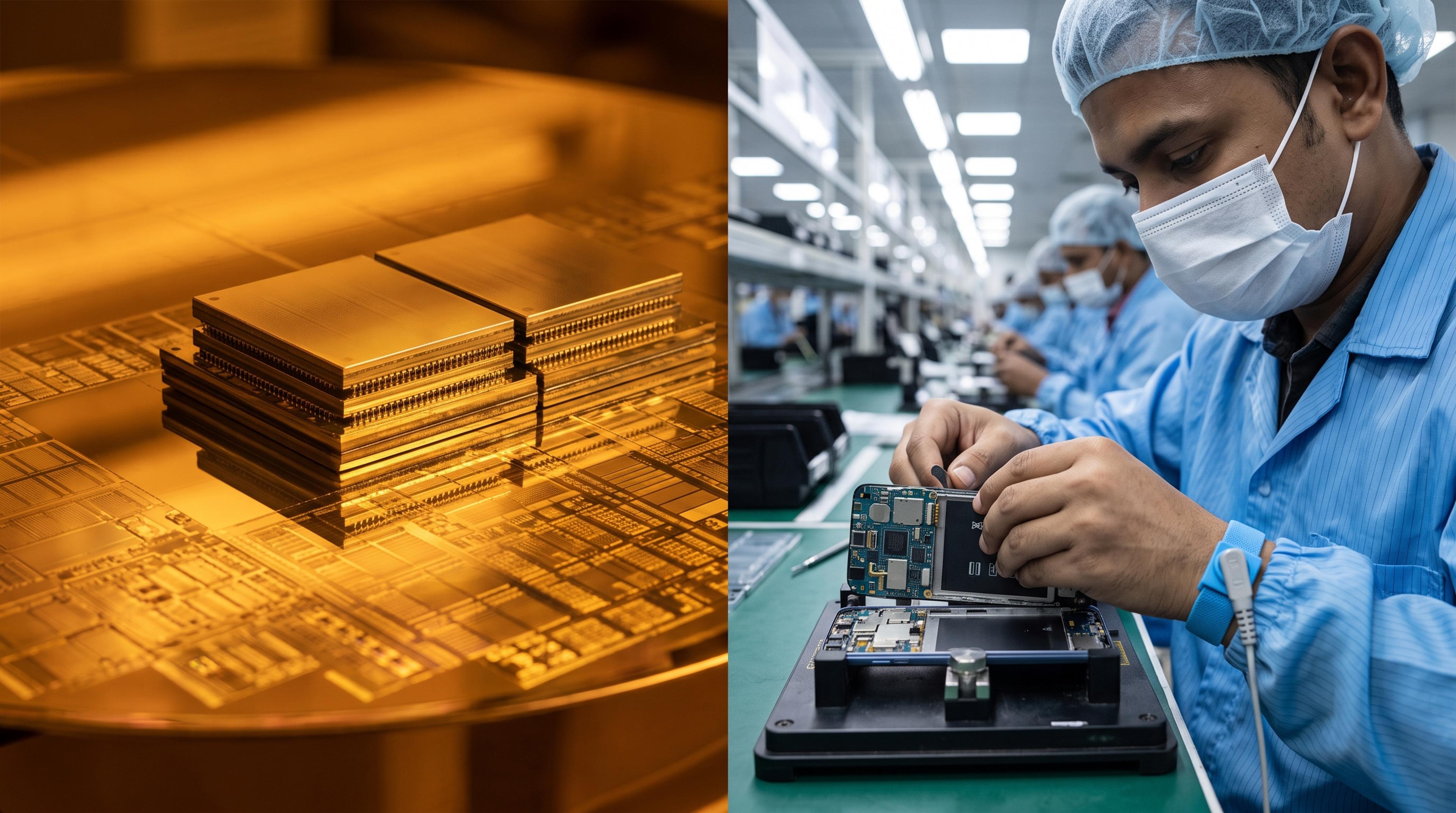
Earlier this week, the Bangladesh Telecommunication Regulatory Commission (BTRC) decided to seek government approval for a hard deadline: shutting down the country’s 2G mobile networks by December 2029. On paper, the goal is straightforward. Phasing out legacy second-generation networks frees up scarce radio spectrum for 4G and 5G services and nudges millions of remaining feature-phone users into the mobile internet economy.
Yet the regulator’s timeline has run straight into a supply-chain bottleneck originating thousands of kilometers away in the semiconductor fabs of South Korea, Taiwan, and the United States.
In September, Rehan Asif Asad, the prime minister’s adviser on posts, telecommunications, and ICT, outlined a government ambition to bring locally assembled 4G smartphones to Bangladeshi consumers for less than Tk 4,000. Within weeks, that target price had to be revised upward to Tk 5,000. The culprit was not domestic inflation or a sudden change in import tariffs. Instead, local handset assemblers are being hit by a sharp global surge in the cost of working memory (DRAM) and flash storage (ROM/NAND)—a price spike driven by the insatiable appetite of artificial intelligence data centers.
For years, technology policy in developing economies rested on a reliable deflationary rule: computing components get cheaper over time, making entry-level smartphones progressively more affordable. In 2026, the economics of AI infrastructure have temporarily reversed that rule. Understanding why requires looking inside the cleanrooms of the world’s three largest memory chipmakers—and seeing how a wafer-allocation decision in Gyeonggi Province or Idaho ripples all the way to assembly lines in Gazipur and Narayanganj.
The Silicon Tug-of-War: HBM vs. Commodity Memory
Every smartphone, laptop, and server relies on two fundamental types of memory chips: Dynamic Random-Access Memory (DRAM), which handles active tasks, and NAND flash, which stores files, apps, and the operating system. Because memory manufacturing requires multi-billion-dollar fabrication plants, global supply is heavily concentrated among three companies: South Korea’s SK hynix and Samsung Electronics, and US-based Micron Technology.
Comments
0Join the discussion
You must be logged in to leave a comment.