

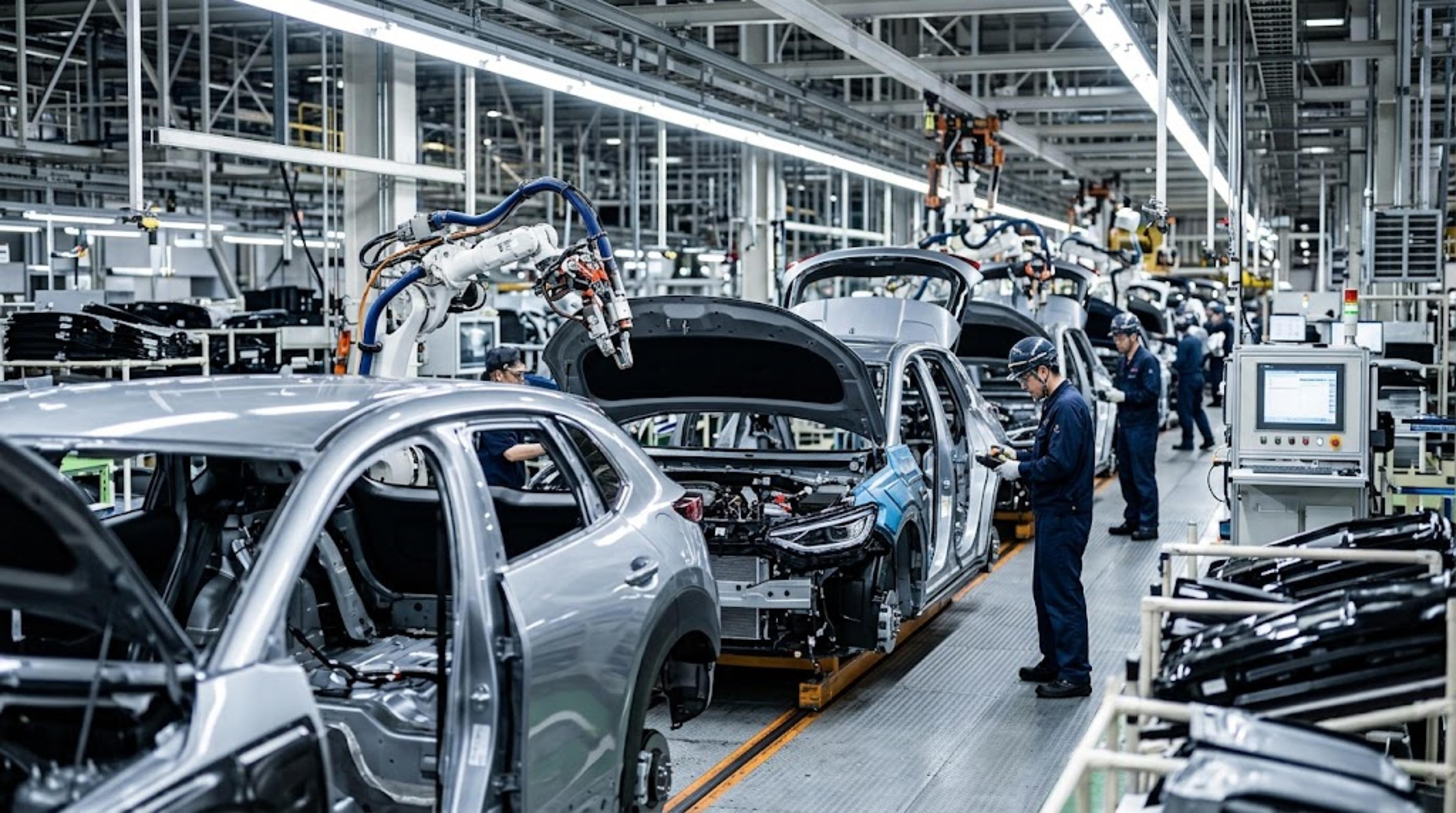
The automotive industry crossed a historic threshold this week as Toyota confirmed its first commercial solid-state EV battery has officially entered the early stages of mass production.
Operating out of a newly retooled facility in Toyota City, the Japanese automaker and its manufacturing partner Panasonic have successfully stabilized the production of solid-electrolyte cells. The milestone effectively transitions the technology out of the research laboratory and onto the factory floor, setting the stage for a new generation of electric vehicles slated to hit global showrooms by late 2027.
For years, the promise of solid-state technology has hovered just out of reach for major automakers. Current electric vehicles rely on lithium-ion batteries that use liquid electrolytes to move energy between the cathode and anode. While effective, liquid electrolytes are heavy, prone to degradation over time, and carry inherent fire risks if the battery casing is punctured or severely overheated during rapid charging cycles.
By replacing that liquid with a stable solid material, engineers have unlocked massive gains in both energy density and thermal safety. The new Toyota cells can store roughly twice the energy of a similarly sized lithium-ion pack. According to official engineering specifications released on Tuesday, this architectural shift will allow upcoming flagship sedans to travel up to 750 miles on a single charge.
The Ten-Minute Charging Benchmark
Range anxiety has long been cited as the primary hurdle preventing widespread consumer adoption of electric vehicles. However, the most disruptive element of the solid-state architecture is its charging speed. Because the solid electrolyte is highly resistant to heat buildup, the battery can accept massive influxes of electrical current without sustaining chemical damage.
Toyota verified that its first-generation solid-state packs can charge from 10 percent to 80 percent capacity in under ten minutes when connected to a 350-kilowatt DC fast charger. This effectively reduces the electric vehicle charging experience to the time it takes to fill a traditional gasoline tank and grab a coffee.

Comments
0Join the discussion
You must be logged in to leave a comment.