


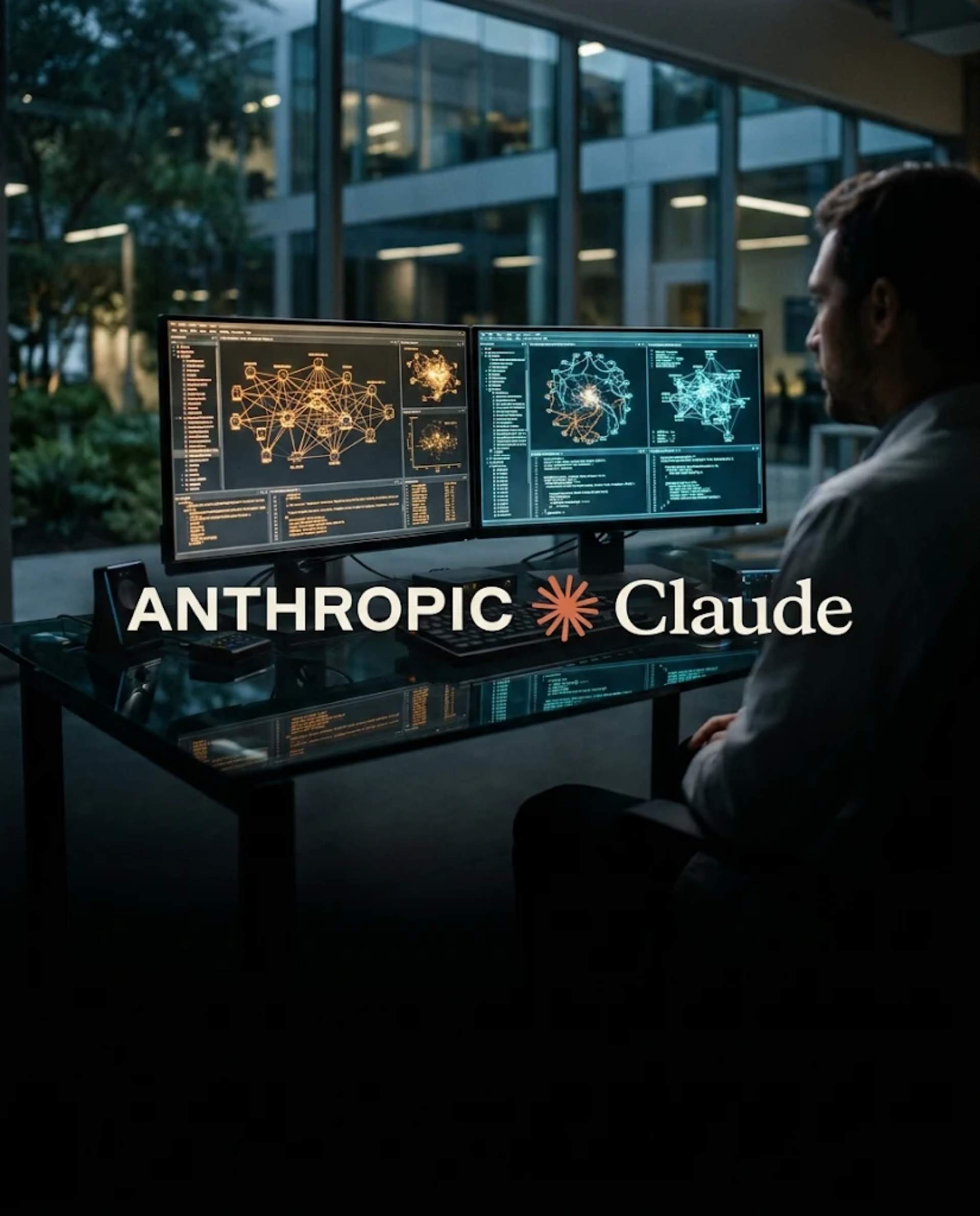
Artificial intelligence research laboratory Anthropic has officially introduced its next-generation foundation model family, Claude 4, establishing a major leap forward in autonomous agentic problem-solving, multi-agent collaboration, and secure software development for enterprise environments.
The release, announced in San Francisco on Saturday, marks a decisive transition from conventional conversational chat interfaces toward fully autonomous, goal-driven agent architectures. While previous frontier models excelled at generating code snippets or summarizing lengthy documents in response to isolated prompts, Claude 4 is engineered to coordinate teams of specialized sub-agents that can research, plan, execute, and verify complex technical projects across multiple software environments with minimal human intervention.
Autonomous Multi-Agent Orchestration and Self-Verification
The defining architectural breakthrough of Claude 4 is its native multi-agent coordination protocol. Instead of relying on a single monolithic neural network to handle every stage of an engineering task, Claude 4 can dynamically spawn specialized worker agents assigned distinct functional roles.
In a typical software development workflow, a primary planning agent outlines system requirements and architectural blueprints. It then delegates discrete coding tasks to implementation agents, while independent reviewer and security agents concurrently inspect the generated code against known vulnerability databases and unit test suites. If a security agent spots a potential memory leak or authentication flaw, it automatically sends feedback to the implementation agent to rewrite the function before the pull request is finalized.
Benchmark evaluations released by Anthropic show that this multi-agent self-verification loop cuts production coding errors by more than sixty percent compared to single-agent systems, achieving top scores on standardized software engineering benchmarks like SWE-bench Verified.
Secure Sandboxed Code Execution and Computer Interaction
To safely bridge the gap between language generation and real-world execution, Claude 4 incorporates an isolated, auditable computing sandbox directly into its enterprise runtime platform.
Within this sandboxed container, the model can execute terminal commands, install required libraries, compile source code, and run comprehensive integration tests. Security administrators maintain granular permission controls, enabling them to inspect every network call, file modification, and external API interaction in real time. This deterministic containment architecture prevents malicious prompt injection attacks from escaping into sensitive corporate internal networks.
Furthermore, Anthropic significantly upgraded its native computer-use capabilities. Operating through optimized vision encoders, Claude 4 can navigate graphical user interfaces, interpret complex application dashboards, click buttons, fill out web forms, and transfer data between legacy software applications with sub-second response times.
Massive Context Windows and Enterprise API Pricing
Anthropic also expanded the model's processing capacity, offering context windows reaching up to 500,000 tokens with virtually zero retrieval degradation across deep document archives. This massive context allows software teams to ingest entire code repositories, architectural diagrams, and technical documentation into working memory simultaneously.
API pricing models have been structured to encourage enterprise adoption, offering flexible batch processing tiers and prompt caching discounts that reduce operational token expenses for repetitive data-processing pipelines. System administrators can also fine-tune specialized agent weights to match internal corporate coding standards and proprietary database schemas.
Enterprise Alignment and Safety Guardrails
Anthropic reinforced its foundational commitment to AI safety by integrating Constitutional AI principles into Claude 4's core reinforcement learning pipeline. The model demonstrates high resistance against adversarial jailbreaks, social engineering exploits, and automated vulnerability scanning against critical infrastructure.
Corporate technology leaders from major financial institutions, healthcare providers, and software firms have already begun deploying Claude 4 in pilot testing programs, automating regulatory compliance documentation, enterprise data reconciliation, and legacy codebase migrations.
The Accelerating Frontier AI Race
The arrival of Claude 4 sharply intensifies the competitive race among frontier AI developers, directly challenging OpenAI's reasoning models and Google DeepMind's Gemini ecosystem. As enterprise customers increasingly demand practical software automation rather than casual conversation, the capability to orchestrate reliable, self-correcting agent teams is rapidly becoming the defining battleground of the global artificial intelligence economy.



Comments
0