


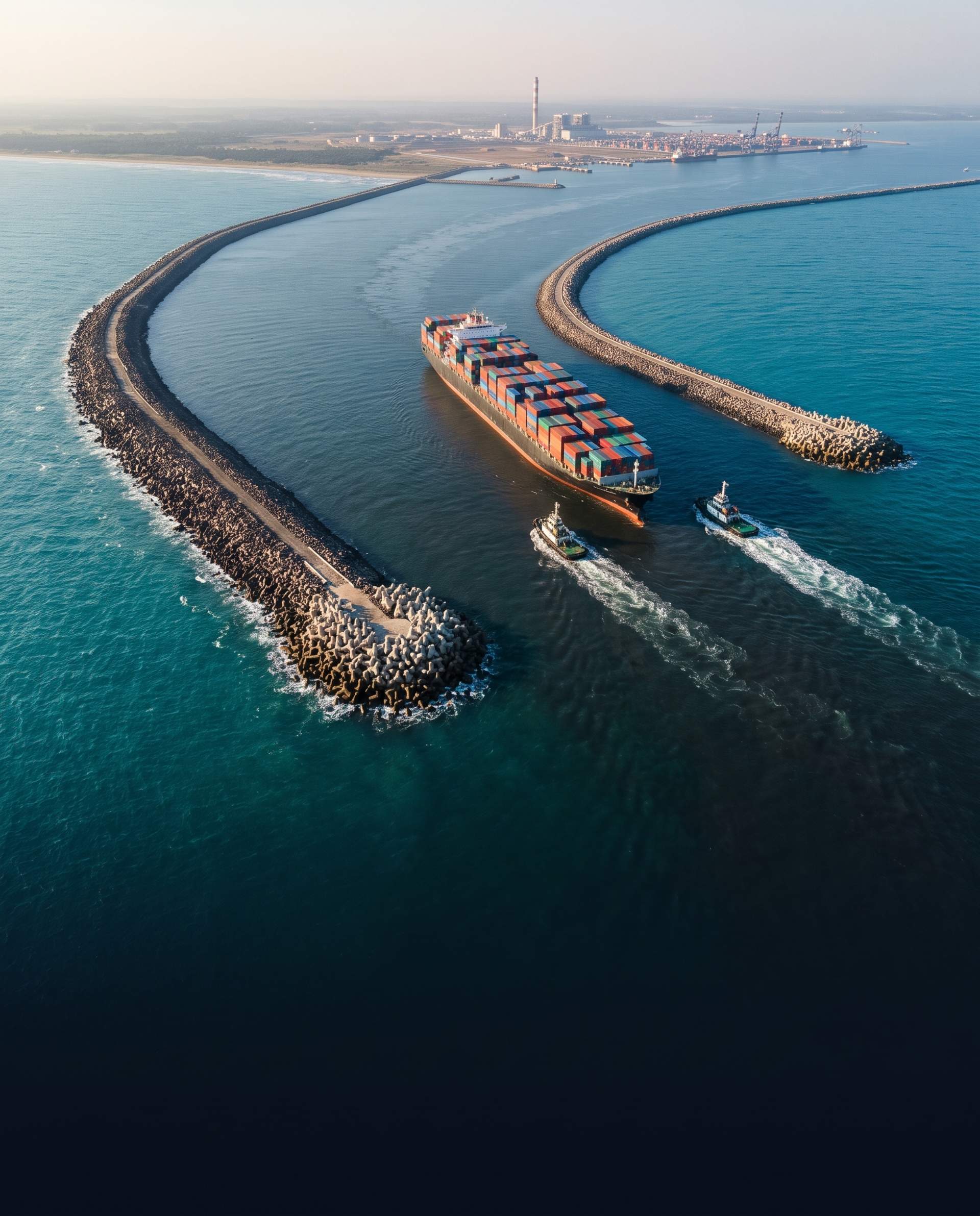
Bangladesh took a major step toward running its first deep-sea port this week. The Chittagong Port Authority and the Japan International Cooperation Agency, known as JICA, finished work and water tests on the new 18.5-meter deep navigation channel at Matarbari in Cox's Bazar.
The channel runs 14.3 kilometers long and sits behind a protected breakwater. This setup allows giant container ships, known in the maritime industry as motherships, to dock directly at a Bangladeshi port for the very first time. For decades, shallow waters in Chittagong and Mongla kept large ships away. That forced Bangladesh to send cargo on smaller vessels to hubs like Singapore, Colombo, and Port Klang, adding heavy costs and delays.
Fixing the Feeder Vessel Bottleneck
Because Chittagong Port can only take ships with a depth of about 9 to 10 meters, it has had to rely on small feeder ships. These smaller boats carry around 1,500 to 2,500 containers at a time. That made things slow and expensive for local businesses.
When a factory in Dhaka or Narayanganj sent goods to Europe or North America, those products had to travel in two steps. First, a small feeder boat moved the containers from Chittagong to an overseas hub across the Indian Ocean. There, workers unloaded the cargo and moved it onto massive ocean-crossing ships carrying up to 18,000 containers. This extra stop added anywhere from seven to fifteen days to shipping schedules. It also added roughly 300 to 400 dollars in extra fees for every single container.
Matarbari changes that equation completely. With a depth of 18.5 meters, it can handle ships carrying up to 8,200 containers without having to wait around for high tide. Shipping experts say skipping foreign hubs will cut delivery times to Europe from 35 days down to around 16 to 18 days. For Bangladesh's garment industry, which brings in most of the country's export cash, that extra speed is a huge advantage.
Building Through the Bay of Bengal
Building a deep port along the Bay of Bengal is never simple. Heavy monsoon rains wash down thick silt, seasonal cyclones whip up dangerous waves, and underwater sandbars shift around constantly.
To keep the channel clear without having to dig it out every few months, Japanese engineers built two massive rock breakwaters. These stone walls stretch more than three kilometers into the sea. They block floating sand and break the power of ocean waves before they can reach the calm turning basin. Dredging crews hauled away more than 50 million cubic meters of mud, clay, and sand to shape the passage. The channel is 350 meters wide at the bottom, giving two large ships plenty of room to pass each other safely under port radar guidance.
A Regional Gateway for Trade
The Matarbari port is not just an isolated dock. It anchors a much larger industrial hub in Moheshkhali, which includes a 1,200-megawatt power plant, liquefied natural gas import terminals, and planned industrial zones.
Officials at the Ministry of Shipping say neighbors are also watching closely. Landlocked areas in Northeast India, as well as Nepal and Bhutan, want faster paths to open water. If direct highway and rail links between Cox's Bazar and Dhaka open on schedule, Matarbari could easily become a lively regional trade hub that bridges South Asia and Southeast Asia.
What Comes Next
Now that the water channel is finished and tested, construction crews are turning their attention to the docks. Workers are building a 460-meter container berth and a separate multi-purpose dock for mixed cargo. Over the next year and a half, specialized cranes and container movers will arrive from overseas.
Port authorities expect the first commercial container terminal to open by early 2027. There is still a lot of paving, electrical work, and customs setup left to do, but opening the deep-water channel marks the moment Bangladesh officially joined the world of deep-sea shipping.


Comments
0