


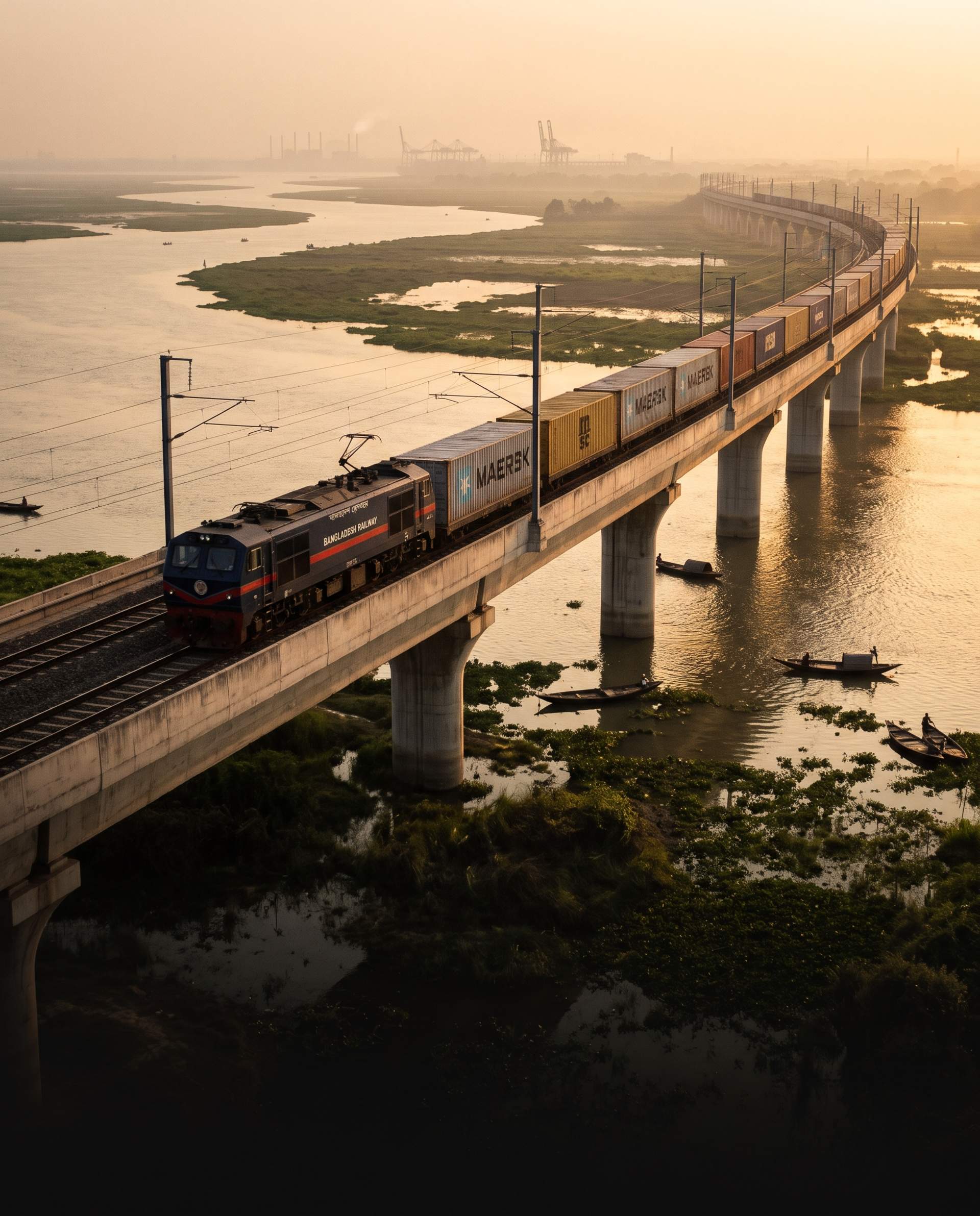
In what promises to be a transformative breakthrough for Bangladesh's export logistics and international trade competitiveness, Bangladesh Railway has officially concluded the comprehensive technical and environmental feasibility study for a dedicated dual-gauge freight rail corridor connecting Chattogram Port directly to major industrial inland container depots around the capital.
The landmark multi-billion dollar infrastructure initiative aims to resolve the severe logistical bottlenecks that have historically plagued the Dhaka-Chattogram economic lifeline. Currently, more than eighty-five percent of all containerized maritime trade moving between the premier seaport and export processing zones around Gazipur, Savar, and Narayanganj travels by road along the heavily congested national highway.
Trucking fleets face constant gridlock, severe weather delays, and high fuel expenses, resulting in container haulage transit times that frequently drag on between twelve and twenty hours. The planned dedicated electric freight line will eliminate these constraints entirely, operating high-capacity container shuttle trains capable of completing the 250-kilometer journey in less than four hours.
Dedicated Double-Track Routing and Advanced Signaling
According to engineering blueprints prepared by international rail design consultants alongside local technical experts, the freight corridor will feature fully grade-separated, continuous dual-gauge tracks built parallel to existing alignments but completely segregated from passenger rail traffic.
Passenger and freight operations currently compete for limited track windows on the Dhaka-Chattogram route, forcing slow-moving cargo trains into sidings for hours to allow scheduled express passenger services to pass. By creating dedicated freight tracks equipped with modern computer-based interlocking signaling and centralized traffic control, the railway will operate uninterrupted scheduled container trains running round the clock at speeds of up to one hundred kilometers per hour.
The route design also incorporates reinforced concrete viaducts over major river floodplains and marshlands across Feni, Cumilla, and Brahmanbaria, ensuring complete operational resilience against seasonal monsoon flooding and track subsidence.
Direct Connectivity to Dhirasram and Kamalapur Terminals
At the capital end, the dedicated tracks will terminate directly inside the expanding Kamalapur Inland Container Depot and the planned state-of-the-art Dhirasram mega-depot in Gazipur. This direct link allows export apparel shipments from regional ready-made garment factories to clear customs inspections locally before being loaded straight onto container wagons.
Containers will travel directly to the dockside container yards at Chittagong Port without undergoing intermediate highway transshipment or double-handling. Logistics economists estimate that transferring half of the current highway container volume onto electric freight rail will reduce export logistics costs by nearly thirty-five percent, saving garment exporters millions of dollars in annual transportation overheads.
Port terminal operators also highlight that continuous rail evacuations will prevent yard congestion at seaport jetties, improving vessel turnaround times and allowing international shipping lines to operate larger, more economical container vessels along Bay of Bengal feeder routes.
Environmental Benefits and Highway Decongestion
Beyond commercial efficiency gains, the shift toward electric rail logistics delivers massive environmental and safety dividends for the nation. Heavy diesel container trailers currently generate immense tailpipe emissions and accelerate severe asphalt pavement damage along the national highway network.
A single electric freight train can haul over one hundred twenty standard shipping containers in one trip, displacing over eighty heavy long-haul diesel trucks from crowded highway lanes. Transport planners project that the freight corridor will cut national transport sector greenhouse gas emissions by hundreds of thousands of tons each year while drastically reducing fatal highway collisions along the congested Dhaka-Chattogram artery.
Financing Framework and Execution Roadmap
Development partners, led by the Asian Development Bank and international infrastructure finance consortia, have expressed strong preliminary commitments to provide long-term concessional financing for the multi-phase construction program.
With environmental clearances finalized and land acquisition surveys advancing in coordination with local district administrations, procurement tenders for civil engineering packages are scheduled to launch within the upcoming fiscal year. For Bangladesh's expanding manufacturing economy, building a modern, reliable freight rail backbone represents a critical national investment, laying the physical foundations for sustained industrial expansion, job creation, and export-driven prosperity for decades to come.


Comments
0