


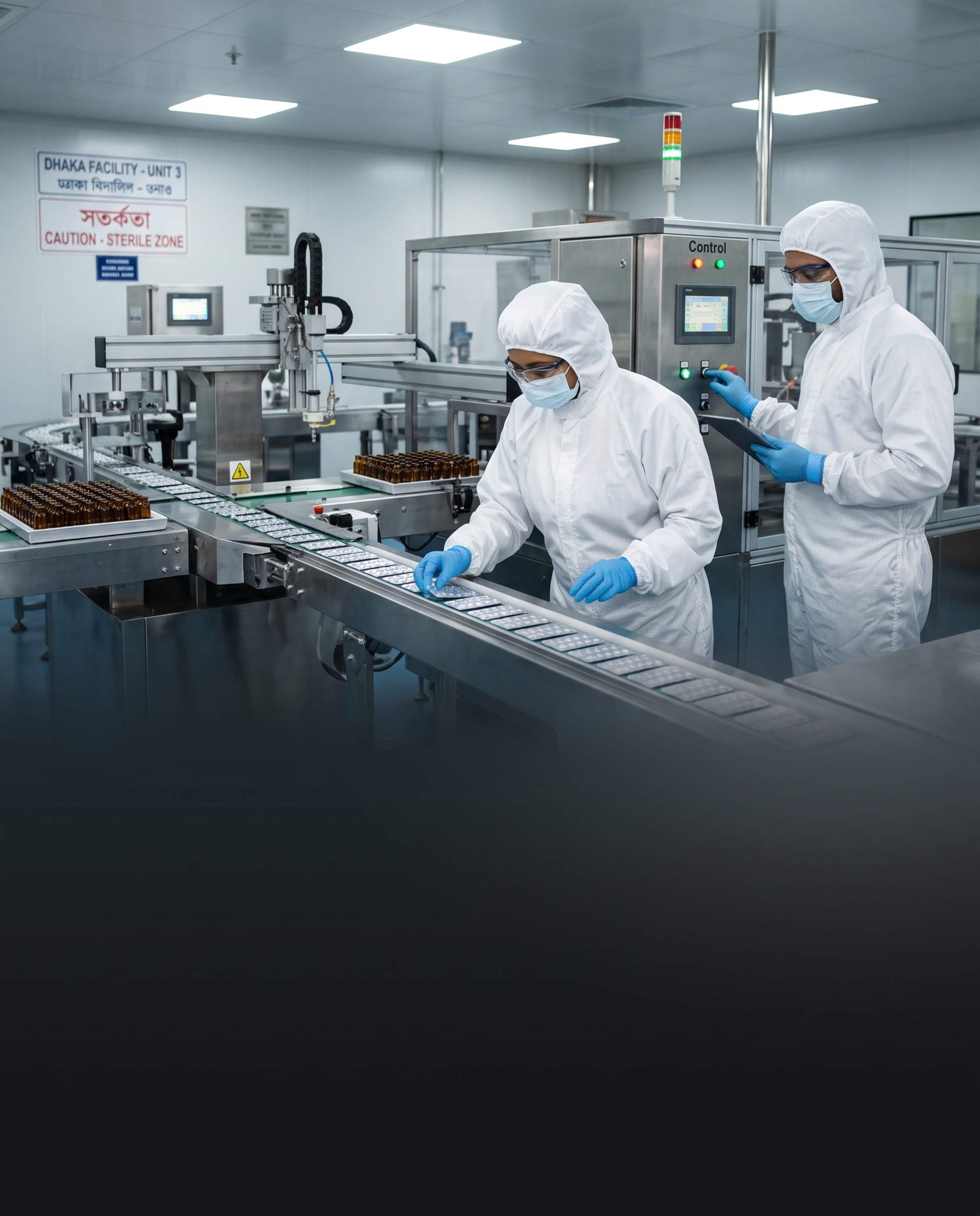
Bangladesh's pharmaceutical manufacturing industry celebrated a historic commercial milestone this week as total export shipments crossed the three-billion-dollar threshold for the first time, consolidating the nation's emergence as a premier global hub for affordable, high-quality generic medicines and specialized biopharmaceuticals.
According to comprehensive trade data verified by the Export Promotion Bureau and the Directorate General of Drug Administration, domestic drug makers now supply finished pharmaceutical formulations to over 160 countries across North America, Europe, Australia, Latin America, and sub-Saharan Africa. The impressive surge reflects decades of continuous capital investment in international regulatory compliance, specialized oncology suites, sterile injectable facilities, and modern research laboratories capable of synthesizing complex therapeutic molecules.
Operationalizing the Munshiganj API Industrial Park
Central to this export acceleration has been the long-awaited operationalization of the Active Pharmaceutical Ingredient Industrial Park in Gazaria, Munshiganj. For decades, Bangladesh's pharmaceutical competitiveness was constrained by heavy reliance on imported active raw materials from India and China, which accounted for more than eighty percent of total raw chemical inputs.
With multiple state-of-the-art API synthesis units now operational in Gazaria, domestic manufacturers have begun producing essential bulk molecules locally, including paracetamol, antibiotics, cardiovascular agents, and anti-diabetic compounds. Domestic synthesis of these core chemicals reduces foreign exchange expenditure, insulates local drug manufacturers from international supply chain shocks, and shortens factory production lead times by several weeks.
Industry executives noted that backward integration at the Munshiganj complex lowers unit production costs by up to fifteen percent, giving Bangladeshi drug formulations a decisive pricing edge in competitive international procurement tenders.
Expanding Stringent International Regulatory Approvals
The stellar export performance is also underpinned by a steady accumulation of stringent regulatory clearances from prestigious global health authorities. Leading Bangladeshi pharmaceutical giants, including Square, Incepta, Beximco, and Renata, operate manufacturing plants certified by the United States Food and Drug Administration, the UK Medicines and Healthcare products Regulatory Agency, the European Union Good Manufacturing Practice authorities, and the World Health Organization.
These gold-standard certifications allow domestic companies to penetrate lucrative regulated Western markets directly, exporting generic medications for chronic cardiovascular ailments, neurological conditions, and respiratory illnesses at substantial profit margins. In developing markets across Africa and Southeast Asia, Bangladeshi formulations have earned widespread trust among hospital networks for maintaining rigorous clinical efficacy while remaining affordable for vulnerable patient populations.
Strategic Preparations Ahead of LDC Graduation
The export milestone arrives at a critical strategic juncture as Bangladesh prepares for graduation from Least Developed Country status. Under the World Trade Organization's Trade-Related Aspects of Intellectual Property Rights agreement, Bangladesh has enjoyed valuable patent waivers allowing domestic firms to manufacture generic versions of patented life-saving medications without paying expensive licensing royalties.
To prepare for the post-waiver environment, leading pharmaceutical companies have aggressively expanded their internal research and development budgets, investing heavily in biotechnology, biosimilar monoclonal antibodies, and novel drug delivery mechanisms that carry independent patent protections. Joint venture agreements with international biotechnology innovators have also accelerated technology transfer, ensuring that the domestic industry transitions smoothly into high-value specialized therapeutics.
Strengthening Specialized Clinical Trials and Biotechnology Talent
To support high-value exports, domestic universities and research institutes are actively expanding postgraduate training in biochemical engineering and pharmaceutical formulation design. Academic clinical research organizations in Dhaka are conducting Phase I through Phase III bioequivalence studies that meet international standards, validating that domestically manufactured generic products deliver identical therapeutic efficacy to originator drugs.
Concurrently, major exporters are expanding specialized temperature-monitored cold-chain shipping hubs at Hazrat Shahjalal International Airport and Chittagong Port. These cold-storage facilities ensure that sensitive biologic formulations, including pediatric vaccines and recombinant insulins, maintain potency across long international transit routes, opening new export corridors across Latin America and Central Asia.
Laying the Groundwork for Long-Term Global Leadership
Government agencies are complementing industry investments with targeted regulatory reforms. The DGDA has modernized its digital dossier review systems and established specialized bioequivalence testing protocols, enabling domestic laboratories to conduct complex clinical pharmacokinetic trials locally rather than outsourcing them abroad.
With global healthcare systems actively seeking reliable, diversified suppliers of affordable generic drugs, Bangladesh's pharmaceutical sector is uniquely positioned to expand its global market share, generating vital foreign exchange reserves and cementing the country's reputation as a world-class manufacturing powerhouse for modern medical science.



Comments
0