


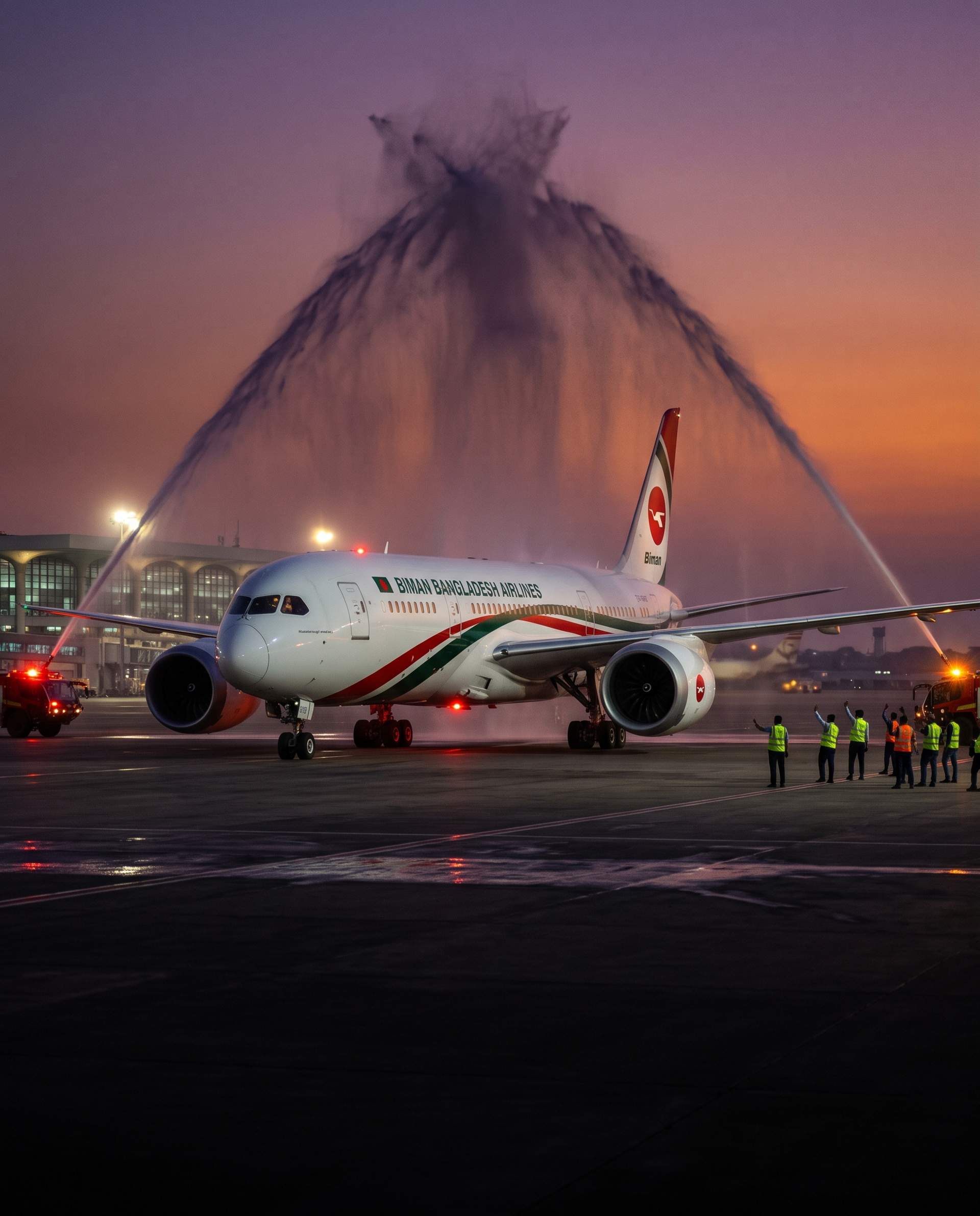
Biman Bangladesh Airlines formally inaugurated direct scheduled flight operations connecting Hazrat Shahjalal International Airport in Dhaka with Incheon International Airport in Seoul this weekend, opening a direct aviation gateway between Bangladesh and East Asia's fourth-largest economy.
The inaugural non-stop service, operated with modern fuel-efficient Boeing 787 Dreamliner aircraft, marks a long-awaited breakthrough for thousands of Bangladeshi professionals, technical trainees, university students, and business travelers who have spent years navigating exhausting layovers across third-country hubs in Southeast Asia. Operating initially three times weekly on Tuesdays, Thursdays, and Sundays, the non-stop flight completes the 4,200-kilometer trans-Asian journey in just over six hours, shaving nearly half the travel time off previous transit routes.
Vital Lifeline for Skilled Workers and Overseas Employment
The establishment of a direct air corridor is expected to provide an immediate boost to bilateral labor mobility under South Korea's Employment Permit System, widely known across Bangladesh as EPS. Over the past decade, South Korea has emerged as one of the most lucrative and legally secure destinations for skilled Bangladeshi workers seeking employment in modern manufacturing, shipbuilding, precision agriculture, and automotive electronics.
Unlike traditional low-skilled labor migration destinations, South Korea offers regulated working conditions, standardized employment contracts, competitive salaries, and robust social security protections. However, securing flights during peak hiring periods has consistently posed immense logistical challenges, with workers often forced to pay exorbitant ticket fares to foreign carriers for multi-stop flights through Bangkok, Kuala Lumpur, or Singapore.
Expatriate welfare officials emphasized that Biman's direct route guarantees predictable, affordable travel arrangements for newly recruited trainees, ensuring that prospective workers arrive at their Korean industrial assignments fresh, punctually, and without predatory airfare markups.
Catalyst for Expanding Bilateral Trade and Technology Exchange
Beyond passenger convenience, the new route establishes a vital cargo conduit for high-value bilateral commerce. South Korea is one of Bangladesh's leading foreign direct investors, with major Korean industrial conglomerates establishing specialized manufacturing facilities in the Korean Export Processing Zone in Chattogram.
Biman's Dreamliner cargo holds offer substantial belly capacity for temperature-sensitive electronics components, semiconductor materials, precision machinery spare parts, and specialized synthetic textiles imported from South Korea for use in high-end apparel manufacturing. Conversely, Bangladeshi exporters gain direct overnight freight access to supply Korean retail markets with specialty woven garments, leather footwear, and perishable horticultural produce, dramatically reducing transit days and storage costs.
Comfort and Operational Efficiency on the Dreamliner Fleet
Passengers traveling on the route will experience modern international long-haul comfort aboard Biman's flagship Boeing 787-8 and 787-9 aircraft. The state-of-the-art aircraft feature spacious two-class cabin configurations, dynamic LED mood lighting, advanced cabin air filtration systems that maintain higher humidity and lower cabin altitude, and personalized seatback touchscreens with rich multi-lingual digital entertainment options.
Aviation sector analysts noted that deploying the Dreamliner on medium-to-long haul international sectors maximizes fuel burn efficiency, lowering per-seat operational costs and allowing the national carrier to price promotional economy and business fares aggressively against regional competitors.
Expanding Higher Education and Cultural Exchanges
In addition to migrant employment and trade, the non-stop link addresses rapidly rising educational travel demand. South Korean government scholarship programs have attracted an unprecedented number of talented Bangladeshi graduate researchers pursuing advanced degrees in robotics, biomedical engineering, and artificial intelligence at leading institutions in Seoul, Daejeon, and Busan.
University student associations noted that direct flights eliminate grueling twenty-hour transit itineraries, enabling young researchers and faculty exchange delegations to commute seamlessly between academic conferences. Tourism boards in both capitals are also formulating promotional stopover packages, anticipating reciprocal growth in eco-tourism, cultural heritage travel, and leisure tourism across the emerging East Asian air bridge.
Strengthening Biman's East Asian Footprint
The Seoul route represents a central pillar of Biman Bangladesh Airlines' broader strategic vision to pivot beyond its traditional reliance on Gulf and European corridors. By establishing scheduled presences in major East Asian capitals like Tokyo, and now Seoul, the national flag carrier is actively connecting South Asian diaspora communities with high-growth Pacific rim economies.
Airline executives confirmed that forward bookings for the winter season have already surpassed expectations, reflecting robust commercial demand. As diplomatic, educational, and commercial relations between Dhaka and Seoul continue to deepen, the direct flight route stands as a tangible bridge linking two dynamic nations in shared pursuit of modern economic growth and cultural exchange.
Comments
0