


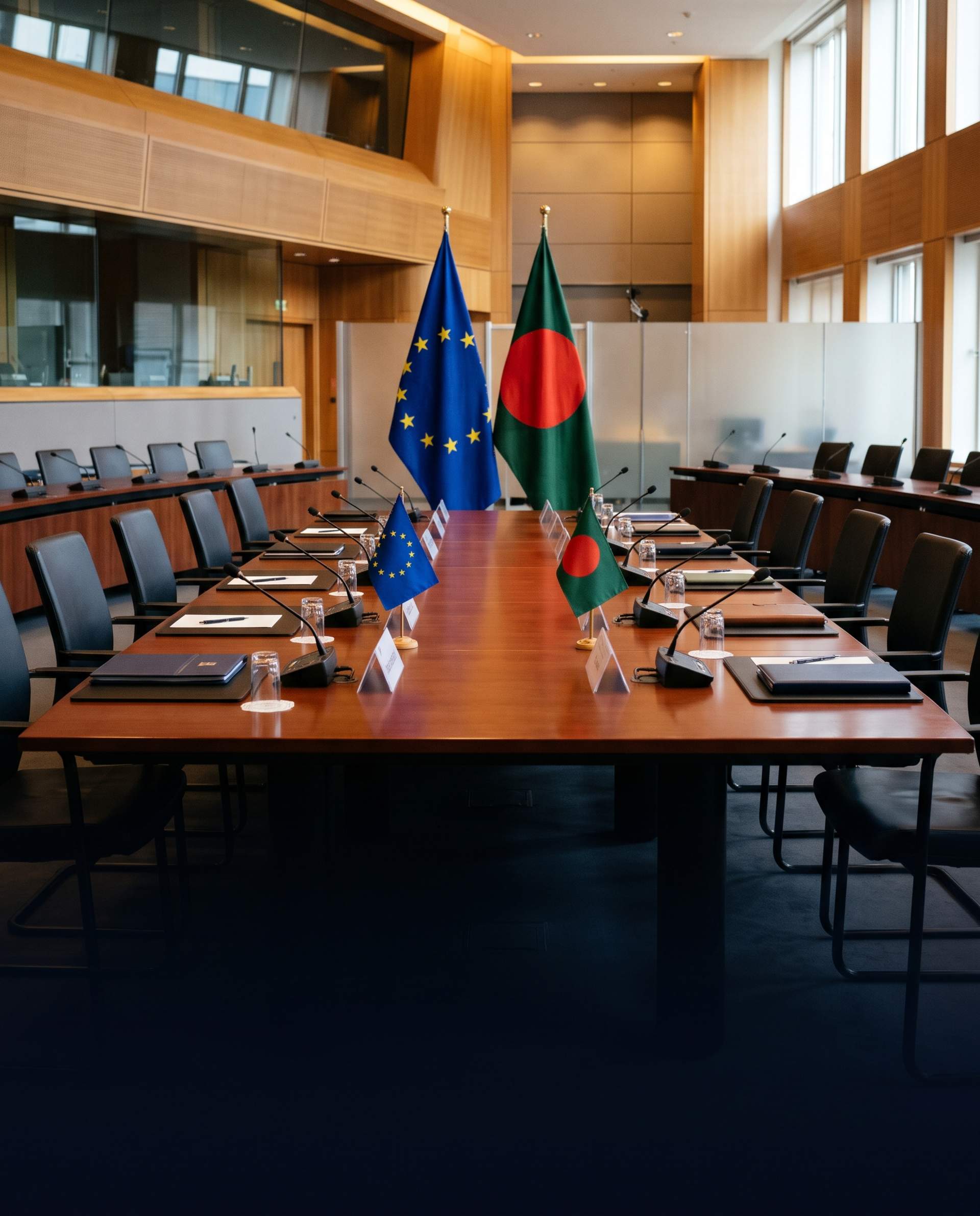
Senior diplomatic delegations from Bangladesh and the European Union have successfully finalized the text of a comprehensive bilateral cooperation roadmap, establishing an institutional bridge designed to secure preferential trade access and support sustainable industrial reforms as Bangladesh graduates from Least Developed Country status in late 2026.
The conclusion of diplomatic consultations between Bangladesh's Ministry of Foreign Affairs and representatives from the European External Action Service in Dhaka lays the foundation for signing a formal Partnership and Cooperation Agreement early next year. The European Union is Bangladesh's largest trade partner, absorbing nearly half of the country's total merchandise exports. The finalized roadmap creates a clear, predictable timetable for meeting European regulatory benchmarks, ensuring that domestic export factories do not face sudden tariff cliffs when current duty-free concessions expire.
Navigating the Transition to GSP Plus
Under the EU's current Everything But Arms initiative, Bangladesh enjoys unrestricted duty-free and quota-free market access across all export categories except arms and ammunition. However, that preferential status is tied directly to the nation's United Nations LDC classification.
Following graduation, Bangladesh will benefit from an agreed three-year transition window under standard European generalized tariff preferences before moving to normal tariff schedules. The primary objective of the new roadmap is to qualify Bangladesh for the European Union's GSP Plus preferential scheme, which grants zero-duty access to developing nations that ratify and effectively implement thirty-two international conventions covering human rights, labor protections, environmental sustainability, and good governance.
European negotiators confirmed that the roadmap includes clear monitoring checkpoints for ongoing labor law amendments, including simplifying trade union registration thresholds, strengthening workplace safety inspection agencies, and expanding labor court capacities across key industrial zones in Gazipur and Chattogram.
Financial Backing for Green Industrial Modernization
Beyond tariff preferences, the partnership framework unlocks substantial European funding through the EU Global Gateway initiative to accelerate Bangladesh's green energy transition.
European development banks, including the European Investment Bank, have committed concessional financing packages to support rooftop solar installations across ready-made garment factories, industrial effluent treatment upgrades, and circular textile recycling hubs. European consumers and fashion brands are increasingly demanding that clothing supply chains adhere to strict environmental corporate sustainability due diligence regulations. By helping Bangladeshi manufacturers decarbonize their energy grids and reduce industrial water waste, the agreement directly protects the long-term commercial appeal of local factories in European retail markets.
Digital Trade and Educational Exchange Links
The cooperation agreement also establishes new partnerships in intellectual property rights, customs digitalization, and higher education. Both delegations agreed to implement electronic data exchange protocols between European and Bangladeshi customs administrations, speeding up port clearances for time-sensitive cargo shipments.
On the educational front, the European Union committed to expanding scholarship quotas under the Erasmus Plus program for Bangladeshi university graduates and technical researchers, focusing on renewable energy engineering, agricultural biotechnology, and data science to build high-skill human capital for the coming decade.
Expanding Bilateral Cooperation Across New Sectors
Diplomatic envoys emphasized that the partnership reflects a significant evolution in bilateral relations, moving away from a traditional donor-recipient dynamic toward a mature economic and geopolitical partnership.
The roadmap introduces structured cooperation mechanisms covering climate adaptation finance, maritime domain security in the Bay of Bengal, digital skills training programs for young professionals, and legal avenues for skilled labor migration. Both sides agreed to establish annual joint ministerial reviews to evaluate reform implementation and resolve commercial trade disputes constructively.
A Crucial Safety Net for Export Competitiveness
Business leaders from the Bangladesh Garment Manufacturers and Exporters Association praised the diplomatic progress, noting that securing European trade certainty is the single most important factor for preserving millions of manufacturing jobs over the coming decade.
With negotiations finalized, Bangladesh has taken a decisive step toward safeguarding its economic future, demonstrating to international buyers that the nation is fully prepared to compete, modernize, and thrive in an increasingly demanding global marketplace.

Comments
0