

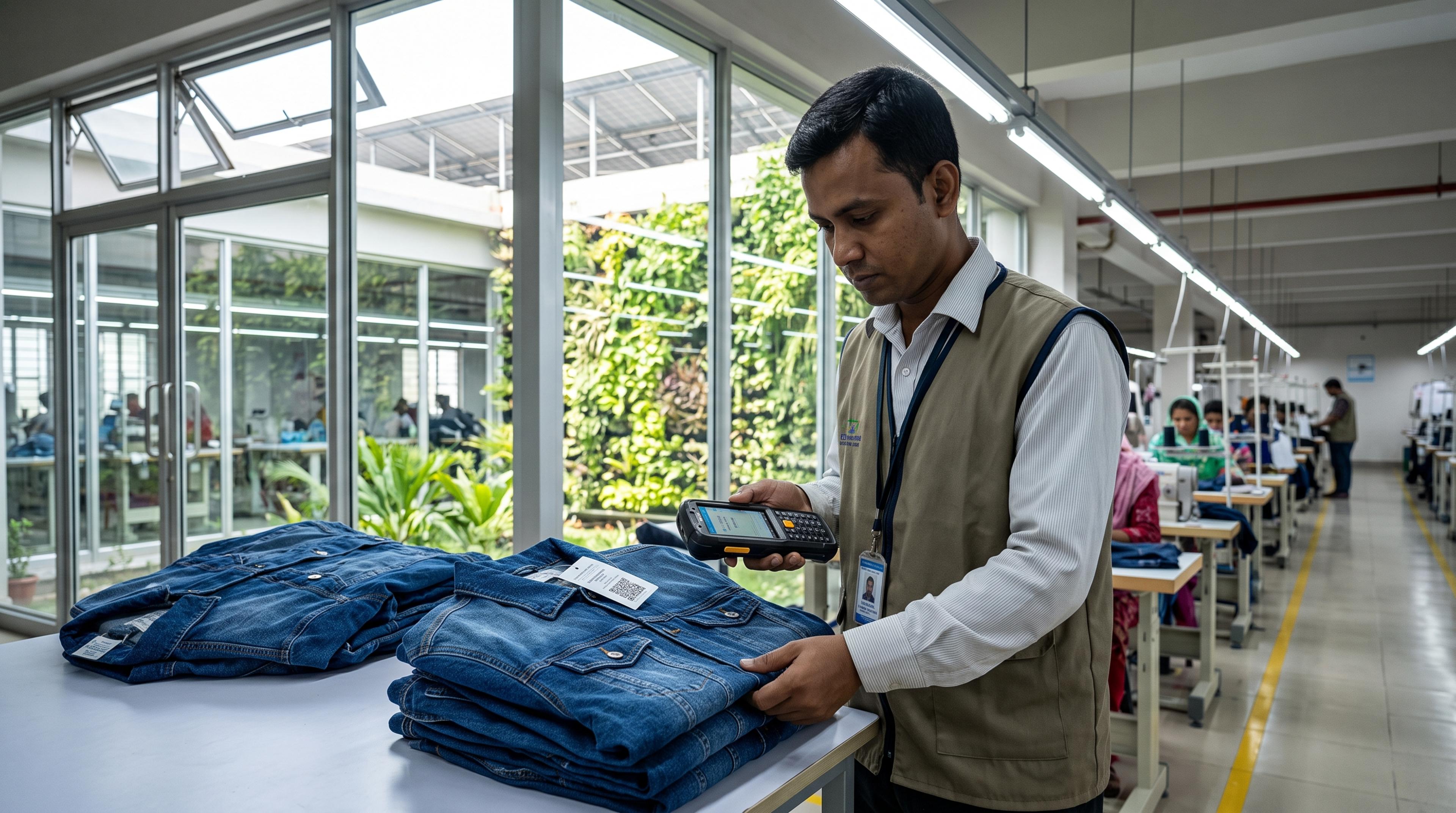
EU greenwashing ban, Walk onto the showroom floor of almost any major export garment group in Gazipur, Narayanganj, or Chattogram, and the first thing executives point to is a framed glass plaque from the U.S. Green Building Council. Over the past decade, Bangladeshi textile entrepreneurs have poured hundreds of millions of dollars into rainwater harvesting, solar rooftops, daylight-optimized sewing floors, and high-efficiency chillers. By mid-2026, Bangladesh had built 287 Leadership in Energy and Environmental Design (LEED) certified garment factories, more than any other country on Earth, including over half of the world’s top 100 highest-scoring green industrial buildings.
For years, those green buildings served as an all-purpose sustainability shield for international fashion retailers. A European high-street brand could source cotton shirts from a LEED Platinum factory in Dhaka, slap a green leaf icon or an "Eco-Friendly Collection" hang tag on the collar, and market the clothing to climate-conscious shoppers in Berlin, Paris, or Stockholm.
As of last Sunday, September 27, 2026, that marketing playbook is illegal across the European Union. Under the newly enforced EU greenwashing ban, formally known as Directive (EU) 2024/825 on Empowering Consumers for the Green Transition (ECGT), retailers selling into the 27-nation bloc can no longer use generic environmental phrases such as "green," "eco-friendly," "sustainable," or "conscious" unless the claim is backed by recognized, product-specific lifecycle proof. Nor can brands claim a garment is "carbon neutral" or "climate positive" simply because they bought carbon offsets.
Coming on the heels of a separate EU prohibition on destroying unsold clothes that took effect on July 19, 2026, the new rules mark a permanent shift for Bangladesh’s readymade garment (RMG) industry. Having a certified green factory wall is no longer enough; to keep winning European orders, Bangladeshi manufacturers must now prove the environmental footprint of every spool of yarn, dye bath, and kilowatt-hour of electricity inside the garment itself.
What the EU Greenwashing Ban Actually Outlaws
For much of 2025 and early 2026, confusion hung over Brussels’ environmental rulebook after European lawmakers paused negotiations on a separate proposal called the standalone Green Claims Directive. Many suppliers in Asia assumed the regulatory pressure had eased.


Comments
0Join the discussion
You must be logged in to leave a comment.