


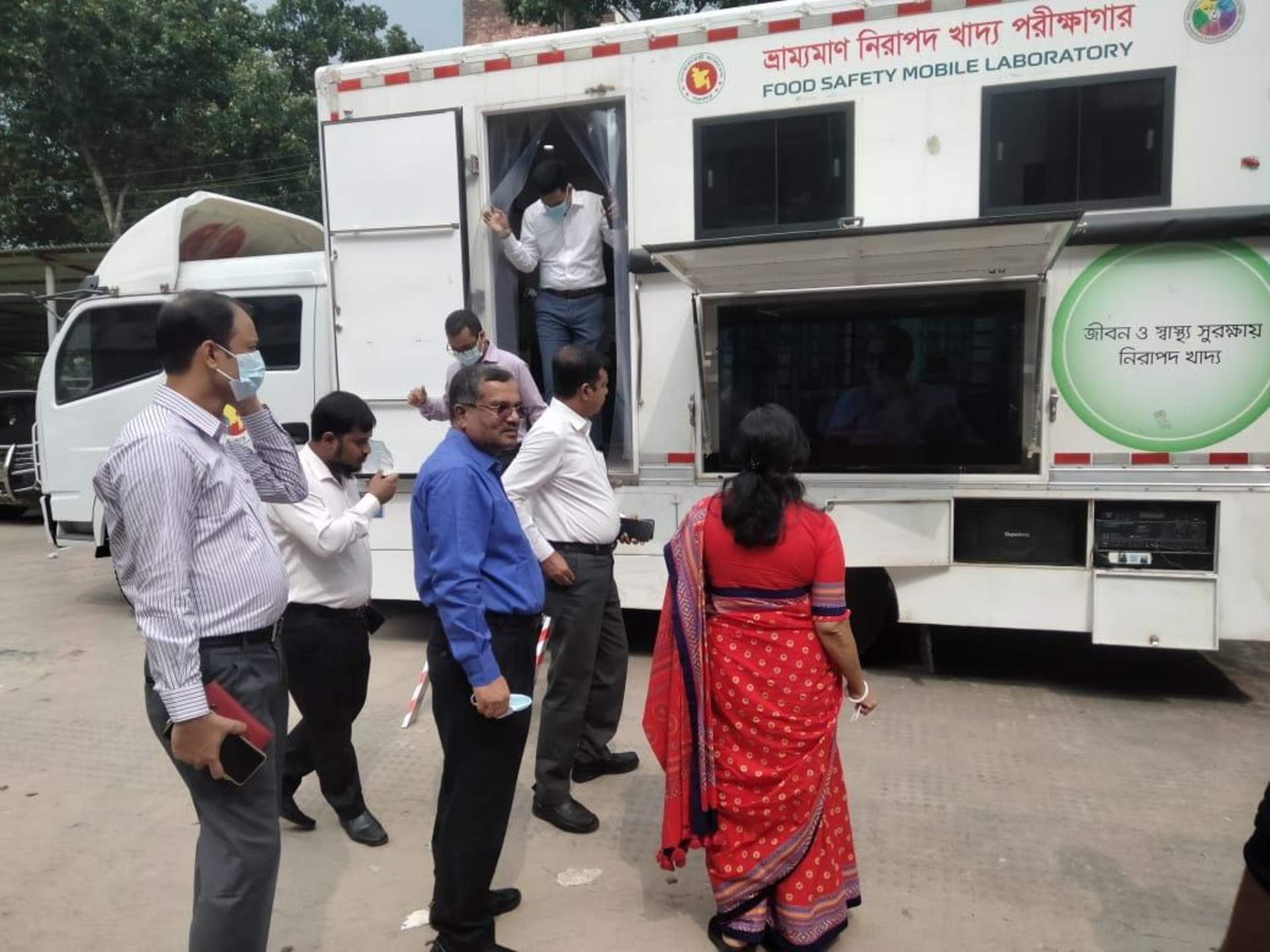
The Bangladesh Food Safety Authority (BFSA) has proposed spending around Tk 390 crore to purchase 72 mobile mini-laboratory vans, aiming to bring food testing directly to markets and communities across the country. However, the ambitious expansion comes as several existing district laboratories continue to struggle with shortages of technicians and essential equipment.
According to a proposal sent to the Planning Ministry, the vans would be purchased under the second phase of the BFSA Capacity Enhancement Project, with implementation targeted for completion by June 2030. The customised vehicles would carry testing equipment and kits to check everyday food products, including edible oil, milk, ghee, turmeric and chilli powder.
Food Minister Afroza Khanam said the mobile laboratories would help authorities identify contamination and adulteration during monitoring drives, particularly in areas where existing testing facilities cannot provide quick results.
Eight mobile laboratory vans have already been operating in divisional cities for around two years. Visits to facilities in Dhaka and Barishal found that each van can test approximately 70 to 80 samples per month. The Barishal unit can examine 32 types of food, although some results take up to 48 hours.
But the expansion plan raises questions about the authority's ability to operate a much larger fleet effectively.
Several existing district laboratories are not functioning at full capacity. In Narayanganj, the district laboratory has no appointed technician. In Khulna, a microbiological laboratory remains non-operational because it lacks a laminar airflow cabinet, while the Chattogram metropolitan laboratory has no dedicated technical staff.
BFSA Chairman Md Safiqul Islam said the government had approved 291 additional staff positions and that recruitment would help address the manpower shortage. He also said repairing equipment in existing laboratories would receive priority.
Experts have nevertheless warned that purchasing more vehicles will not automatically improve food safety. Latiful Bari, chief scientist at the University of Dhaka's Centre for Advanced Research in Sciences, highlighted recurring expenses such as fuel, drivers' salaries, air conditioning and maintenance. He also questioned whether mobile laboratories would be practical on Bangladesh's roads and in remote areas.
He recommended recruiting qualified technicians and developing affordable, locally produced rapid-testing kits that food safety officers could use in the field.
AHM Shafiquzzaman, president of the Consumers Association of Bangladesh, also stressed that food safety requires skilled personnel, regular testing, effective monitoring and enforcement, rather than infrastructure spending alone.
The central challenge for BFSA will therefore be ensuring that the proposed investment translates into functioning laboratories, reliable testing and meaningful action against food adulteration.
Comments
0