


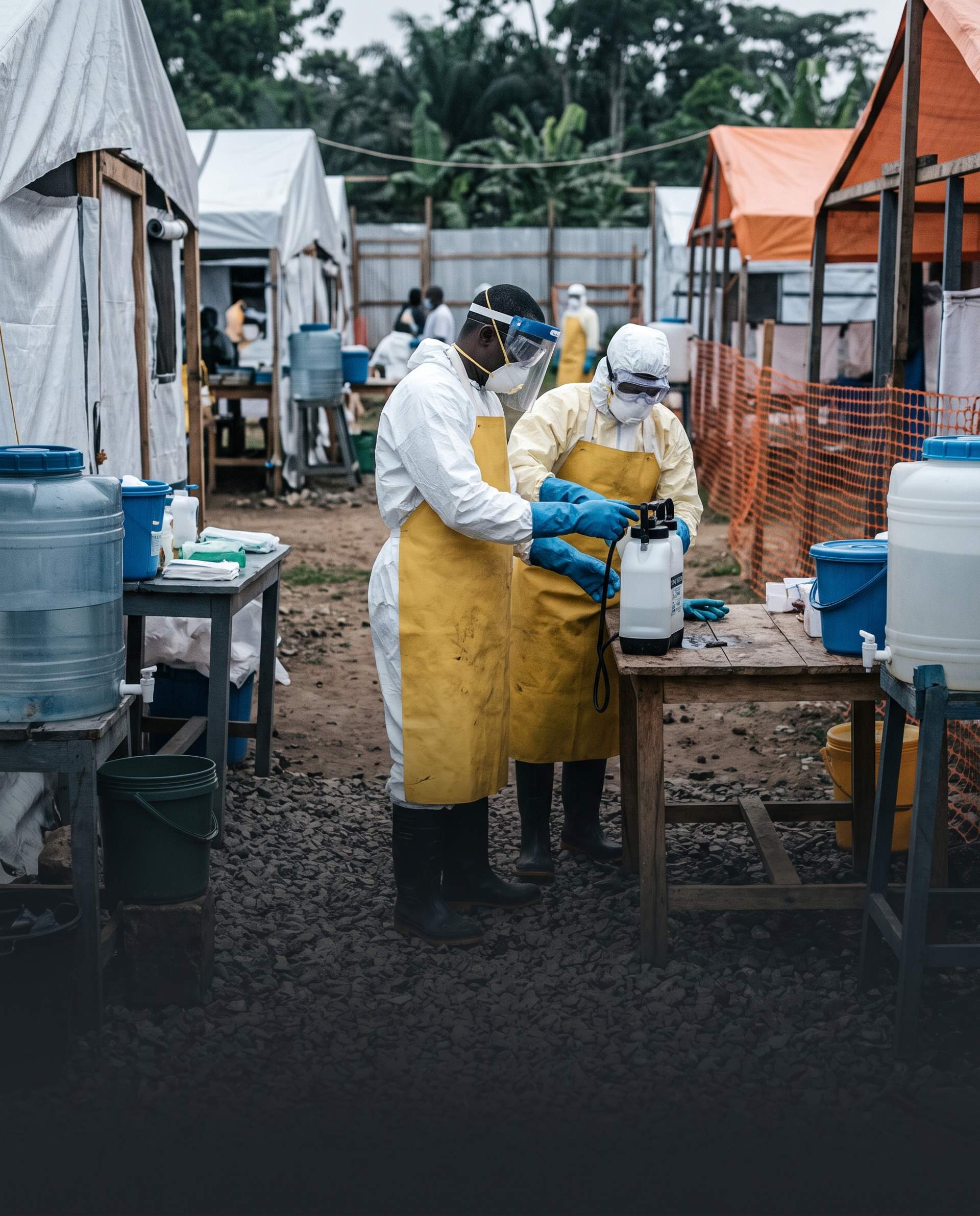
An Ebola outbreak in the Democratic Republic of the Congo (DR Congo) has exceeded 11,000 reported cases and 5,400 deaths, with health authorities warning that insecurity, population displacement and difficulties reaching affected communities continue to obstruct containment efforts.
The outbreak is caused by the Bundibugyo virus, a type of Ebola virus associated with a serious and potentially fatal illness. It has spread across multiple provinces in DR Congo and has also been reported in neighbouring countries, creating additional challenges for regional public health authorities.
In a November 15 update, the World Health Organization (WHO) said more than 11,000 cases and 5,400 deaths had been reported during the six-month outbreak. Children account for more than a quarter of confirmed cases and approximately one-third of deaths.
The figures underline the scale of a health emergency that has continued despite efforts to expand treatment, surveillance and community support.
An outbreak spreading across multiple provinces
The outbreak began in mid-May 2026 and has developed into one of the most serious Ebola emergencies in recent years.
According to WHO, transmission has expanded across 67 health zones in eight provinces of DR Congo. The organisation reported that between 400 and 500 new cases continued to be recorded each week in its November 15 assessment.
The geographical spread makes the response more complicated because health authorities must operate across communities with different levels of healthcare access, infrastructure and security.
Some areas have experienced improvements, with health teams bringing essential services closer to affected populations. However, progress in individual locations has not translated into nationwide control of transmission.
The WHO has emphasised that the outbreak continues to expand in some areas even as other locations experience slower transmission.
This uneven pattern means that a reduction in cases in one location cannot be treated as proof that the overall emergency is ending.
Why the Bundibugyo virus matters
Ebola is a group of viruses that can cause severe disease in humans. Different Ebola viruses have different characteristics, and available medical countermeasures do not necessarily work equally against every type.
The current outbreak is caused by the Bundibugyo virus.
This distinction is important because the vaccines and treatments developed for other Ebola virus species cannot automatically be assumed to provide protection against Bundibugyo virus disease.
The outbreak has therefore presented particular challenges for public health teams seeking to prevent infections and improve patient outcomes.
Early identification, isolation of suspected cases, infection prevention, supportive medical care and monitoring of contacts remain important parts of the response.
People who have been in contact with infected individuals may need monitoring so that new infections can be identified quickly. Community engagement is also essential because people need access to reliable information and must be able to seek care without fear or misinformation.
Children face a particularly serious burden
The impact on children is among the most concerning aspects of the outbreak.
WHO reported that children account for more than 25% of confirmed cases and approximately one-third of deaths.
The organisation also said that seven out of ten children under five with confirmed Ebola had died in the reported data.
These figures demonstrate the severity of the outbreak among young children and the importance of early medical attention.
Ebola can cause symptoms including fever, weakness, vomiting, diarrhoea and, in severe cases, internal and external bleeding. However, symptoms can overlap with other illnesses, making accurate diagnosis and timely testing important.
The disease can spread through direct contact with the bodily fluids of an infected person or someone who has died from the disease, as well as contaminated materials.
Public health authorities therefore need to provide clear information about transmission and safe care without creating unnecessary fear of ordinary social contact.
The wider impact on children also extends beyond infection. School disruption, displacement, the loss of family members and pressure on healthcare services can affect education and community stability.
Conflict and insecurity complicate containment
One of the largest obstacles facing health authorities is the difficulty of reaching communities affected by insecurity and conflict.
The WHO has identified access to hard-to-reach populations as a major requirement for controlling the outbreak.
Armed conflict and population displacement can interrupt medical services, complicate contact tracing and make it difficult for health workers to conduct surveillance.
The problem is particularly serious when people move between communities before their exposure or symptoms are identified.
Health workers also need safe access to treatment facilities and affected households. Without reliable access, even well-designed containment programmes may struggle to reach the people who need them.
Mistrust and misinformation can create additional barriers. Communities may hesitate to report symptoms, cooperate with health teams or seek medical assistance if they do not trust the information they receive.
Building confidence through local healthcare workers, community leaders and clear communication is therefore an essential part of the response.
International health cooperation remains important
The outbreak has implications beyond DR Congo because infectious disease surveillance and response require cooperation across borders.
WHO has reported cases and outbreak activity involving neighbouring countries, including Kenya and Nigeria in its November 6 disease update.
Cross-border surveillance is important because people travel for work, trade, family visits and medical care. Health authorities need the ability to identify potential infections and respond quickly without unnecessarily disrupting ordinary movement.
International partners also have a role in supporting medical facilities, laboratory capacity, protective equipment, surveillance and community outreach.
The challenge is not limited to delivering emergency supplies. Effective containment requires sustained funding, trained personnel and healthcare infrastructure that can continue operating when international attention shifts elsewhere.
What happens next?
The immediate priority is to reduce new infections, improve access to medical services and strengthen surveillance in areas where transmission continues.
WHO has reported progress in bringing lifesaving services closer to communities, but the continuing weekly case numbers show that major gaps remain.
Health authorities must also maintain support for affected families and children while working to prevent further geographical spread.
For the international community, the outbreak is a reminder that disease containment depends on more than medical technology. Security, public trust, accessible healthcare and consistent funding are equally important.
The reported figures show the seriousness of the emergency, but they also highlight why the response must continue even in areas where transmission has begun to slow.

Comments
0