


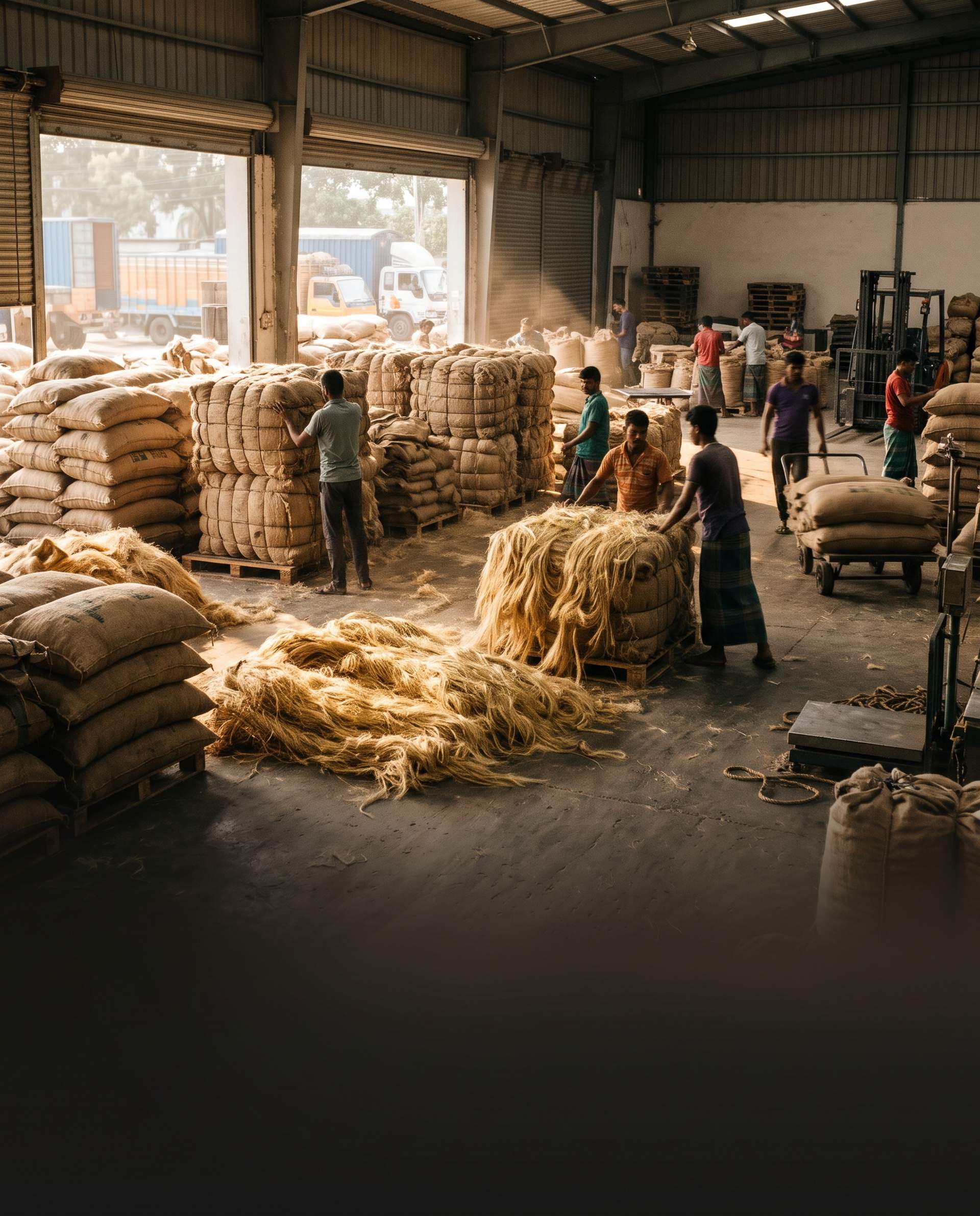
Bangladesh’s earnings from jute and jute goods exports to India nearly doubled during the first four months of the 2026–27 financial year, offering a notable gain for a traditional export industry even as garment shipments to the neighbouring market declined.
Bangladesh earned $77.92 million from jute and jute goods exports to India between July and October 2026, compared with $42.65 million during the same period a year earlier, according to country-wise export figures released by the Export Promotion Bureau (EPB).
The increase came at a time when trade restrictions had made it more difficult for several Bangladeshi products to enter India through land ports. The export figures suggest that jute shipments have continued to find buyers despite those barriers, although the data alone does not establish which routes or commercial arrangements account for the increase.
Garment exports moved in the opposite direction. Bangladesh earned $250.87 million from garment shipments to India during the four-month period, down 5.38 percent from $265.14 million a year earlier.
The contrasting figures highlight how different export industries are performing in one of Bangladesh’s most important neighbouring markets.
Jute's changing export picture
The growth in jute exports to India is part of a wider increase in Bangladesh’s global jute and jute goods earnings. EPB figures cited in the latest reporting show that exports of these products worldwide reached $346.37 million between July and October, up approximately 25 percent from $277.37 million in the corresponding period of the previous financial year.
India accounted for $77.92 million, or about 22.5 percent, of that total.
The figures include both raw jute-related products and manufactured jute goods. Bangladesh has a long history of producing jute-based materials, including sacks, bags, yarn, fabrics and other products used in packaging, agriculture and industry.
Demand for jute products can be influenced by the price of alternative materials, the availability of raw fibre, production costs and the requirements of importing businesses. The latest export data show a stronger performance, but sustained growth will depend on whether Bangladeshi producers can maintain quality, delivery reliability and competitive prices.
Trade restrictions complicate the Indian market
The export increase is particularly notable because access to the Indian market has faced restrictions.
Bangladeshi jute and jute goods have historically entered India through land customs stations, with Benapole among the country's major gateways for bilateral trade. However, India introduced restrictions on the entry of certain Bangladeshi goods through land ports.
The restrictions included jute, jute goods and fabrics. Reporting on the measures said that, from June 27, India further barred imports of these products through land ports. A similar restriction was imposed at the Changrabandha and Fulbari land customs stations in West Bengal.
The reported arrangements still allowed certain products to enter through Nhava Sheva Port. Shipments to Nepal and Bhutan through India were also permitted under conditions that prevented re-export to the Indian market.
This means the export relationship has not simply stopped. Instead, businesses have had to operate within a changed set of entry conditions. Alternative shipping routes can affect freight expenses, delivery schedules and the amount of working capital exporters need to keep goods moving.
The available figures do not identify the exact share of the recent jute exports that travelled through each route. That distinction matters when assessing how much of the growth can be sustained.
Garment exports show a different trend
The decline in garment earnings to India provides another important part of the picture. The $250.87 million recorded during July–October was 5.38 percent lower than the $265.14 million earned in the same period a year earlier.
The comparison does not establish a single cause for the decline. Export performance can be influenced by demand, prices, competition, trade policy, product mix and the timing of shipments.
The figures do show that Bangladesh's export performance is not uniform across industries. Jute exports rose sharply, while garment exports to India fell. Leather shipments also maintained positive growth, according to the same reporting.
This distinction is important for policymakers and exporters. A rise in one product category cannot automatically offset weakness in another, particularly when the industries have different supply chains, customers and market-entry requirements.
What the numbers mean for Bangladesh
The stronger jute figures could provide encouragement to producers and exporters seeking to diversify beyond ready-made garments. Jute products have an established manufacturing base in Bangladesh, and their export performance can contribute to employment and foreign-currency earnings.
However, one four-month period is not enough to establish a lasting recovery. Exporters will need to maintain access to buyers, manage transport costs and meet product standards in destination markets.
The government also faces a trade-policy challenge. Restrictions affecting land-port access can create uncertainty for businesses on both sides of the border. Predictable customs procedures and transparent trade rules are important for exporters planning contracts and delivery schedules.
For the industry, the next question is whether the increase can continue through the remaining months of the financial year. Monthly EPB data, product-level figures and information about the routes used by exporters will help determine whether the rise reflects a broad-based expansion or a temporary shift in shipments.
The latest figures offer a clear contrast: jute exports to India have risen substantially, while garment earnings have weakened. Whether that shift becomes a longer-term change will depend on market demand, trade access and Bangladesh's ability to keep its exporters competitive.




Comments
0