


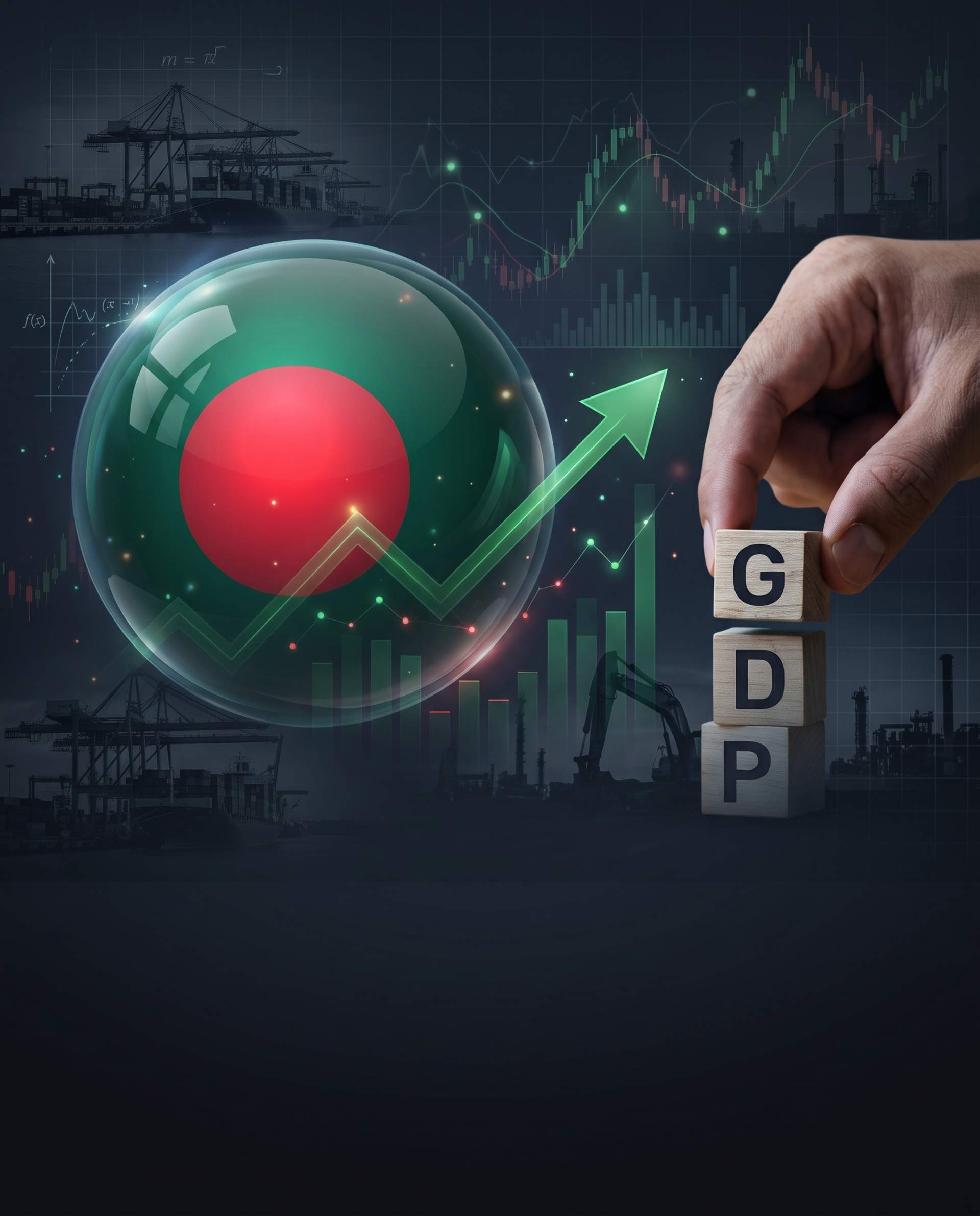
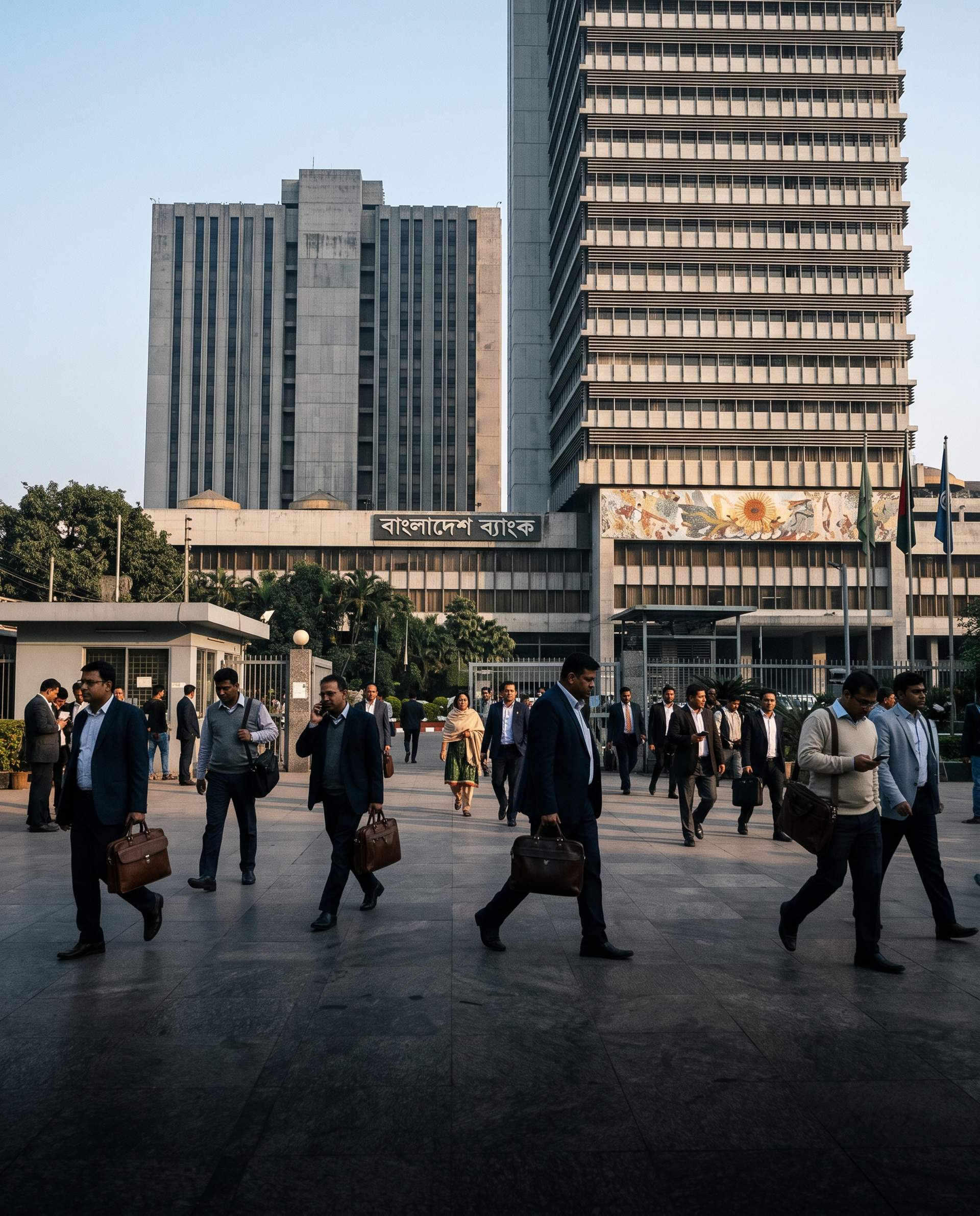
Bangladesh's reported economic growth may have been overstated for more than a decade because of inconsistencies and possible manipulation in official industrial and administrative data, according to a government-commissioned forensic review presented at the Bangladesh Bureau of Statistics (BBS) on November 14.
The review estimates that annual GDP growth may have been overstated by approximately 0.7 to 1.13 percentage points from fiscal year 2014–15 onwards. The findings raise questions about the reliability of historical economic statistics and the information used to guide government policy.
The seven-member committee examined national accounts and industrial production data, identifying problems in manufacturing estimates, tax information and export statistics.
However, the findings are based on a draft review presented for peer discussion. They should not be interpreted as a final official revision of Bangladesh's historical GDP figures.
How the growth estimates came under scrutiny
The investigation identified inconsistencies in industrial production figures, particularly in sectors where GDP calculations depended heavily on administrative records and secondary data rather than independently verified surveys.
According to the review, seven of the 22 industrial subsectors examined showed significant problems.
Cement production was among the examples highlighted by the committee. Reported increases in production did not consistently correspond with the value added recorded in GDP calculations.
The petroleum industry also showed unusually sharp fluctuations. Some reported growth figures were followed by substantial contractions, raising questions about the reliability of the underlying information.
The review further identified weaknesses in the calculation of industrial output, including reliance on information from a limited number of major companies.
These weaknesses can have an outsized effect on national growth estimates when individual companies or administrative records are used to represent entire industries.
Problems extended beyond manufacturing
The committee also examined discrepancies in government revenue and export statistics.
Figures maintained by the Export Promotion Bureau, Customs and Bangladesh Bank did not always match.
The review identified weaknesses in the use of National Board of Revenue data, particularly before the introduction of the Integrated Budget and Accounting System.
Such inconsistencies matter because GDP calculations depend on reliable information from multiple sectors of the economy.
If the underlying production, tax or trade figures are inaccurate, the resulting national economic estimates can also become distorted.
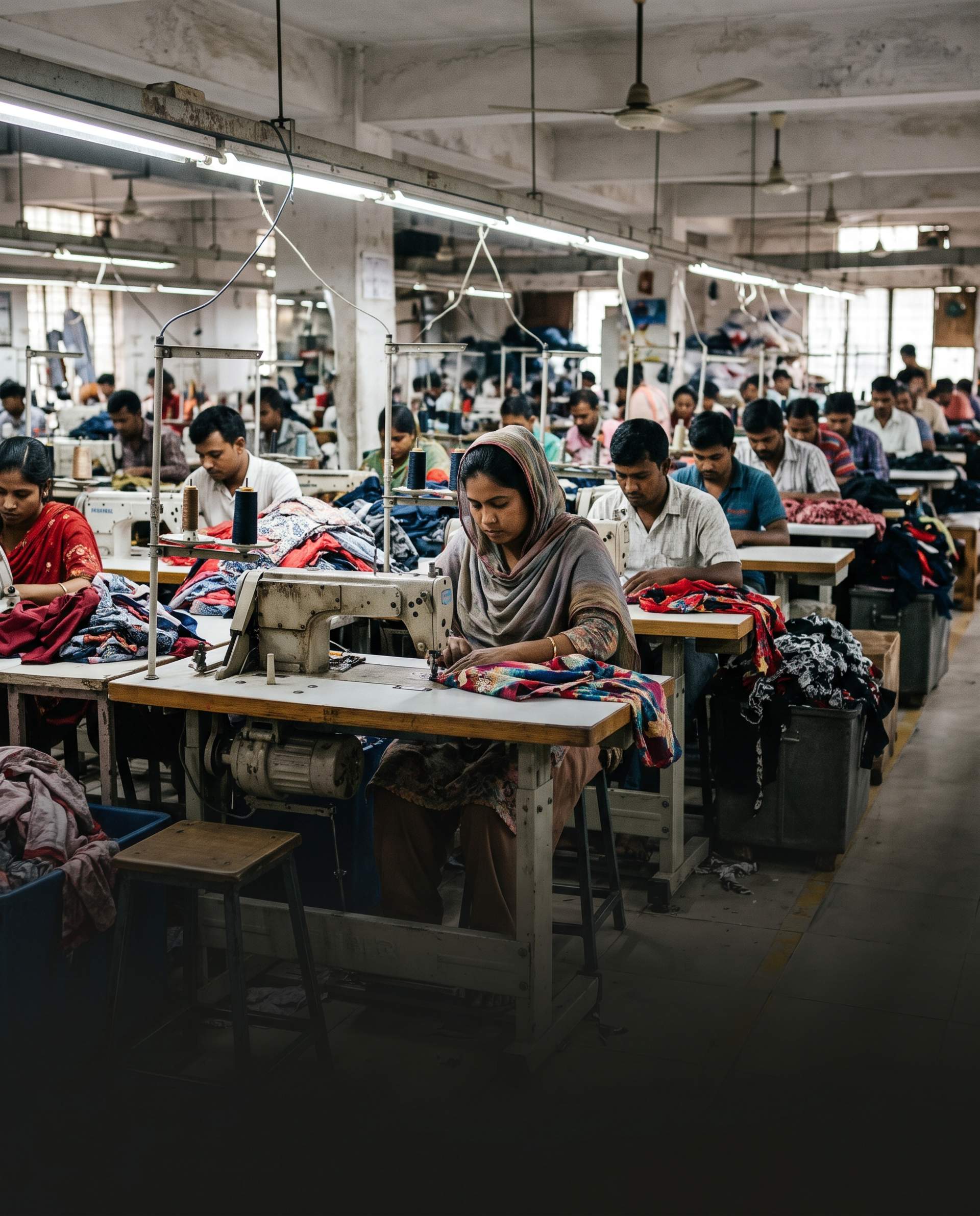
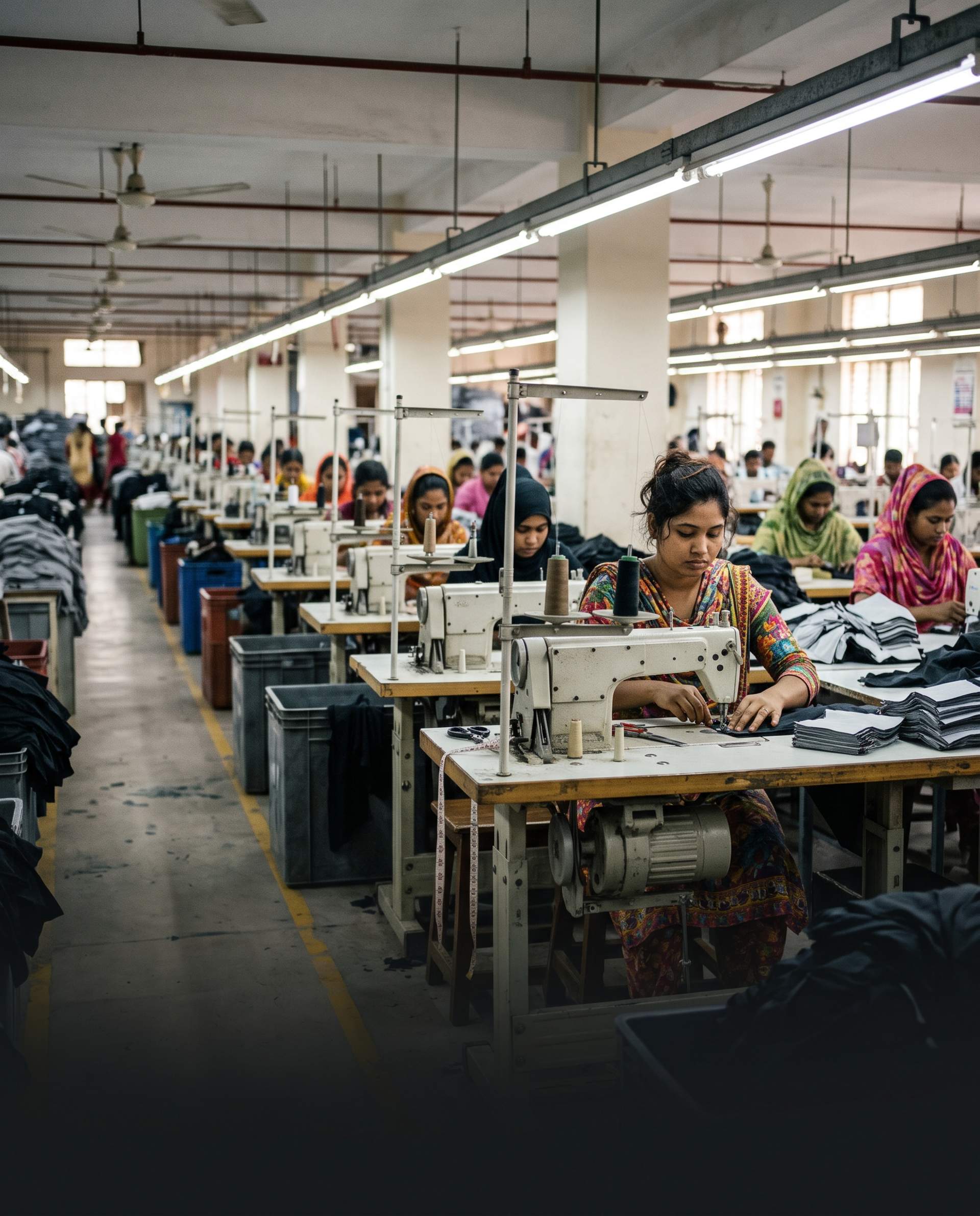
The review did not identify comparable problems in the ready-made garment industry, where more reliable industry-level information was available.
Why the findings matter
GDP growth is one of the most important indicators used to assess a country's economic performance.
Governments rely on it when preparing budgets, evaluating development programmes, planning infrastructure investment and assessing economic progress.
Investors, international lenders and development partners also use economic statistics when evaluating a country's financial position and growth prospects.
If historical growth figures were overstated, some previous assessments of Bangladesh's economic performance may need to be reconsidered.
However, the findings do not mean that Bangladesh's entire reported economic output was fabricated or that every previous economic statistic was incorrect.
The review points to specific weaknesses in the methods and data used to estimate growth. Establishing the precise impact requires further verification of the underlying records.
Government plans changes to economic data collection
The government says it wants to strengthen the independence, transparency and technical capacity of the Bangladesh Bureau of Statistics.
Among the measures discussed are improved field-level data collection, independent verification of industrial production and greater use of alternative indicators such as electricity and gas consumption.
The government has also begun preliminary work to rebase GDP calculations using fiscal year 2025–26 as the new base year, replacing the existing FY2015–16 base.
Computer-Assisted Personal Interviewing, or CAPI, is also being introduced to improve the reliability of survey data through digital collection and geographical verification.
Other proposed improvements include introducing quarterly GDP estimates, strengthening access to official datasets and considering income-based GDP calculations alongside existing production and expenditure approaches.
These changes are intended to make economic statistics more transparent and less vulnerable to administrative or political influence.
What happens next?
The immediate challenge is to establish how much the identified weaknesses affected historical economic estimates.
That requires examining the original industrial production records, reconciling administrative datasets and improving the methodology used to calculate national income.
The government has indicated that it wants to make statistical information more accessible to researchers and the public.
For Bangladesh, restoring confidence in official economic data will be important not only for assessing past performance but also for making better economic decisions in the years ahead.
Reliable statistics are essential to understanding whether the economy is genuinely growing, which industries are expanding and where public investment is most urgently needed.

Comments
0