


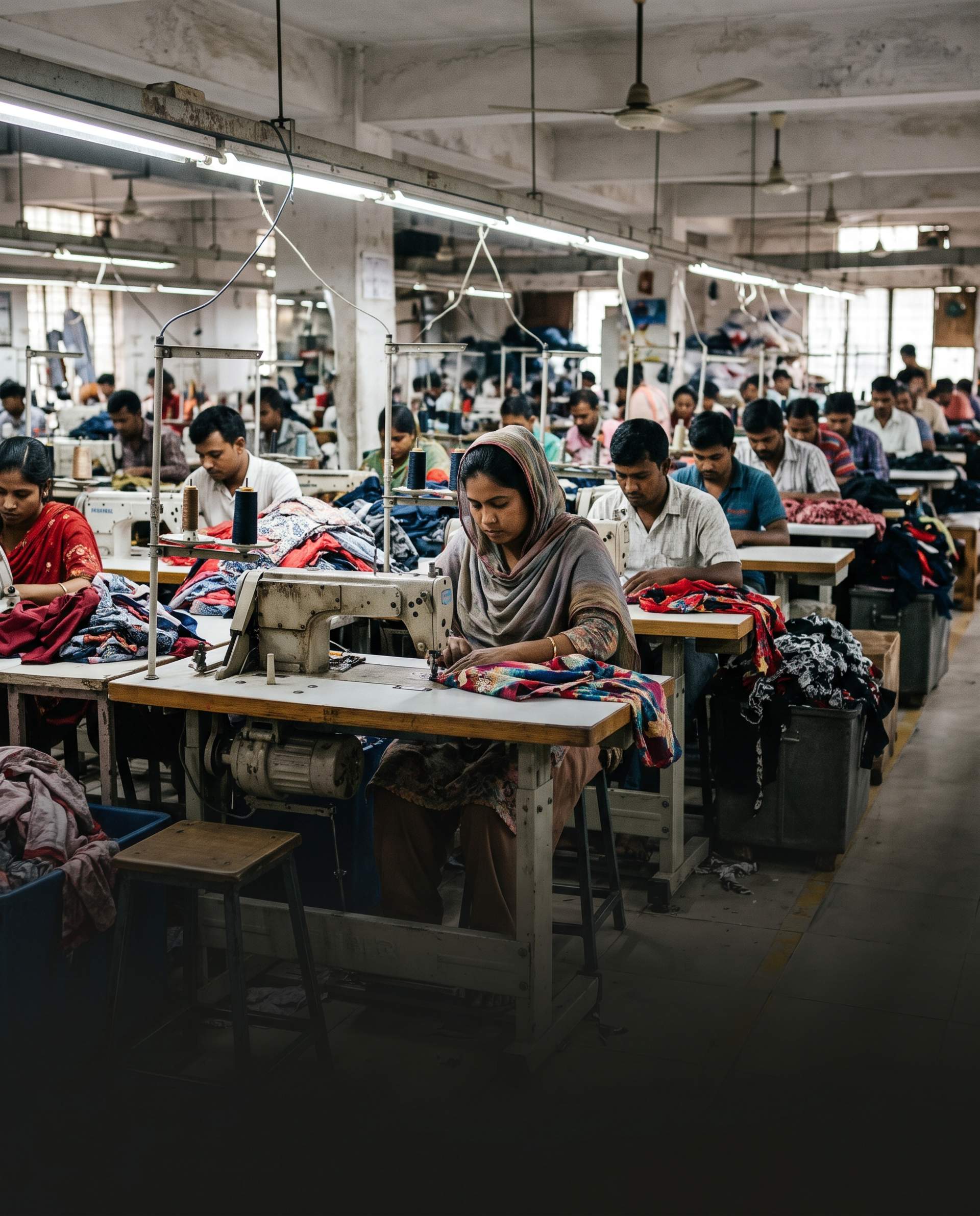
Bangladesh's garment industry is facing renewed uncertainty after a key meeting of the country's Minimum Wage Board was postponed, delaying the submission of factory owners' proposed pay structure while workers continue demanding higher wages. The dispute is adding pressure to an export industry that employs millions of people and plays a central role in the country's economy.
The third meeting of the Minimum Wage Board was scheduled for November 16, 2026, at the Department of Labour in Dhaka. Factory owners' representatives were expected to present their proposed minimum wage structure. However, the meeting was postponed after a permanent workers' representative, Anwar Hossain, became ill and was admitted to hospital.
The postponement left the board without the employers' proposal and frustrated workers' representatives, who had been waiting for the next stage of negotiations. On November 17, the board announced that the postponed meeting would take place on November 23 at 11:30am.
Workers and factory owners remain far apart
The central disagreement concerns how much garment workers should receive as a minimum monthly wage.
At the board's second meeting on November 9, workers' representative Babul Akhter proposed a minimum monthly wage of Tk 32,000. Workers' organisations have argued that rising food prices, housing costs, healthcare expenses and other household costs have made higher pay necessary.
Some labour groups have also advanced a Tk 30,000 demand. These proposals reflect the pressure on workers' living standards, although the final wage will depend on the board's assessment and the recommendations it makes to the government.
The existing minimum monthly wage for garment workers is Tk 12,500. It was announced in November 2023 and came into effect the following month.
Factory owners have not yet formally presented their proposal to the board. Media reports before the postponed meeting indicated that manufacturers were considering a substantially lower starting figure than the workers' demand. Those discussions should not be treated as an approved or formally submitted offer.
The difference between the positions illustrates the challenge facing the wage-setting process: workers want an increase that addresses living costs, while manufacturers are concerned about production expenses and their ability to compete in international markets.
Factory closures add pressure
The wage dispute is taking place alongside serious disruption in several garment-producing areas, including Gazipur, Savar and Ashulia.
According to reporting by The Business Standard on November 17, the number of factories declared indefinitely closed had reached 98, while production was suspended at 128 factories on the previous day. The figures describe different categories of disruption and should not be treated as identical totals.
Factory owners have used Section 13(1) of the Bangladesh Labour Act 2006 to close factories affected by industrial unrest. The provision allows employers to declare a workplace closed in specified circumstances, with consequences for workers' wages during the closure.
Protests, work stoppages and road blockades have also affected industrial areas. In Gazipur, workers blocked roads while demanding higher monthly pay. Police used tear gas and sound grenades to disperse protesters, according to local reporting.
The dispute has also involved serious human consequences. A worker injured during an attack on a factory in Ashulia earlier in November died while receiving treatment at Dhaka Medical College Hospital on November 16, The Business Standard reported.
These developments underline that the wage negotiations are not simply an administrative disagreement. The outcome affects workers' income, factory operations, employment security and the wider industrial environment.
International buyers are watching the disruption
Bangladesh is one of the world's major garment-exporting countries, supplying clothing to international retailers and brands. Factory interruptions therefore have implications beyond individual industrial areas.
The Business Standard reported that international buyers had been seeking updates from suppliers about when normal production would resume. A factory owner quoted anonymously by the newspaper said a major buyer had asked when conditions were likely to stabilise and had indicated that some orders could be reduced if disruption continued.
Such concerns matter because international apparel orders depend on production schedules, shipment deadlines and reliable supplier relationships. A prolonged interruption can create uncertainty for manufacturers and buyers alike.
However, the reported concerns do not establish that Bangladesh has experienced a nationwide cancellation of garment orders. The impact will depend on how long disruption lasts, which factories are affected and whether suppliers can meet delivery commitments.
What happens next?
The rescheduled November 23 meeting is now an important date for the wage process. Employers are expected to present their proposal, allowing the board to consider the positions of workers and manufacturers.
The board must balance the need for better worker incomes with the financial conditions of an industry operating in a competitive international market. Its recommendation will also need to be assessed against the practical costs of implementing a revised wage structure.
The industry associations have called for the process to move quickly. The new wage structure had previously been expected to take effect from December 1, 2026, making the timetable increasingly important for employers and workers.
For garment workers, the central question is whether the negotiations will produce a wage that better reflects the cost of living. For manufacturers, the concern is whether a new pay structure can be implemented without further weakening production and export competitiveness.
The November 23 meeting may not settle every disagreement, but it should provide a clearer indication of the employers' position and the next stage of negotiations.

Comments
0