


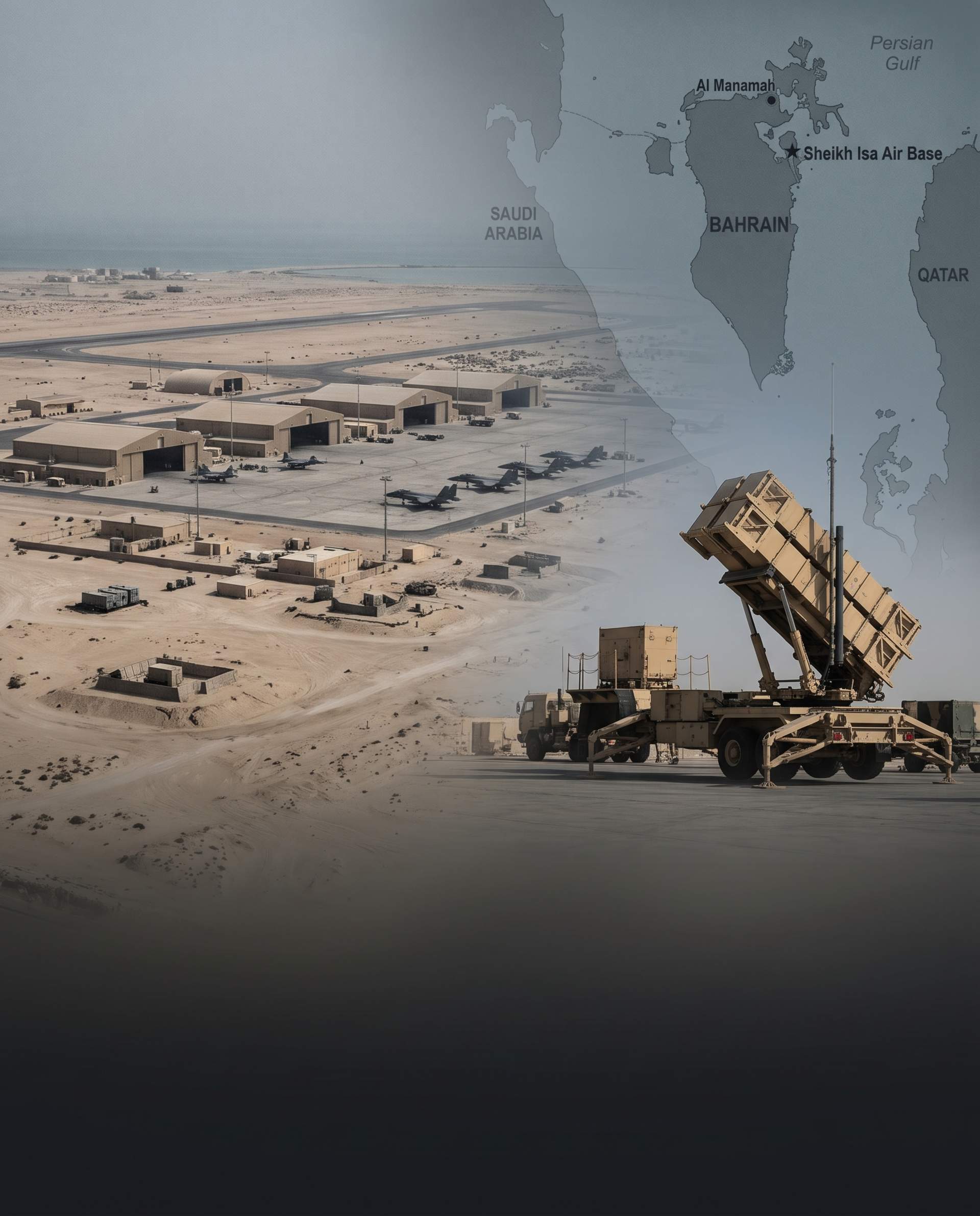
Bahrain said its air defences intercepted Iranian aerial attacks on Tuesday, November 17, after Iran's Islamic Revolutionary Guard Corps (IRGC) claimed it had launched drones targeting a United States military radar system at Sheikh Isa Air Base.
The latest incident highlights the continuing regional security risks surrounding the conflict between Iran, the United States and Israel, with Gulf countries increasingly exposed to military threats and disruptions.
Bahrain's state television reported that the country's air defences had intercepted the attacks. The Iranian Revolutionary Guards, meanwhile, said their drones had targeted a US military radar installation at the air base.
The two developments establish that Bahrain reported interceptions and Iran claimed a specific target. They do not independently establish that the radar system was damaged.
Reuters reported that Bahrain had warned residents of a potential threat before later issuing an all-clear notification.
What happened on Tuesday?
The IRGC said its combat drones conducted an operation against a US military radar system at Sheikh Isa Air Base.
Iranian officials described the operation as retaliation for what they called repeated violations of Iranian airspace by American military drones.
The claim was carried by Iranian state media.
Bahrain's response focused on the interception of incoming aerial threats. Its state television reported that the country's air defences had acted against the attacks, while authorities issued public safety warnings.
The Interior Ministry urged residents and citizens to move to the nearest safe location after announcing a potential threat.
It subsequently issued an all-clear message.
Anadolu Agency also reported the interception and the sequence of public safety announcements.
The available reporting does not establish the full number of drones involved in Tuesday's incident or provide independently confirmed evidence that the targeted radar system was hit.
That distinction matters because military statements during an active conflict can contain claims that cannot immediately be verified.
Why Bahrain matters to the conflict
Bahrain occupies an important strategic position in the Gulf.
The country hosts the United States Navy's Fifth Fleet, making it a significant part of Washington's regional military presence.
Facilities associated with American operations in Bahrain therefore have wider significance for security in the Middle East.
Any threat involving military installations can create pressure on the United States and its regional partners, even when defensive systems successfully intercept incoming weapons.
The incident also illustrates how the conflict can affect countries that are not necessarily the main parties to a particular military operation.
For Bahrain, the immediate priorities include protecting residents, securing important facilities and preventing attacks from escalating into a broader domestic security crisis.
For Washington, the presence of military personnel and equipment across the Gulf means that threats against regional installations remain a continuing operational concern.
A pattern of reported attacks
Tuesday's incident followed earlier Iranian claims involving American radar facilities in Bahrain.
The IRGC had previously claimed attacks against radar-related targets, including an installation at the Al-Riffa helicopter base.
Bahrain said it intercepted aerial attacks during earlier incidents.
The United States also reported intercepting Iranian drones in a previous episode and denied that a radar facility had been hit.
These separate incidents should not be combined into one attack. Each has its own reported timing, claimed target and official response.
Nevertheless, the repeated threats demonstrate the importance of air-defence systems and early-warning infrastructure in the current conflict.
Radar systems are essential for detecting and tracking incoming aircraft, missiles and drones. Damage to such facilities could affect the ability of military forces to identify threats and coordinate defensive operations.
However, the effectiveness of an individual system cannot be assessed from the claims made about a particular attack alone.
Regional security and the economic consequences
The military confrontation is taking place in a region that is central to global energy transportation.
The Strait of Hormuz is particularly important because a substantial share of international oil shipments passes through the narrow waterway.
Reuters has reported increasing concerns over maritime security, tanker attacks and interference with navigation systems during the wider conflict.
Disruptions in this area can affect energy prices, shipping costs and the confidence of businesses that depend on reliable transportation routes.
Gulf governments therefore face a challenge that extends beyond military defence.
They must protect critical infrastructure, maintain confidence in their economies and prevent security incidents from disrupting international trade.
Even an intercepted attack can create uncertainty for aviation, shipping, insurance and investment decisions.
The consequences depend on the scale and duration of the threat, rather than simply whether a weapon reaches its intended target.
Diplomatic efforts remain important
The latest attack claims also come amid diplomatic discussions aimed at preventing the conflict from expanding further.
Reuters reported that Iranian Foreign Minister Abbas Araqchi met Omani Foreign Minister Badr Albusaidi to discuss the protection of maritime corridors, restoring dialogue and preventing escalation.
Oman has historically played a diplomatic role in communication between regional and international actors.
Such discussions are important because military incidents can increase the risk of miscalculation.
A drone attack, interception or disputed claim can trigger additional military responses if governments interpret the event as a direct escalation.
Diplomatic communication can help establish what happened, clarify intentions and create opportunities to prevent further confrontation.
What happens next?
Bahrain's immediate task is to maintain security around military and civilian facilities while ensuring that residents receive accurate public safety information.
The United States and its regional partners will also be monitoring threats against their installations.
For now, the reported interception does not establish that the targeted radar system was damaged.
The larger concern is the repeated targeting claims and the possibility that further incidents could expand the conflict across the Gulf.
The next important developments will include any independently confirmed damage assessment, further military statements and progress in regional diplomatic discussions.




Comments
0