


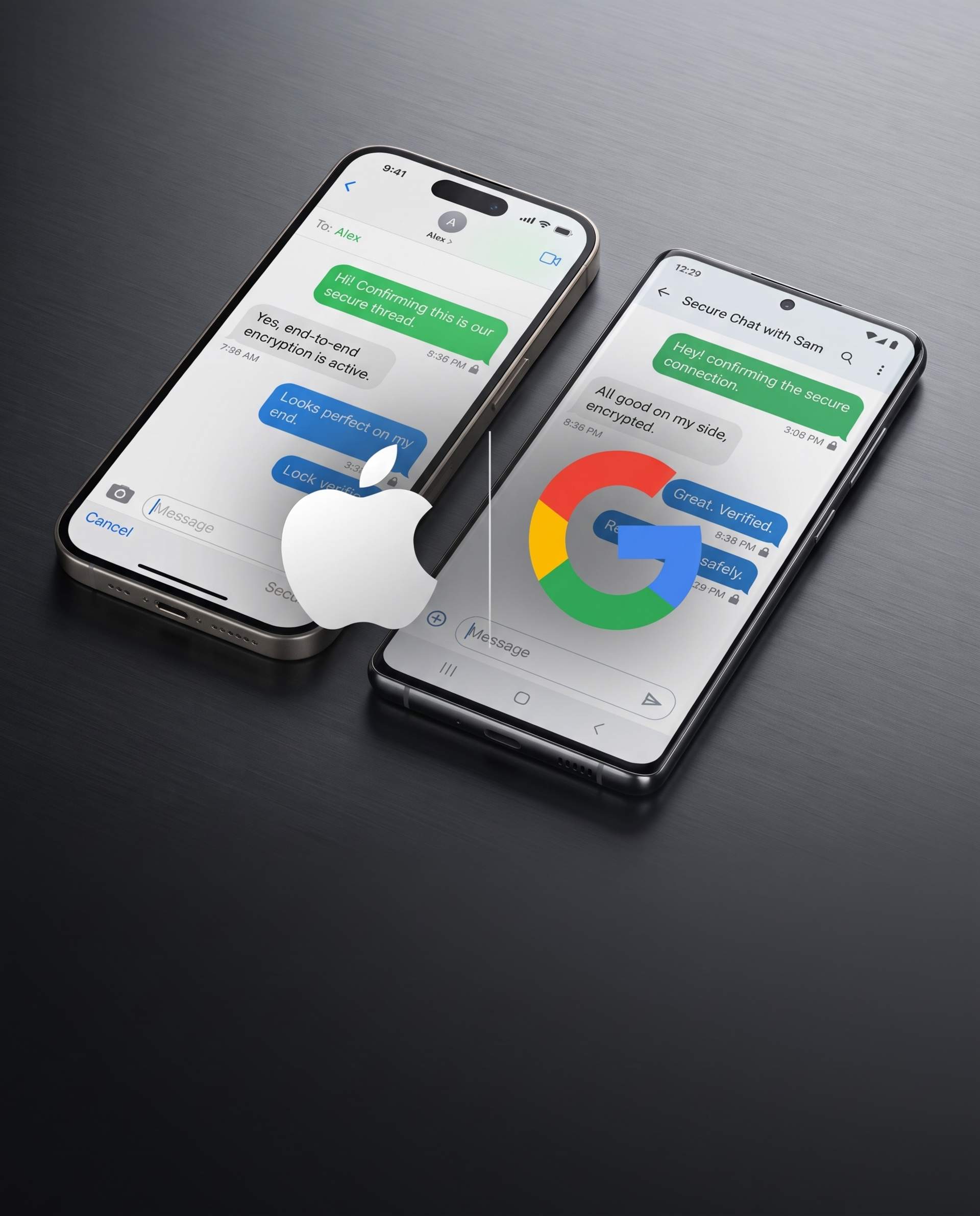
In a historic collaboration brokered by the GSM Association, technology rivals Apple and Google have finalized an interoperable cryptographic protocol that introduces universal end-to-end encryption for Rich Communication Services messaging between iPhone and Android devices.
The landmark agreement closes a glaring, decades-old security vulnerability in global consumer telecommunications. While both tech giants have long provided encrypted communications within their own respective ecosystems, text messaging between different operating systems historically downgraded to insecure, unencrypted SMS and MMS protocols, leaving billions of messages exposed to interception by cellular network carriers, foreign intelligence agencies, and wireless network eavesdroppers.
Closing the Cross-Platform Privacy Gap
The adoption of Rich Communication Services, commonly known as RCS, initially solved long-standing consumer complaints regarding low-resolution photo sharing, missing read receipts, and broken group chats between iPhone and Android users. However, early cross-platform RCS implementations still lacked a unified encryption framework that could bridge proprietary operating system boundaries.
Google had previously layered proprietary end-to-end encryption onto its Messages app using the open-source Signal Protocol, but Apple's iMessage utilized its own bespoke encryption architecture. Because neither company permitted the other direct access to its cryptographic keys, chats between green-bubble and blue-bubble users remained unencrypted during transit across cellular carrier towers.
The newly ratified standard, developed in partnership with the GSMA, incorporates modern Messaging Layer Security protocols directly into the universal RCS profile. Under this framework, messages, high-resolution media attachments, and audio notes are cryptographically scrambled on the sender's device and can only be decrypted by the recipient's authenticated hardware, ensuring that neither mobile network operators nor cloud service providers can read the contents of conversations in transit.
Technical Safeguards and Key Management
Engineering teams from both companies worked for over a year to resolve intricate technical challenges surrounding decentralized cryptographic key distribution. Unlike closed third-party messaging apps like WhatsApp or Signal that control centralized user registries, carrier-based text messaging operates across thousands of independent telecommunication providers in over two hundred countries.
To preserve security without compromising device performance, the universal standard utilizes automated post-quantum key encapsulation algorithms alongside transparent cryptographic key verification. Users will be able to verify contact security keys directly within their native messaging interfaces, verifying that no unauthorized third party has inserted itself into the communication channel.
Furthermore, the cryptographic design prevents cellular carriers from inspecting metadata or logging message transcripts, curbing the commercial monetization of consumer texting habits by telecommunications brokers.
Regulatory Pressure and the Push for Open Interoperability
The breakthrough also reflects growing global regulatory scrutiny over big tech walled gardens. In the European Union, the enforcement of the Digital Markets Act put intense pressure on platform gatekeepers to make their core communication services interoperable without sacrificing user privacy.
Previous third-party attempts to reverse-engineer iMessage for Android devices often introduced significant security flaws, leaving user credentials vulnerable to rogue proxy servers. By agreeing to an open, formally audited international standard through the GSMA, Apple and Google have eliminated the need for fragile workarounds while satisfying regulatory expectations across Europe and North America.
Implications for Consumer Security Worldwide
Cybersecurity experts and digital civil liberties organizations around the world welcomed the finalized standard as a major leap forward for global communication privacy. By embedding military-grade encryption directly into default smartphone messaging clients, billions of everyday users will automatically receive robust privacy protections without needing to download, configure, or manage third-party software.
Security analysts note that while the universal encryption standard protects text and media in transit, endpoint security remains vital. Users must continue safeguarding their devices against physical theft and spyware, as encrypted messages can still be read if a physical device is unlocked or compromised by malicious software. Even with those caveats, the joint rollout represents one of the largest coordinated security upgrades in the history of consumer telecommunications.
Software updates rolling out across both operating systems over the coming months will activate universal end-to-end encryption by default for all supported carrier networks worldwide, establishing an uncompromising standard of digital privacy across the modern smartphone ecosystem.



Comments
0