


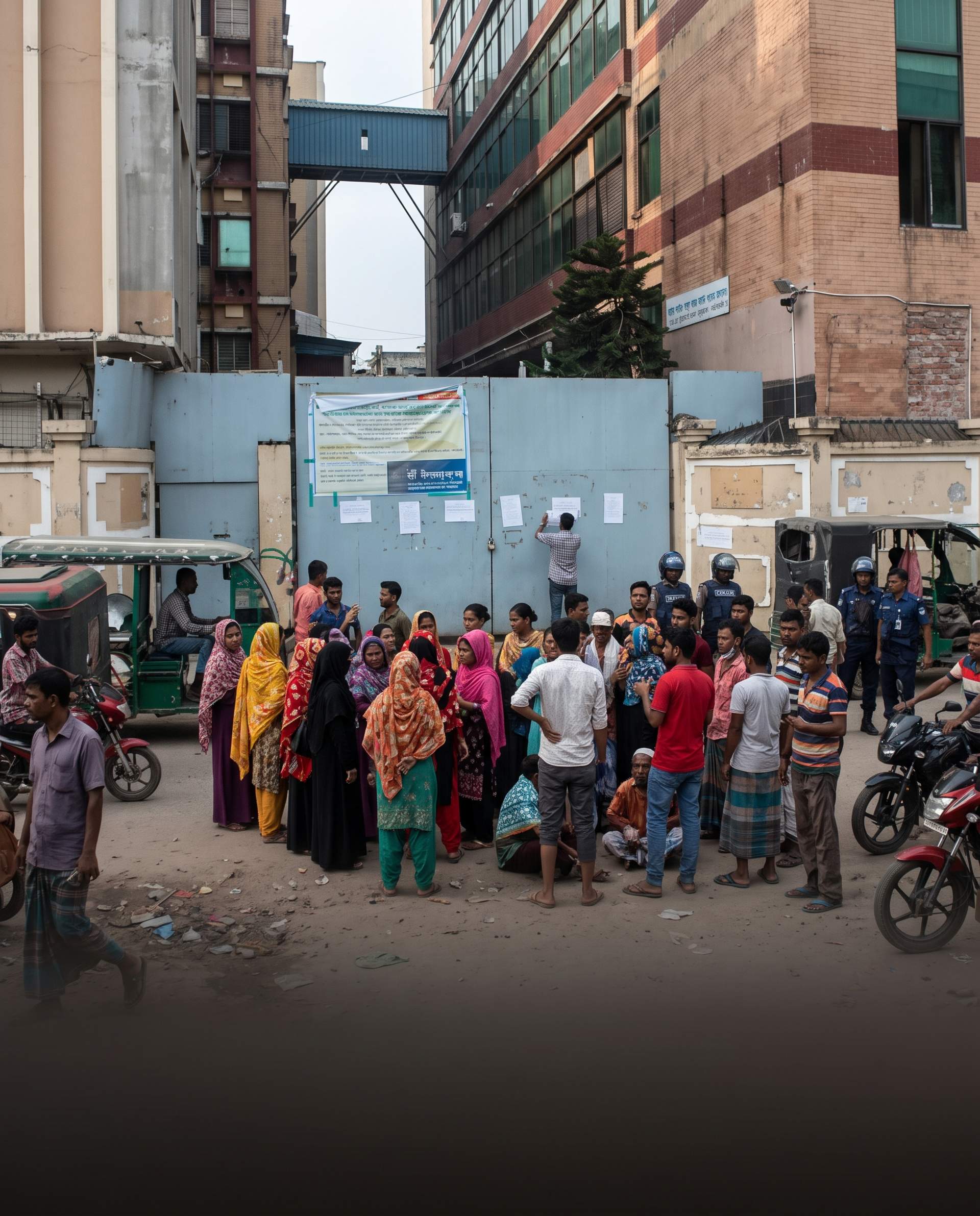
Thirteen garment factories in Bangladesh's Gazipur industrial area have declared indefinite closures amid continuing labour unrest, as a dispute over minimum wages puts further pressure on the country's vital apparel industry.
The closures took effect on Sunday, November 15, affecting factories in the Mouchak and Konabari areas. Five additional factories announced a one-day general holiday, according to local authorities and industrial police cited by The Business Standard.
The latest developments come as garment workers continue demanding higher wages and factory owners struggle to maintain production amid demonstrations and work stoppages.
Twenty-five platoons of law enforcement personnel have been deployed across Gazipur's industrial areas to maintain order and protect factories. The deployment includes 13 platoons of Border Guard Bangladesh, five platoons of Ansar and eight platoons of the Special Response Battalion, alongside 25 executive magistrates.
Closures affect a limited number of Gazipur factories
According to Gazipur Industrial Police, the 13 factories were closed under Section 13(1) of the Bangladesh Labour Act, 2006, following continued labour unrest and interruptions to production.
Superintendent of Police of Gazipur Industrial Police Amjad Hossain said the factories could reopen once the situation improved.
Despite the closures, production continues at most factories across the district's industrial belt. Gazipur has approximately 2,300 garment factories, meaning the 18 factories reporting indefinite closures or a one-day holiday represent only a small portion of the district's industrial base.
The situation nevertheless highlights the potential for localised labour disputes to disrupt production and transportation in one of Bangladesh's major manufacturing centres.
Workers demand Tk 32,000 minimum wage
The dispute centres on demands for a substantial increase in the minimum monthly wage.
Workers' representatives on the Minimum Wage Board have proposed a minimum monthly salary of Tk 32,000 for garment workers, compared with the existing minimum of Tk 12,500.
The proposal was submitted at the board's second meeting on November 9. Workers have argued that rising living costs, including housing, food, healthcare and education expenses, have made the existing wage structure increasingly difficult to sustain.
The employers' representatives did not submit their counterproposal at that meeting and requested additional time.
Wage negotiations scheduled for Monday
The next meeting of the Minimum Wage Board is scheduled for Monday, November 16, at 11am at Shrom Bhaban in Dhaka's Bijoynagar area.
According to an official notice reported by Bangladesh Sangbad Sangstha, the employers' representative is expected to submit a written proposal outlining the industry's position on minimum wages.
The meeting will also discuss recommendations covering workers and employees across different categories in the garment industry.
The Bangladesh Garment Manufacturers and Exporters Association and the Bangladesh Knitwear Manufacturers and Exporters Association have warned that continued unrest and factory security concerns could affect their participation in subsequent negotiations.
Why the dispute matters to Bangladesh's economy
Bangladesh's ready-made garment industry is central to its export economy, employing approximately four million people and generating more than 80% of the country's export earnings, according to Reuters.
The continuing dispute therefore has implications beyond individual factories and their workers.
Extended production interruptions could affect manufacturing schedules, shipment deadlines and relationships with international clothing buyers.
For workers, prolonged factory closures also create immediate financial uncertainty, particularly where wages are not payable during qualifying closures under Section 13(1) of the labour law.
The provision allows employers to close an establishment or part of it in the event of an illegal strike, with participating workers not entitled to wages during the closure.
What happens next?
Monday's Minimum Wage Board meeting could become an important turning point in the dispute if employers submit their long-awaited proposal.
However, the submission of a proposal would not automatically settle the disagreement. The board must still consider the competing positions and formulate its recommendations.
For now, the immediate priorities are restoring normal factory operations, maintaining security in industrial areas and keeping negotiations moving.
The coming days will be important in determining whether Bangladesh's garment industry can avoid further disruption while addressing workers' demands for higher wages.

Comments
0