


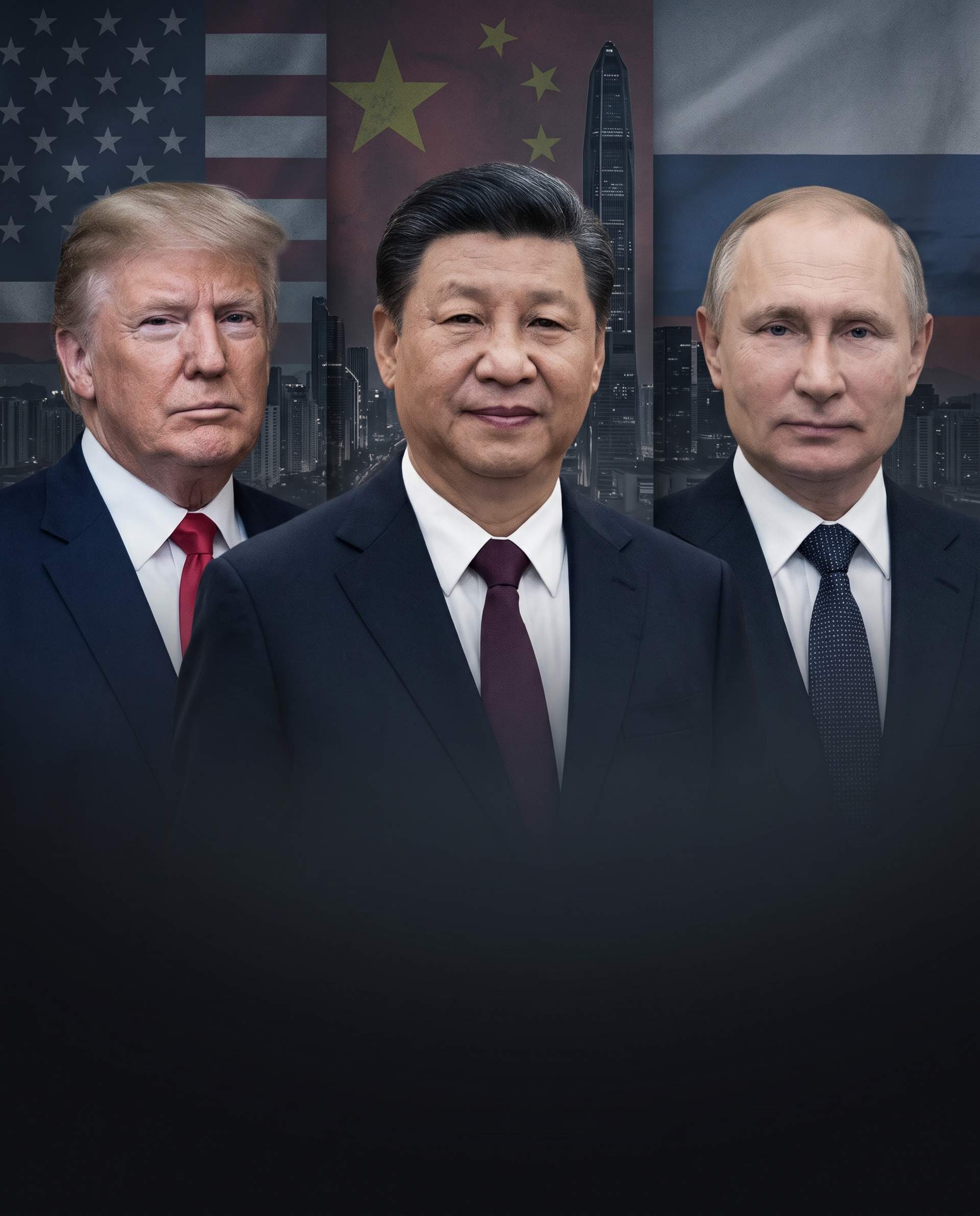
US President Donald Trump, Chinese President Xi Jinping and Russian President Vladimir Putin are expected to hold their first three-way meeting during the Asia-Pacific Economic Cooperation (APEC) summit in Shenzhen, China, on November 19, 2026. The planned gathering could become an important diplomatic moment as tensions over international trade, nuclear security, regional conflicts and the future of global cooperation continue to shape relations between major powers.
The meeting was confirmed by officials from the United States and Russia ahead of the summit. Chinese officials have also described the planned gathering as an important opportunity for international dialogue.
The discussions are expected to take place during a period of considerable geopolitical uncertainty. Washington, Moscow and Beijing have different interests in several major international disputes, making the possibility of direct communication between their leaders particularly significant.
However, the announcement of a meeting does not establish that the three governments have reached any agreement. Its actual diplomatic consequences will depend on the issues discussed and whether the leaders can identify areas of practical cooperation.
Why the meeting matters
The United States, China and Russia are three major powers with substantial influence over international security, economic policy and diplomacy.
Their relationship affects international trade, military competition, nuclear arms control, energy markets and the security calculations of other countries.
A direct meeting involving all three presidents could therefore attract attention well beyond the APEC summit itself.
The three governments do not share identical strategic objectives. The United States has longstanding disagreements with both China and Russia, while Beijing and Moscow have developed closer political and economic cooperation in recent years.
A trilateral meeting creates an opportunity to discuss these differences directly, but it also highlights the difficulty of building common positions among countries with competing interests.
For smaller and middle-sized countries, the outcome could matter because decisions taken by major powers can influence international institutions, regional security and economic relationships.
Nuclear security is expected to be an important issue
One of the issues associated with the planned meeting is nuclear arms reduction.
The White House has indicated that Trump wants to discuss reducing nuclear arsenals during the trilateral talks.
Nuclear arms control has become increasingly important as the international security environment changes and established agreements face uncertainty.
The United States and Russia possess the world's largest nuclear arsenals, while China has been expanding its nuclear capabilities.
However, bringing the three countries into a common arms-control framework would be difficult.
The governments have different nuclear doctrines, security concerns and expectations about what a future agreement should cover.
China has previously resisted American pressure to participate in negotiations structured around existing US-Russian arms-control arrangements.
A successful discussion would therefore require more than a general commitment to peace. It would need agreement on the purpose of negotiations, the countries' responsibilities and the mechanisms that could make any future commitments meaningful.
The planned meeting could create an opening for dialogue, but there is no confirmed trilateral nuclear agreement at this stage.
Ukraine and Iran remain difficult diplomatic questions
The meeting is also taking place against the background of continuing international conflicts.
Russia's war in Ukraine remains a major source of disagreement between Moscow and Western governments. Any discussion involving Putin and Trump is likely to be examined for possible implications for diplomatic efforts surrounding the conflict.
However, officials cited in reporting before the summit indicated that Ukraine was not expected to be a principal subject of the trilateral discussion.
That does not mean the war is irrelevant to the wider diplomatic environment. European governments and Ukraine will continue to assess whether any discussions between Washington, Moscow and Beijing could affect negotiations or security arrangements.
The conflict involving Iran is another issue connected to the planned talks.
Trump has indicated an interest in raising the Iran conflict, adding another complicated subject to an already ambitious diplomatic agenda.
China has important economic and diplomatic interests in the Middle East, while Russia also maintains strategic relationships in the region.
Their positions do not automatically align with Washington's objectives, meaning that any discussion of Iran could reveal both opportunities for communication and substantial differences.
Why Shenzhen is an important setting
The meeting is expected to take place in Shenzhen, a major Chinese technology and commercial centre.
The city has become an important symbol of China's economic transformation and industrial development.
Hosting a major international gathering there gives Beijing an opportunity to present itself as a significant diplomatic and economic centre.
The wider APEC summit will bring together political leaders and business representatives from across the Asia-Pacific region.
Trade tensions are expected to feature prominently in the discussions, particularly following changes in American tariff policy and the responses of other major economies.
Business leaders from major Chinese and American companies are also expected to participate in summit-related activities.
Their presence highlights the relationship between international diplomacy and commercial interests. Governments may disagree over security and trade policy while businesses continue to seek access to markets, investment opportunities and supply chains.
What China, Russia and the United States want
Each leader enters the proposed meeting with a different set of priorities.
For Trump, the meeting offers an opportunity to pursue direct diplomacy with two major international rivals and promote his administration's positions on nuclear security and international conflicts.
For Xi, hosting the leaders in China strengthens Beijing's diplomatic visibility and provides an opportunity to discuss economic cooperation and the international order.
For Putin, direct engagement with the American and Chinese presidents offers an important diplomatic platform at a time when Russia continues to face the consequences of its war in Ukraine and international sanctions.
The three leaders may find areas of common interest, particularly in economic cooperation and maintaining channels of communication.
Nevertheless, major disagreements remain over international security, trade, military influence and the rules governing relations between states.
What the world should watch
The most important question is whether the meeting produces concrete outcomes or remains largely symbolic.
Statements about cooperation and international stability may have diplomatic value, but their practical importance depends on what follows.
Observers will be watching for any specific commitment on nuclear negotiations, developments concerning Iran, discussions about trade and signals regarding the wider international security environment.
The positions taken by the three governments will also matter to countries that are not directly represented in the meeting.
For Asian economies, changes in US-China relations could affect investment, manufacturing and international trade. For European countries, discussions involving Russia and Ukraine could have important security implications.
For Bangladesh and other developing economies, the wider direction of relations between the major powers matters because trade conditions, energy markets and international economic stability are influenced by geopolitical decisions.
The November 19 meeting is therefore important not simply because three powerful leaders are expected to sit together, but because their decisions and disagreements could influence international affairs well beyond the summit.
Until the meeting takes place and its outcomes are confirmed, however, any suggestion that a major geopolitical agreement has already been reached would be premature.



Comments
0