


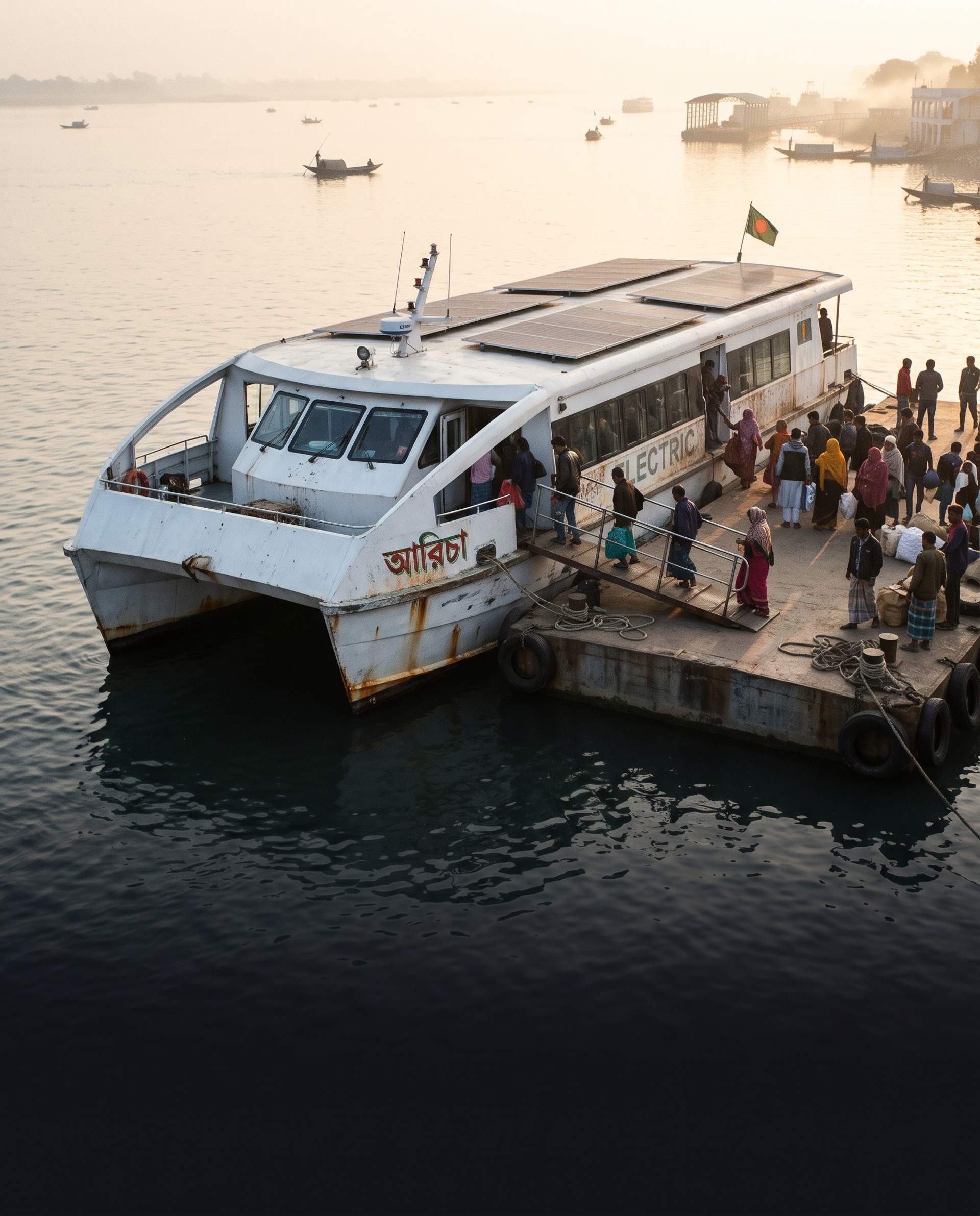
In a historic step toward modernizing Bangladesh's extensive riverine transit network and combating aquatic environmental degradation, the Bangladesh Inland Water Transport Authority has officially launched the nation's first commercial fleet of zero-emission electric passenger and vehicle catamaran ferries along vital river crossing routes.
The landmark green maritime project, inaugurated at the Aricha-Daulatdia river terminal, introduces four custom-built aluminum-hull catamarans powered by advanced lithium-iron-phosphate battery packs and high-efficiency permanent magnet electric propulsion motors. Operating across the expansive waters of the Padma and Jamuna river channels, each electric vessel is capable of transporting up to three hundred passengers and thirty light motor vehicles silently across the river without generating a single puff of diesel exhaust or dropping a trace of engine oil into delicate river ecosystems.
Replacing Polluting Diesel Engines on Historic Waterways
Inland water navigation has served as the cultural and commercial lifeblood of Bangladesh for centuries, carrying millions of rural commuters, traders, and agricultural goods daily across the country's seven hundred rivers. However, traditional river ferries and passenger launches rely on aging, low-efficiency heavy diesel engines that consume millions of liters of subsidized fuel annually.
These older vessels release thick plumes of black particulate soot into the atmosphere and regularly discharge toxic bilge oil directly into river currents, severely harming riverine fish populations, including endangered Gangetic dolphins and hilsha breeding schools. The newly deployed electric catamarans eliminate these environmental hazards entirely, replacing noisy internal combustion engines with whisper-quiet electric thrusters that generate zero localized emissions and create minimal wake wash to prevent riverbank erosion.
High-Speed Mega-Watt Charging Terminals at River Ghats
To support high-frequency scheduled ferry crossings throughout the day, the Ministry of Shipping constructed dedicated high-power megawatt automated charging stations at participating river terminals. Designed in collaboration with national power distribution utilities, the charging gantries utilize liquid-cooled heavy-duty charging connectors that deliver up to 1.2 megawatts of electrical power directly to vessel battery banks during routine passenger embarkation and disembarkation stops.
A full twenty-minute charging cycle provides sufficient electrical energy for two complete round-trip river crossings at cruising speeds of up to twelve knots. Furthermore, the terminal charging hubs are integrated with rooftop solar photovoltaic canopies installed across passenger terminal waiting sheds, supplementing grid power with clean on-site solar electricity during daytime hours.
Slashing Commuter Travel Expenses and Operating Costs
Beyond its profound environmental benefits, the transition to electric water transport delivers compelling economic savings for both terminal operators and daily commuters. Marine propulsion engineers confirmed that running a commercial catamaran on electricity cuts energy operating expenses by more than sixty percent compared to conventional marine diesel.
With electric motors possessing far fewer moving parts than diesel engines, ongoing maintenance and lubricating oil expenses drop by nearly seventy percent, virtually eliminating engine breakdown delays that frequently disrupt river travel during winter fog season. In response to these operating cost reductions, the BIWTA has announced a fifteen percent reduction in standard commuter passenger fares across electric routes, providing immediate economic relief to rural working families and traders.
A Comprehensive Blueprint for Green River Transit
The four inaugural catamarans represent the initial phase of a comprehensive national river electrification roadmap formulated under the Riverine Green Fleet Initiative. Over the next five years, the BIWTA plans to deploy over forty electric ferries across twenty-two major river crossing points, including routes connecting Chandpur, Barishal, Bhola, and Narayanganj.
Domestic shipbuilding yards in Narayanganj and Chattogram, which constructed the aluminum hulls in partnership with international electric propulsion designers, have demonstrated that local shipwrights can master cutting-edge marine electrification technologies. By pioneering clean electric river transit, Bangladesh is demonstrating how traditional waterway networks can be revitalized into modern, sustainable, and affordable transportation corridors for the twenty-first century.

Comments
0