


Political tensions intensified in Bangladesh's Gopalganj district after supporters of the activity-banned Awami League staged an armed demonstration, prompting the government to hold high-level security meetings and increase law-enforcement deployments.
The developments have placed renewed attention on the country's political stability as former prime minister Sheikh Hasina continues to express her intention to return to Bangladesh from India in December. Authorities are monitoring the situation while warning against further violence and attempts to disrupt public order.
According to reporting by Prothom Alo and The Business Standard on November 16, the government held two high-level meetings over the preceding two days to assess the security situation. Officials discussed the activities of Awami League supporters, the response of local authorities and measures needed to prevent further unrest.
Home Minister Salahuddin Ahmed said law-enforcement agencies were handling the situation patiently but would take action in accordance with the law if political activities crossed established limits.
What happened in Gopalganj?
The immediate tensions followed demonstrations by Awami League activists in Gopalganj on November 15. Reports described groups of protesters carrying locally made weapons, including sticks, oars and machetes, during marches in the district.
Prothom Alo reported that demonstrators damaged police facilities and memorial structures. The protests also involved damage to the July Memorial and a nameplate at Hadi Chattar.
A separate report by the Press Trust of India, published by NDTV on November 16, described attacks on police installations and vehicles, including the burning of an armoured personnel carrier and vandalism at a police outpost.
The demonstrations followed overnight arson attacks on two offices of the ruling Bangladesh Nationalist Party in Tungipara, according to the PTI report. The perpetrators of those attacks were not identified in the reporting available at publication time.
The sequence of events has increased concerns about political confrontation in an area historically associated with the Awami League.
Government increases security deployment
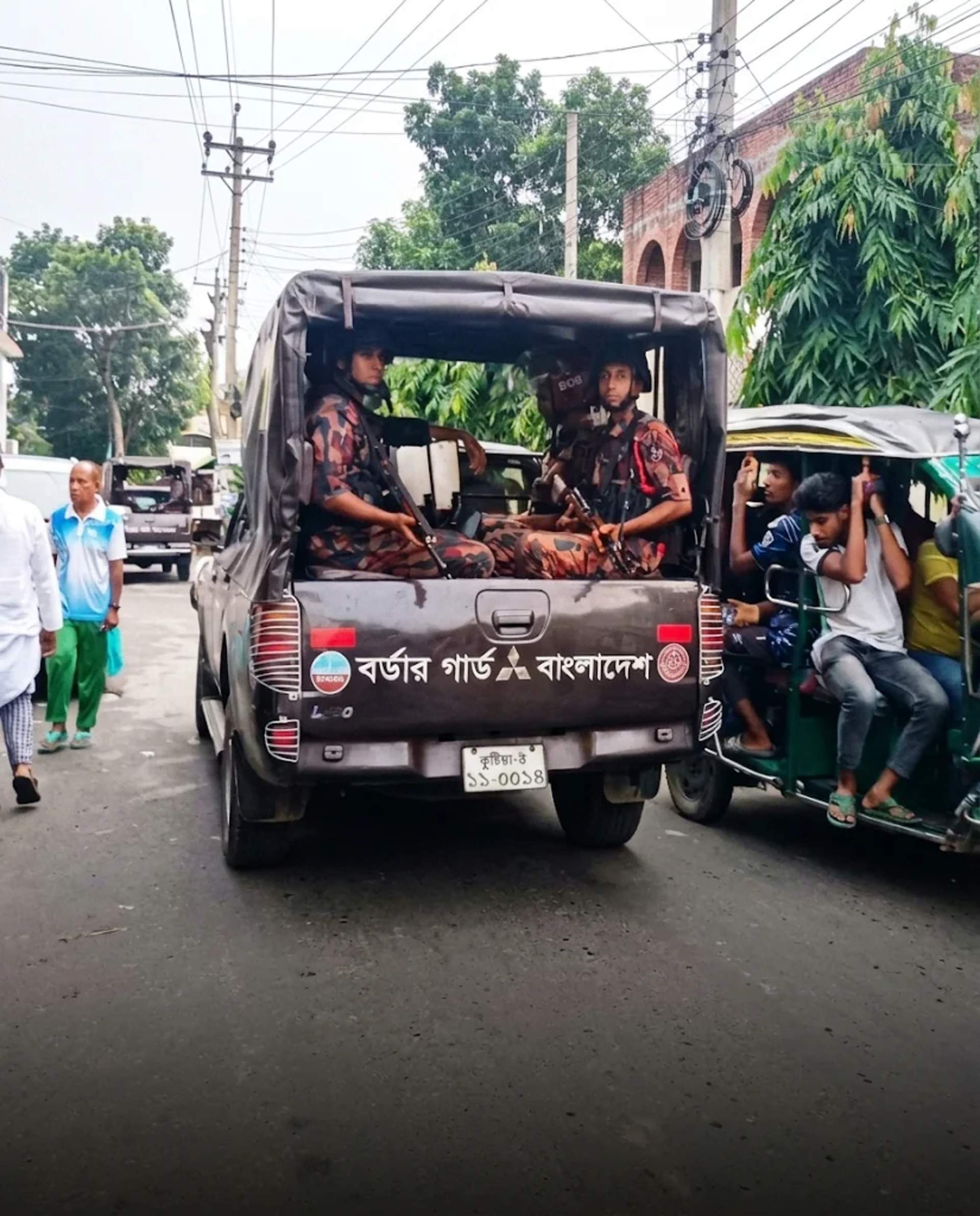
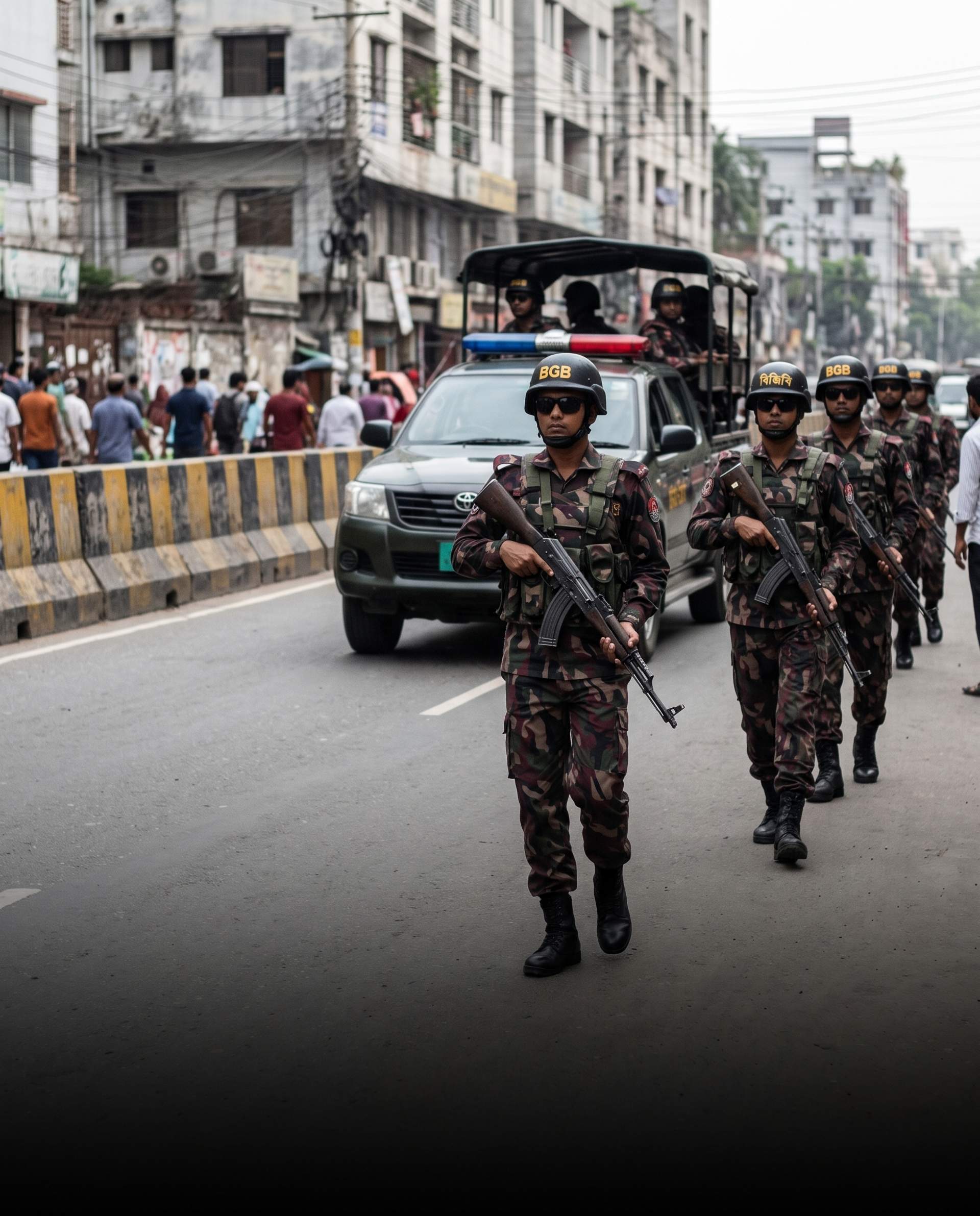
The government has responded by increasing the presence of police and Border Guard Bangladesh personnel in the district.
The Business Standard reported that six BGB platoons had been deployed, while additional police personnel were brought in from neighbouring districts. Prothom Alo also reported that the government had withdrawn the district's deputy commissioner and superintendent of police following the developments.
The decisions followed discussions about the handling of the demonstrations and the performance of local administration and police officials.
Authorities have indicated that they do not want an immediate escalation involving excessive force. A senior official cited by Prothom Alo said the government was seeking to prevent casualties and property damage while retaining the option of stronger action if violence continued.
This approach reflects the difficult balance facing the authorities: maintaining public order while avoiding a response that could intensify political confrontation.
Why Sheikh Hasina's proposed return matters
The unrest is taking place amid renewed discussion about Sheikh Hasina's possible return from India.
Hasina left Bangladesh in August 2024 after a student-led uprising ended her government. She has subsequently said that she intends to return in December and face legal proceedings.
In November 2025, Bangladesh's International Crimes Tribunal sentenced her to death in absentia over crimes against humanity relating to the crackdown on protesters. Hasina has rejected the charges and the proceedings.
Bangladesh has sought her extradition from India under the two countries' bilateral arrangements. Indian officials have acknowledged receiving the requests, but New Delhi has not announced a final decision.
Bangladesh's Law Minister Md Asaduzzaman said on November 15 that the legal process for securing her return had been completed and that the decision now rested with India, according to PTI reporting.
The political significance of a possible return extends beyond the legal question. It could affect party mobilisation, security planning and the relationship between Bangladesh's political forces.
However, the current demonstrations should not automatically be interpreted as evidence that Hasina's return is imminent. The timing and circumstances of any return remain unresolved.
Political mobilisation and the coming days
The Awami League has announced a five-day programme, including a nationwide lockdown on November 19, according to The Business Standard.
The authorities will therefore face further decisions about public security, political activity and the management of possible demonstrations.
The government has said it is monitoring the situation closely. Its response will be important in determining whether the unrest remains concentrated in Gopalganj or spreads to other areas.
For residents and businesses in the district, the immediate concern is the restoration of normal daily activity. Additional security deployments may help prevent further violence, but they cannot independently resolve the political disagreements underlying the confrontation.
The coming days will test the government's ability to maintain public order while protecting lawful political expression and preventing attacks on public institutions.
The central question is whether political mobilisation can proceed without renewed violence. That answer will depend on the actions of political leaders, local organisers and law-enforcement agencies, as well as the government's handling of the wider political dispute.

Comments
0