


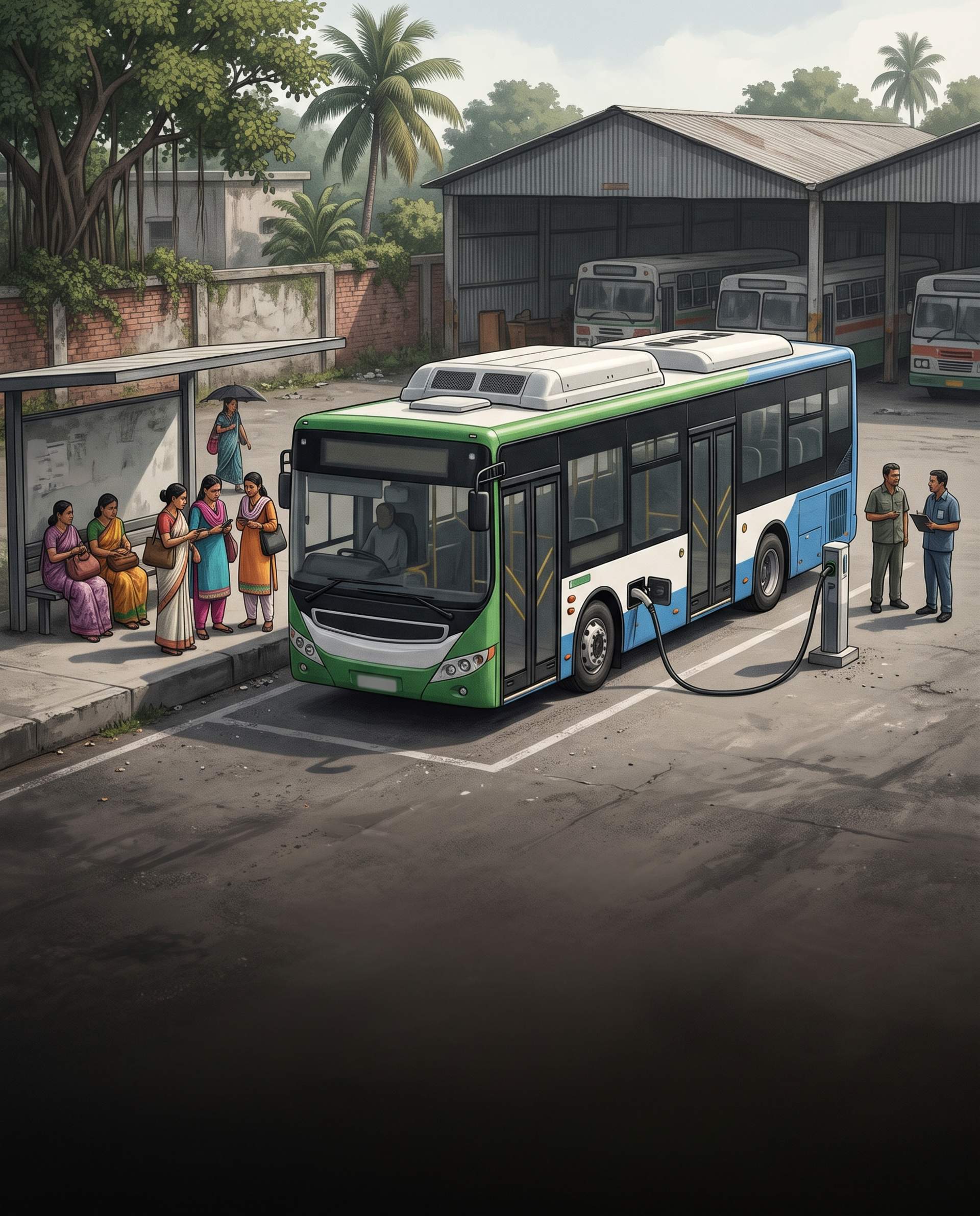
Bangladesh is moving towards the purchase of 100 electric buses intended for women passengers, with Tk400 crore allocated for the vehicles, charging stations and supporting infrastructure. The initiative is expected to expand public transport options for women, but its impact will depend on more than the number of buses purchased.
The Bangladesh Road Transport Corporation (BRTC) is expected to receive the buses by February 25, 2027. The government has assigned state-owned vehicle manufacturer Pragoti Industries to handle the procurement process, according to reporting by The Business Standard.
The allocation covers the buses and the infrastructure required to operate them. The Finance Division released the funds on October 29, while the Road Transport and Highways Division subsequently instructed BRTC to take steps to transfer the money to the corporation's Public Ledger account.
The proposal is part of a wider effort to introduce electric public transport while addressing the travel needs of women. It also raises practical questions about routes, charging facilities, procurement, passenger demand and the long-term cost of operating the fleet.
What has been approved
The government has approved Tk4 billion, equivalent to Tk400 crore, for the purchase of 100 electric buses and the associated infrastructure.
The buses are intended primarily for women commuters. The planned delivery deadline is February 25, 2027, although procurement and approval steps still need to be completed.
BRTC Chairman Mir Ahmed Tariqul Omar told The Business Standard that Pragoti Industries had been assigned responsibility for procuring the vehicles. The company had held discussions with several bus suppliers in China, according to the report.
The procurement is expected to use the Direct Procurement Method rather than a conventional open tender process. That makes transparency and clear documentation especially important. The public should be able to understand how suppliers are selected, what technical specifications are required and how the final price is determined.
The government has not yet published a complete public operating plan for the new fleet, including confirmed routes, daily service frequency and the locations of charging facilities.
Why electric buses matter
Electric buses can reduce tailpipe emissions in urban areas and may lower operating costs over time, depending on electricity prices, maintenance requirements, battery life and vehicle utilisation.
For Bangladesh, the transport case is closely connected to the energy system. The benefits of electrification depend on reliable electricity supply and charging infrastructure that can support regular service. A bus fleet cannot operate efficiently if vehicles spend too much time waiting for charging or if depots lack the capacity to manage the schedule.
The cost of the buses is only one part of the investment. Charging stations, grid connections, depot arrangements, spare parts, trained technicians and battery maintenance all affect the long-term performance of the programme.
A well-planned fleet could provide useful experience for future electric-bus projects. Poorly planned infrastructure, on the other hand, could leave expensive vehicles underused.
The importance of women’s access
The initiative is also a public transport policy directed at women commuters. Safety, comfort and reliable access are central to whether women can use public transport for work, education, healthcare and other daily activities.
A dedicated fleet can offer a specific service option, but the usefulness of that service depends on where the buses operate and when they run. A route that does not connect residential areas with employment centres, educational institutions and major transport hubs may have limited value even if the vehicles are modern.
The government should therefore publish clear information about routes, timetables, boarding arrangements and passenger feedback systems before the service begins.
Earlier women-only bus services have also raised questions about passenger demand and how households travel. Reporting on the existing service has described concerns that some women travel with male relatives or partners. BRTC has discussed whether limited arrangements for certain male family members could be considered. Any change to a women-focused service would need clear public explanation and a careful assessment of the service's original purpose.
Procurement and accountability
The decision to use direct procurement makes it particularly important to publish the process and its justification. The public investment includes not only the vehicles but also charging infrastructure and supporting facilities.
Key details should include the bus specifications, battery capacity, expected driving range, warranty terms, maintenance arrangements, delivery schedule and the total cost of ownership. These details would allow taxpayers and transport users to assess whether the purchase represents value over the full operating life of the vehicles.
The government should also disclose how the charging network will be distributed and whether the depots will be ready before the buses arrive.
The February 25 delivery target is an important milestone, but receiving the vehicles is not the same as launching a reliable service. Driver training, route planning, depot readiness and maintenance systems must be in place.
What happens next
The next stages include the procurement process, supplier selection, final purchase arrangements and preparation of charging facilities. Reporting on the initiative has indicated that procurement steps were expected to advance in November, but the final supplier and vehicle specifications should be confirmed through official documentation.
The programme will ultimately be judged by its daily performance: whether buses arrive on time, whether routes serve the people who need them, whether the vehicles remain operational and whether women feel able to use the service.
Bangladesh's plan is an opportunity to connect public transport modernisation with women's mobility. Delivering that promise will require transparent procurement and careful attention to the practical details that determine whether a new fleet becomes a dependable public service.



Comments
0