


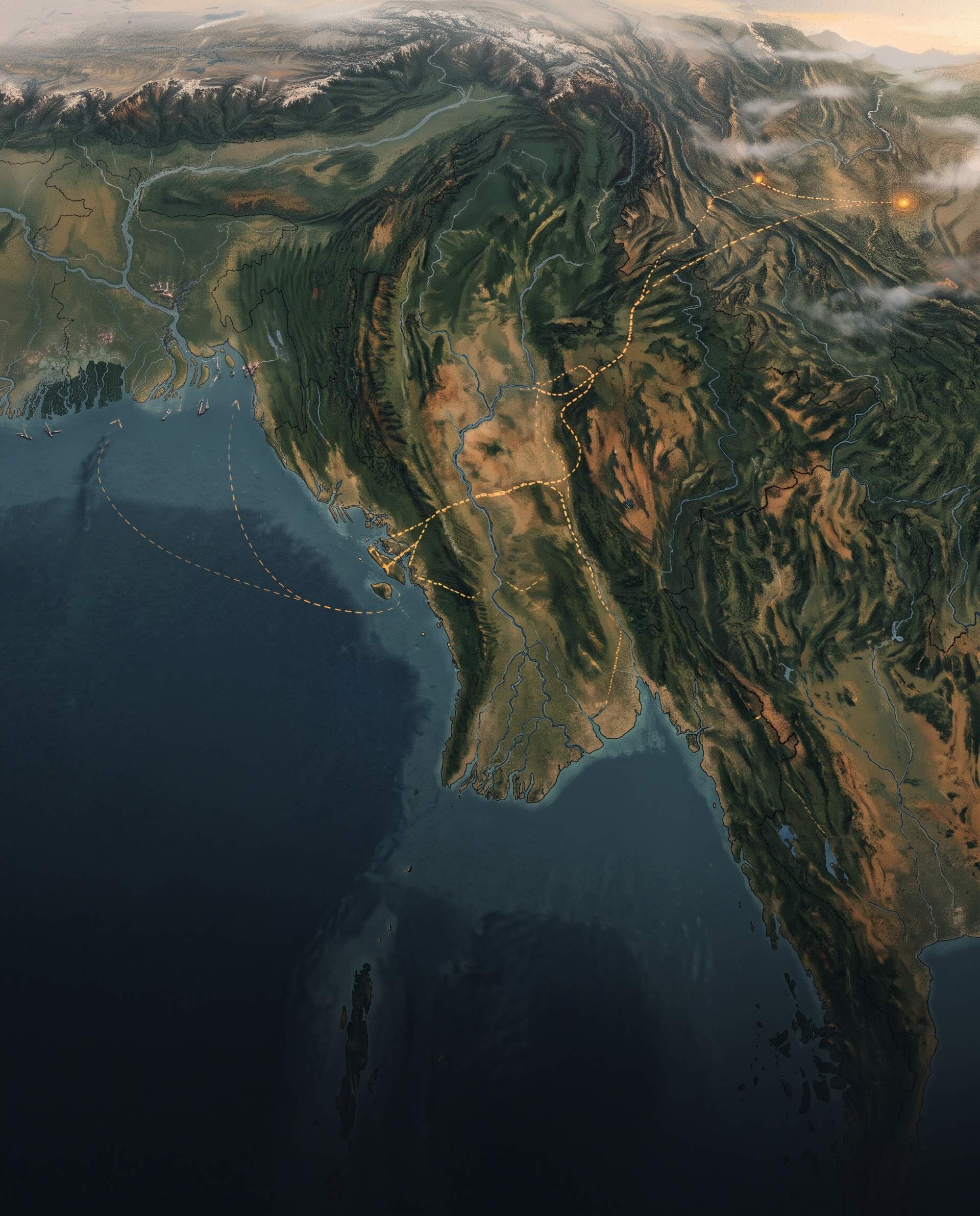
China’s proposed economic corridor linking Bangladesh, Myanmar and China has moved from a diplomatic idea to a subject of practical discussion, but its route remains unsettled. The central question is no longer simply whether a line can be drawn from China’s Yunnan province to Bangladesh. It is whether the three countries can create a safe, commercially viable transport network through a part of Myanmar where control of territory and access to ports remain contested.
The proposal was raised on June 26, 2026, when Chinese President Xi Jinping met Bangladesh Prime Minister Tarique Rahman in Beijing. The Prime Minister’s Office said China had proposed an economic corridor through Myanmar to deepen regional connectivity, trade and economic cooperation. China’s public statement after the meeting also referred to advancing the China-Myanmar-Bangladesh Economic Corridor.
The route described by Beijing
The initial outline reported by Prothom Alo begins in Kunming, the capital of China’s southwestern Yunnan province. From there, the land connection would run through Ruili and Muse on the China-Myanmar border, continue to Mandalay and reach Kyaukphyu in Rakhine State. Kyaukphyu is the coastal endpoint of major Chinese infrastructure interests, including a deep-sea port project and an existing oil and gas pipeline connection to Yunnan.
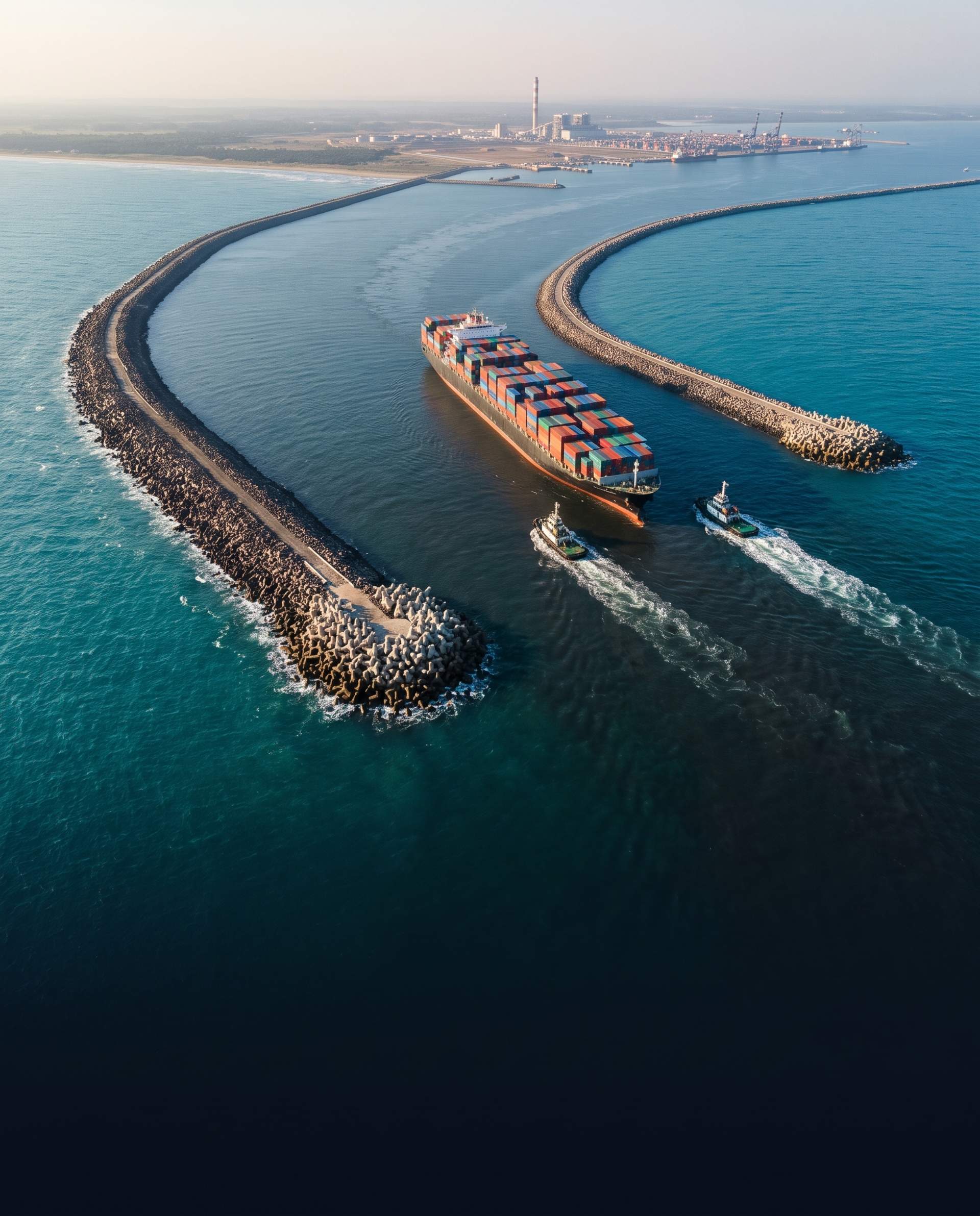
In the initial version described by Bangladeshi diplomats, the Bangladesh leg would be mainly maritime. Smaller feeder vessels would carry goods from Kyaukphyu across the Bay of Bengal to a Bangladeshi port. But the destination port, shipping frequency, cargo volume, port charges and commercial arrangements have not been settled. No final route, construction agreement or implementation timetable has been announced.
A further proposal has since entered the discussion. On September 27, bdnews24 reported that Bangladesh had proposed a direct road corridor connecting Chattogram with Kunming through Myanmar. Commerce Minister Khandaker Abdul Muktadir described a possible route of about 1,200 kilometres and said it could reduce the time and cost of moving goods. On November 5, State Minister for Foreign Affairs Humaiun Kobir said the government was open to the corridor and referred to a network of roads, railways and ports connecting Yunnan, Myanmar, Chattogram and Cox’s Bazar.
These statements point to more than one possible configuration. A sea-based Kyaukphyu–Bangladesh link is part of the early outline; a direct overland connection to Chattogram and Cox’s Bazar has also been discussed by Bangladeshi officials. They should not be treated as one approved route. The final design would depend on technical studies, negotiations and the security situation.
Why Kyaukphyu matters
For China, the corridor could give Yunnan an additional route to the Bay of Bengal and connect its inland economy more directly with South Asian markets. Kyaukphyu is already strategically important to Beijing because China’s oil and gas pipelines from the Bay of Bengal coast run towards Yunnan. A functioning port and transport network could support trade and logistics, although the scale of any benefit would depend on cargo demand, costs and the infrastructure actually built.
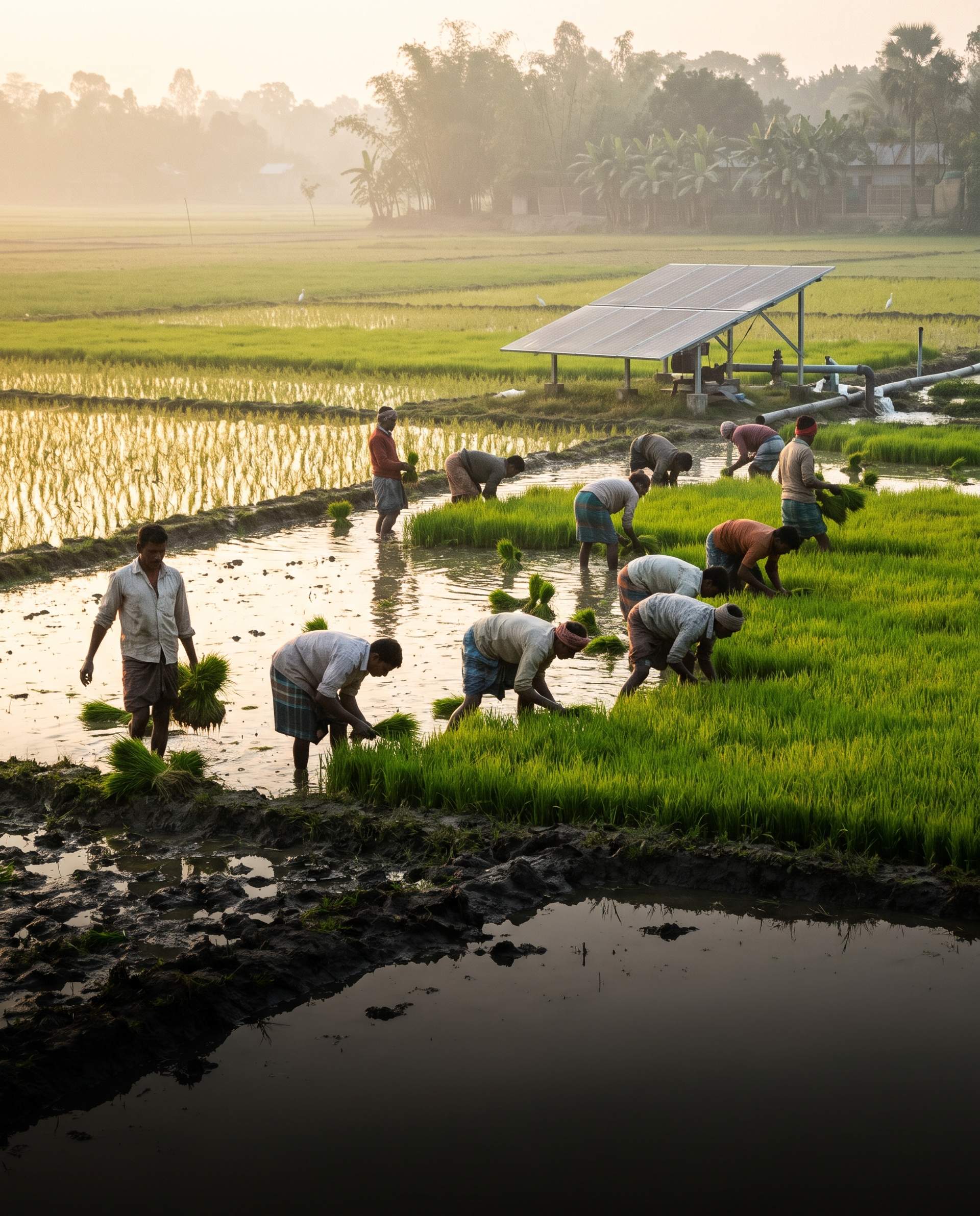
For Bangladesh, improved connectivity could create another channel for imports and exports, widen access to markets in western China and Southeast Asia, and attract logistics and industrial investment. The benefits would not be automatic. Bangladesh would need evidence that the corridor could move goods at a competitive cost and that local exporters—not only Chinese or transit cargo—could use it on fair terms.
Myanmar is the decisive obstacle
The most serious uncertainty lies in Rakhine State. The Arakan Army controls much of the state, while the Myanmar military retains key coastal positions, including around strategic sites. Fighting has continued around Kyaukphyu. A regional security assessment published by Singapore’s RSIS on October 20 said clashes in Rakhine had intensified and described the military’s remaining coastal positions as increasingly dependent on maritime access. The Centre for Arakan Studies’ October review, published in November, also recorded intensified fighting around Kyaukphyu and other fronts.
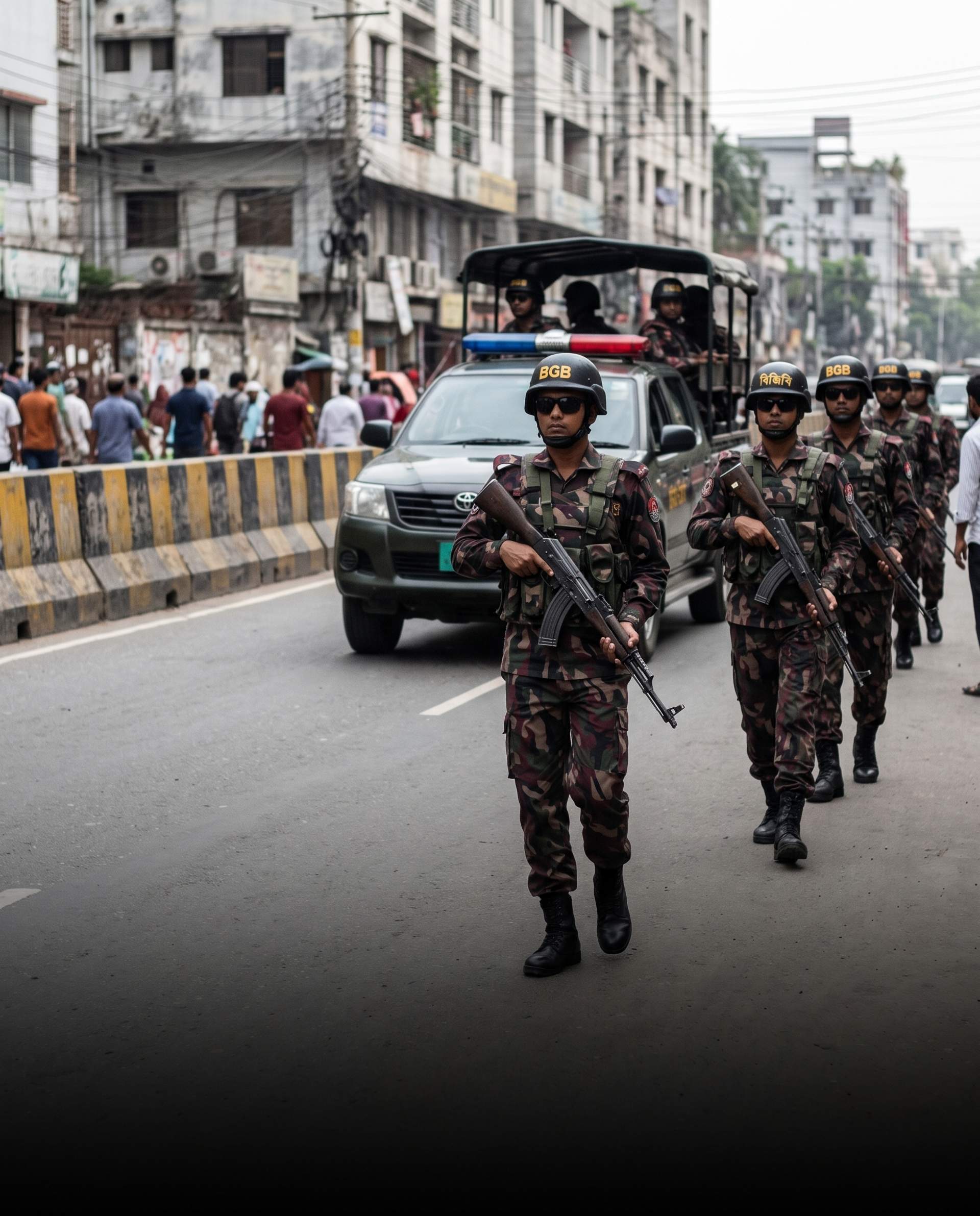
That matters because a corridor needs more than roads, tracks and ships. It requires predictable access, safe movement, functioning border procedures, insurance cover and agreements with the authorities able to secure the route. A project crossing territory affected by active conflict could face delays, higher transport costs, interrupted services and risks to workers and infrastructure. China’s existing investments in Kyaukphyu do not, by themselves, guarantee that a new cross-border corridor can operate safely.
The political question is also complex. Any practical arrangement would have to account for Myanmar’s military authorities and the realities of territorial control in Rakhine. The corridor’s progress may therefore depend on negotiations and security understandings that are not yet in place.
A regional idea with a longer history
The proposal also recalls the Bangladesh-China-India-Myanmar, or BCIM, economic corridor discussed by the four countries from 2013. That initiative envisaged a route linking Kunming with Mandalay, Bangladesh and Kolkata. It did not develop into a functioning corridor amid worsening China-India relations and disagreements over regional strategy. The current proposal places Bangladesh and Myanmar at the centre while leaving the door open, according to China, for other countries to join.
India’s position matters because the Bay of Bengal is a strategically important region and because the earlier BCIM plan included Indian territory. Japan also has major economic interests in Bangladesh’s coastal infrastructure, including the Matarbari development. The corridor could therefore be viewed through both a trade and a wider regional-geopolitical lens. That does not make it inherently a military project; its actual character would depend on the agreements, facilities and operations eventually established.
What Bangladesh should establish first
Before committing to a route, Bangladesh needs a transparent feasibility assessment comparing the maritime and overland options. It should calculate door-to-door transport costs, travel times, port and handling charges, cargo capacity, financing requirements and the likely volume of two-way trade. The study should test whether Chattogram, Mongla or another facility would offer the best commercial outcome, rather than assuming a port in advance.
Dhaka would also need clear guarantees on access, transit rights, customs procedures, dispute resolution, environmental safeguards and the protection of Bangladeshi workers and businesses. The terms should ensure that Bangladeshi exports can use the corridor and that the country receives measurable benefits from any transit or logistics activity.
The Rohingya crisis should remain part of Bangladesh’s diplomatic calculations. Stability in Rakhine is essential not only for a transport link but also for any sustainable effort to create conditions for the voluntary, safe and dignified return of Rohingya refugees. A corridor cannot substitute for a political solution, but dialogue around regional connectivity may create additional channels for engagement if handled carefully.
For now, the proposal is an opportunity under examination, not a project ready for construction. Its future will be decided by three tests: whether the route makes economic sense, whether the parties can secure reliable access through Myanmar, and whether Bangladesh can negotiate terms that serve its own trade and development priorities. Until those questions are answered, the route to Bangladesh remains a proposal, not a finished corridor.

Comments
0