

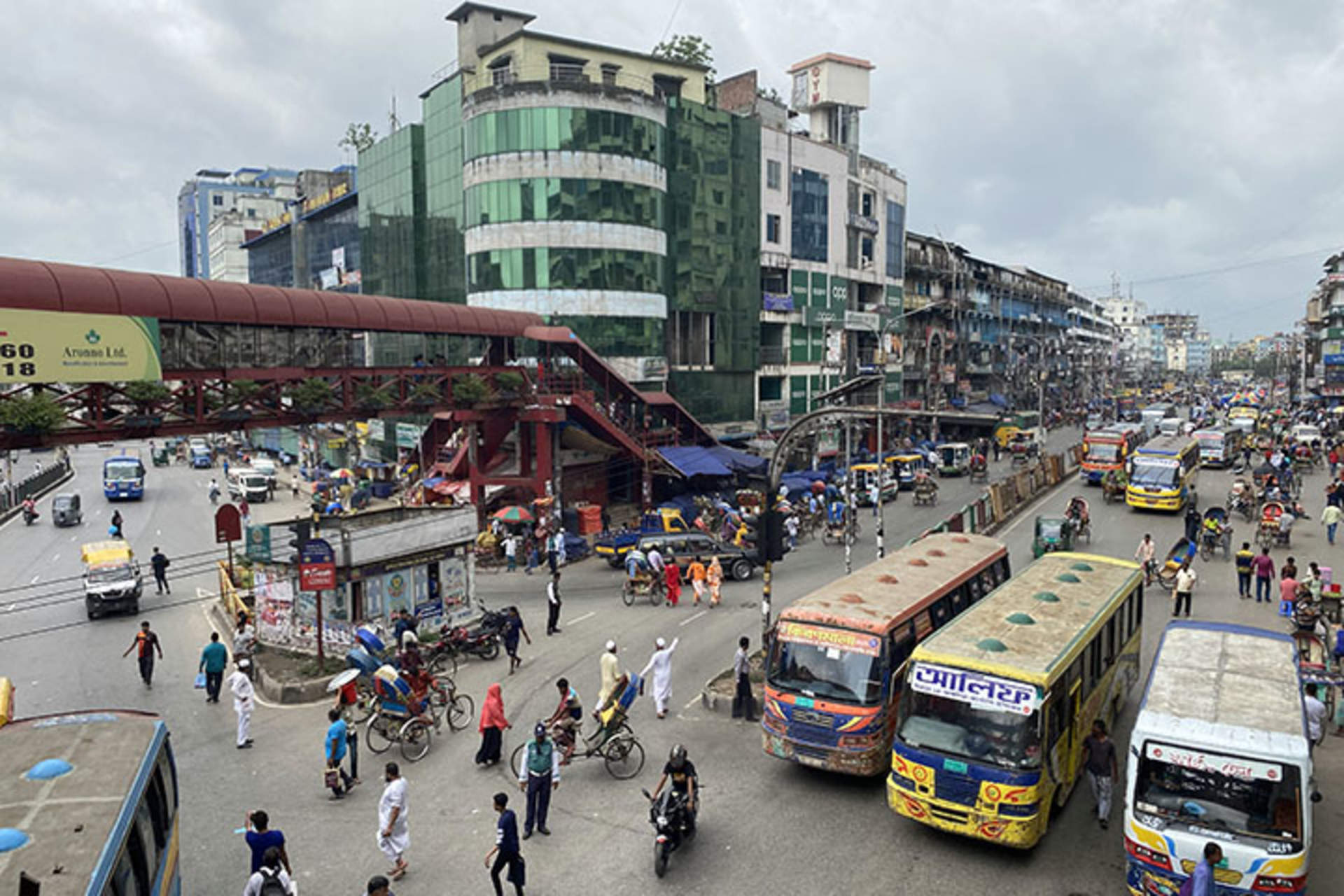
Bangladesh’s road safety crisis is taking a toll far beyond the number of crashes reported each day. A national health injury survey estimated that 24,233 people die from road traffic injuries annually, while 38,028 people are left permanently disabled. The figures translate to roughly 66 deaths and 104 cases of permanent disability every day.
The findings, reported by The Daily Star in October 2025, draw attention to a serious public-health problem: road crashes are not only killing people but also leaving thousands of survivors with lasting physical, social and economic consequences.
The survey, titled Prevalence and Risk Factors for Mortality and Morbidity in Relation to National Health Injury Survey of Bangladesh 2022–23, was commissioned by the Directorate General of Health Services. The Centre for Injury Prevention and Research Bangladesh conducted the research with technical support from the World Health Organization and the Bangladesh Bureau of Statistics.
The study was carried out between May 2023 and February 2024, involving approximately 443,000 participants.
Its estimates require careful interpretation. Government administrative figures, road-safety organisations’ reports and international estimates use different methods and do not produce identical totals. However, the survey highlights a level of harm that cannot be understood through reported crash cases alone.
Why are so many people dying on Bangladesh’s roads?
More vehicles, but safety has not kept pace
Economic growth has brought new roads, more vehicles and greater mobility to Bangladesh. But building roads and increasing transport capacity do not automatically make travel safer.
According to findings reported by The Daily Star, the survey’s principal investigator, Salim Mahmud Chowdury, linked the rise in road fatalities to economic development and the growth in roads and vehicles without an effective mechanism to control crashes.
This points to a central weakness in transport planning. Infrastructure expansion must be accompanied by safe road design, effective traffic management, vehicle inspections and consistent enforcement of traffic laws.




Comments
0Join the discussion
You must be logged in to leave a comment.