


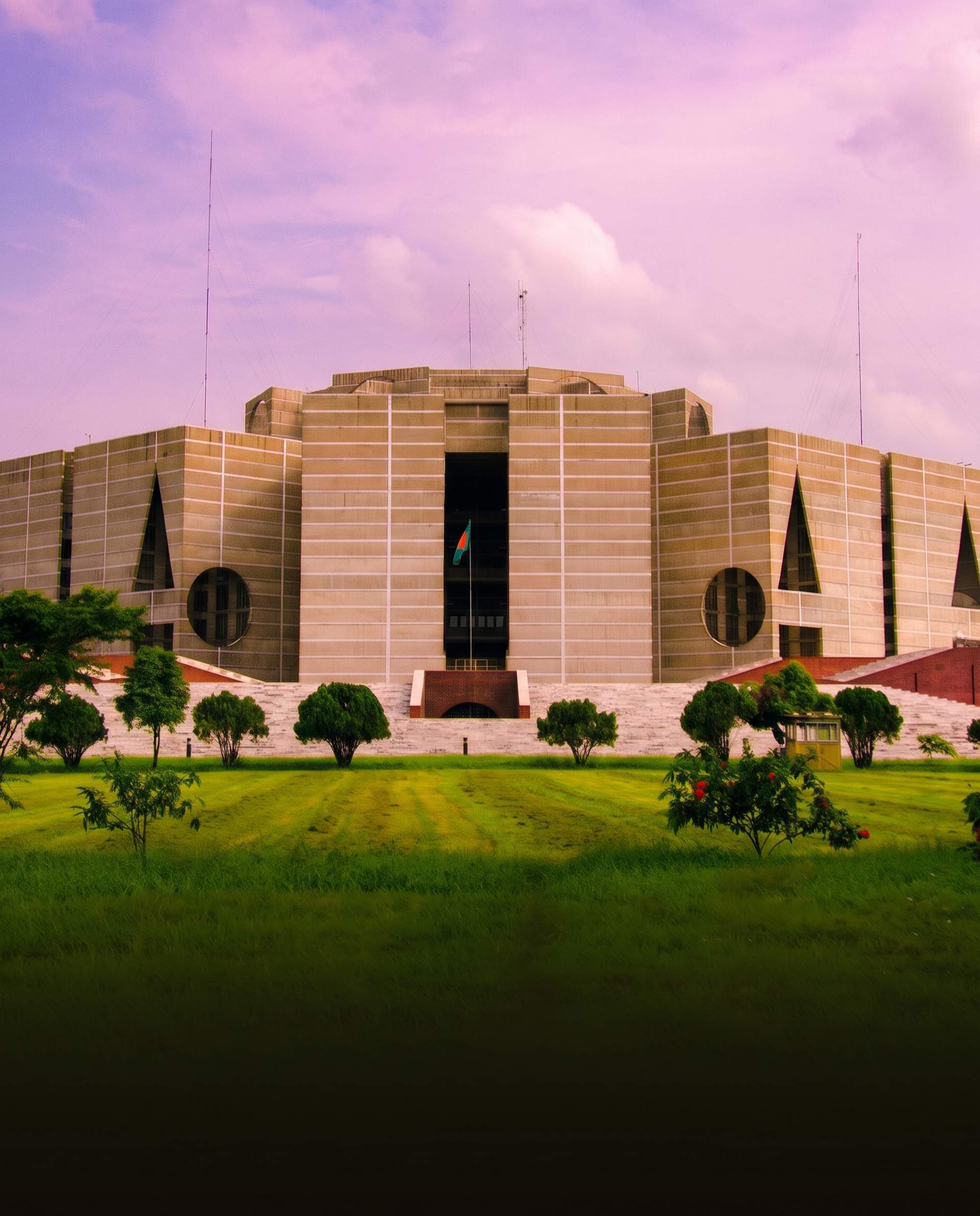
Bangladesh's Parliament Secretariat, supported by the United Nations Development Programme and the Government of Switzerland, has launched a two-day orientation programme aimed at strengthening parliamentary oversight of public spending, development projects and progress towards the Sustainable Development Goals.
The programme began on November 15, 2026, bringing together members of parliament and senior officials to discuss how lawmakers can more effectively examine government expenditure and assess whether development initiatives deliver their intended benefits.
The initiative highlights an important question for Bangladesh's public institutions: how can the country ensure that money allocated to development projects translates into measurable improvements in people's lives?
The programme is being organised under UNDP's Strengthening Institutions, Policies and Services project, known as SIPS.
Why parliamentary oversight matters
Parliamentary oversight is one of the mechanisms through which elected representatives can examine government activities and hold public institutions accountable.
Approving a budget is only one part of that responsibility. Lawmakers must also be able to examine how public money is spent, whether projects are completed as planned and whether their intended beneficiaries receive the promised services.
At the opening programme, Speaker Hafiz Uddin Ahmad Bir Bikram emphasised that the quality and completion of development projects matter alongside the allocation of funds.
His message was that government spending should be assessed not only through financial approvals but also through implementation, timelines, budgets and public benefits.
UNDP Resident Representative Stephen Rodriques similarly stressed that public money represents an investment made by citizens.
He argued that Parliament has an important responsibility to help ensure that approved funding reaches the people for whom it was intended.
These priorities are particularly relevant to development projects that involve large public budgets, multiple implementing agencies and long implementation periods.
What will the training cover?
The first day of the programme focused on Bangladesh's progress towards the Sustainable Development Goals and the parliamentary tools available to monitor implementation.
The sessions covered the global SDG picture, Bangladesh's development priorities for 2030 and findings from the country's 2025 Voluntary National Review.
The Voluntary National Review is a process through which countries report on their progress towards the United Nations' Sustainable Development Goals.
For Bangladesh, the exercise provides a framework for assessing national progress and identifying areas where further action is needed.
Participants also discussed how parliamentary committees, budget scrutiny and legislative debate can help lawmakers examine government performance.
The programme included contributions from officials and development specialists, including Owais Parray, UNDP Bangladesh's Country Economic Advisor, Dr Monzur Hossain of the General Economics Division and Professor Dr S M Abdul-Awal, Principal Coordinator for SDG Affairs at the Prime Minister's Office.
The second day is scheduled to address public procurement rules, transparency in contracting, project management and the effective use of public resources.
Abu Sayed Md Kamruzzaman, Chief Executive Officer of the Bangladesh Public Procurement Authority, is expected to lead sessions on procurement and project management.
These topics are important because development spending involves more than approving money. Governments must also select contractors, manage projects, monitor implementation and ensure that public resources are used appropriately.
A broader institutional development effort
The November programme follows another UNDP-supported orientation held earlier in the month.
According to UNDP Bangladesh, an earlier November 3 programme focused on strengthening parliamentary committee oversight through improved procedures, evidence collection, documentation and follow-up.
That initiative brought together parliamentary committee officials and explored how institutional capacity and digital tools could improve the effectiveness of oversight.
The earlier sessions also examined the potential role of artificial intelligence and e-Parliament systems in making parliamentary processes more efficient.
The November 15 programme has a somewhat different emphasis, focusing on elected lawmakers, development targets and public resource management.
Together, the initiatives illustrate a broader institutional effort to improve the capacity of Bangladesh's Parliament.
However, training sessions alone cannot guarantee stronger accountability. Their effectiveness will depend on whether participants can apply the knowledge in parliamentary committees, budget discussions and oversight activities.
The challenge of turning training into results
Bangladesh's development ambitions require public investment across infrastructure, education, healthcare, social protection and other areas.
The Sustainable Development Goals provide an international framework covering poverty reduction, education, health, environmental protection and economic development.
Reaching the 2030 targets requires not only financial resources but also institutions capable of monitoring results.
Parliamentary committees can contribute by requesting information from ministries, examining implementation reports, questioning delays and following up on recommendations.
Budget scrutiny can also help identify differences between approved spending and actual implementation.
But effective oversight depends on access to reliable information. Lawmakers need accurate project data, understandable financial reports and institutional support to assess whether government programmes are working.
The programme's emphasis on evidence-based decision-making therefore addresses an important part of the accountability process.
What happens next?
The immediate next step is the completion of the two-day orientation programme and the application of its lessons within parliamentary work.
The real measure of success will not be the number of participants attending training sessions. It will be whether Parliament becomes more capable of identifying weak implementation, questioning inefficient spending and ensuring that public investment produces meaningful results.
UNDP and the Swiss government are supporting this institutional capacity-building effort, but accountability ultimately depends on the responsibilities exercised by Bangladesh's elected representatives and public institutions.
As the country approaches the 2030 deadline for the Sustainable Development Goals, stronger parliamentary oversight could become an important part of ensuring that development commitments translate into practical benefits.


Comments
0