BangladeshistBangladeshistBangladeshist
HomeBusinessEntertainmentGeneralOpinion
About UsContact UsPrivacy Policy
Terms of ConditionsFAQ
FacebookInstagramYouTubeTwitterTikTok
BangladeshistBangladeshist

© 2026 Bangladeshist. All rights reserved.

  1. Home
  2. Business
  3. Bangladesh Moves to Form Garment Wage Board as Wor…
Business

Bangladesh Moves to Form Garment Wage Board as Workers Demand Tk 30,000

Bangladesh is moving to form a new garment-sector wage board as workers demand Tk 30,000 a month amid rising living costs and continued protests.

PlabonnFriday, October 16, 2026Source:The Daily Star, TBS, Financial Express12 min read10 views
Bangladesh Moves to Form Garment Wage Board as Workers Demand Tk 30,000
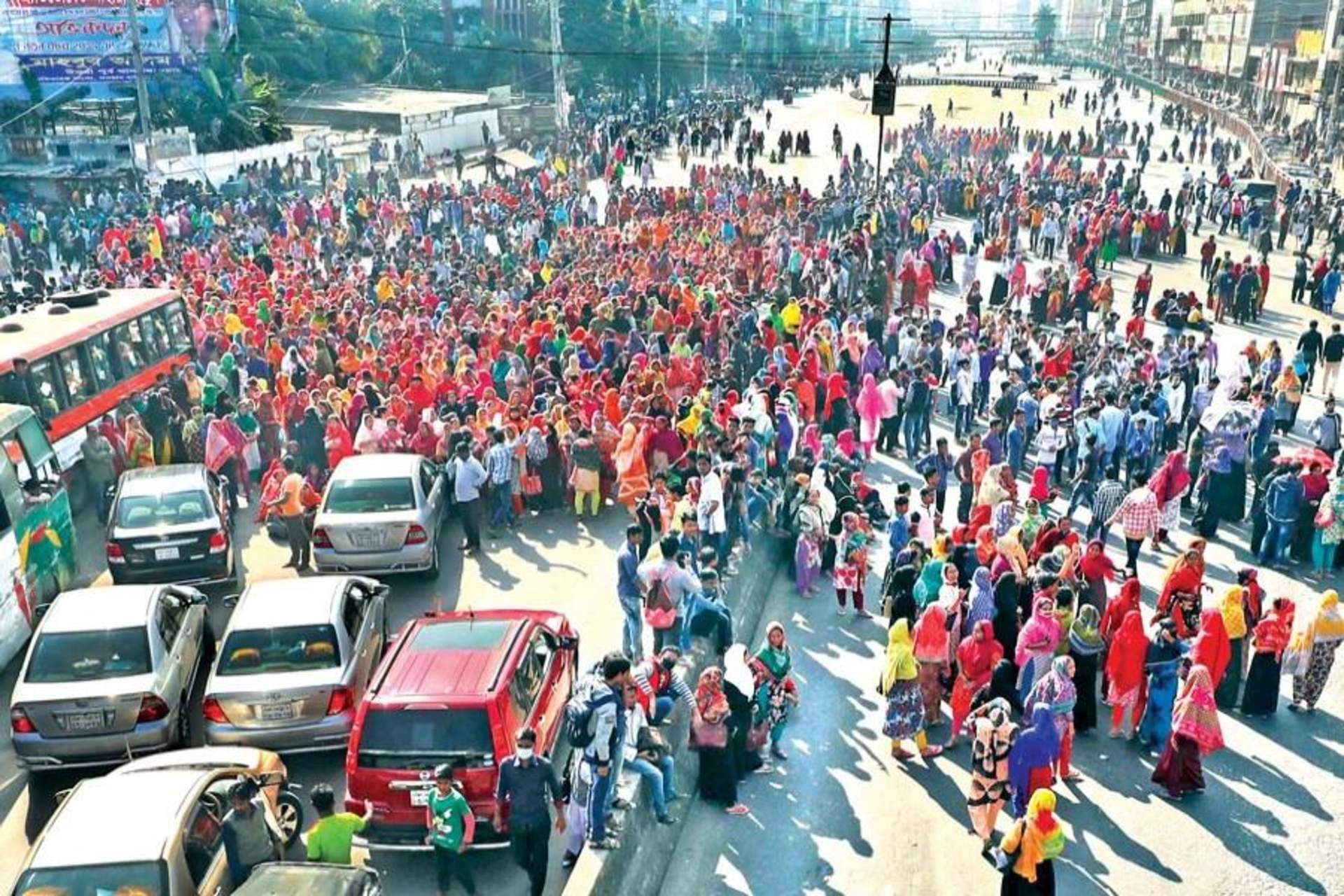
Photo: collected

Bangladesh is moving to form a new minimum wage board for garment workers as protests over pay and rising living costs continue in industrial areas, bringing renewed attention to the gap between workers’ earnings and the cost of daily life.

The Ministry of Labour and Employment has begun seeking nominations from employer and worker organisations for the proposed board. The initiative comes as garment workers in Dhaka’s Uttara area demand a minimum monthly wage of Tk 30,000, substantially above the existing minimum of Tk 12,500.

The government’s move could open the way for a fresh review of wages in Bangladesh’s ready-made garment (RMG) industry, one of the country’s most important export sectors. However, the formation of a board does not itself guarantee a particular pay increase or establish when a revised wage would take effect.

Government Starts the Wage Review Process

According to reports published by The Daily Star and The Business Standard on October 15–16, the Department of Labour has contacted employer and worker organisations to seek nominations for the proposed wage board.

A senior Labour Ministry official told The Daily Star that the process was under way. The Bangladesh Employers’ Federation also confirmed receiving a request for its opinion and a representative nomination.

The Bangladesh Garment Manufacturers and Exporters Association (BGMEA), which represents garment exporters, said it had no objection to forming a new wage board, according to the newspaper.

The board is expected to bring together representatives of the government, workers and factory owners, alongside independent expertise. Its task will be to recommend a revised wage structure for garment workers.

The next steps will be important. The government must complete the process of forming the board, while worker and employer representatives will need to present their positions on wages and the practical conditions for implementing any revision.

The latest reports describe an initiative under way, not a completed wage settlement.
Read More

All Stories in Read More →
Meta Hit With Record €2 Billion EU Privacy Fine Over Data Merging
Business

Meta Hit With Record €2 Billion EU Privacy Fine Over Data Merging

The European Data Protection Board fined Meta Platforms €2 billion on Friday for illegally combining user data across WhatsApp, Instagram, and Facebook without explicit consent.

4 min read5Oct 18
IMF Warns Global Growth Faces Pressure From Oil Shock and AI Risks

Mustasinur Rahman Alvi/Eyepix Group/Future Publishing/Getty Images

Why Workers Are Demanding Tk 30,000

The current minimum monthly wage for Bangladesh’s garment workers is Tk 12,500, a rate announced in November 2023 and effective from December that year.

Workers protesting in Uttara have called for a minimum salary of Tk 30,000, arguing that rising prices for essential goods have made it increasingly difficult to cover ordinary household expenses.

Their demands have been accompanied by road blockades on the Dhaka–Mymensingh highway, disrupting traffic and making journeys difficult for commuters. Reports published on October 16 said protests had continued for several days and that five garment factories in the area had decided to shut their units indefinitely following repeated work disruptions.

Police used batons and sound grenades to disperse protesters during the demonstrations, according to The Daily Star. The report also described separate unrest involving workers seeking unpaid September wages at a factory in Gazipur’s Sreepur area.

These incidents highlight that the labour dispute extends beyond the question of a new minimum wage. Timely payment of earned wages, communication between workers and employers, and the handling of demonstrations are also central to industrial stability.

The immediate challenge for the government is to move the wage-review process forward while encouraging negotiations that reduce the risk of further disruption.

The Three-Year Wage Review Cycle

The timing of the proposed board is significant because Bangladesh’s amended labour law provides for wages to be reviewed every three years rather than every five years, according to reporting by The Daily Star and The Financial Express.

The existing garment-sector minimum wage took effect in December 2023, bringing the next review into focus as the three-year period approaches.

Previous revisions have raised the minimum monthly wage from Tk 8,000 in 2018 to Tk 12,500 in 2023. The new review will have to consider the circumstances facing workers as well as the conditions under which factories operate.

A wage decision involves more than announcing a number. The board must assess the competing positions of workers and employers and recommend a structure that can be implemented across the sector.

For workers, the central concern is purchasing power: how much their wages can buy after paying for food, housing, transport and other essentials. For employers, the question includes the cost of production and the ability of factories to meet their commitments.

Those considerations may influence the final recommendation, but they do not determine its outcome in advance.

Why the Decision Matters Beyond Factories

Bangladesh’s garment industry is a major source of export earnings and employment. Its performance affects factory workers, suppliers, transport operators and businesses connected to production and shipping.

That makes a wage dispute more than a workplace issue. Prolonged unrest can disrupt production schedules, complicate deliveries and create uncertainty for businesses and workers alike.

At the same time, the industry's economic importance makes the living standards of its workforce a central policy concern. A sector’s export performance does not, by itself, establish whether workers’ wages are sufficient to meet their needs.

A credible wage-review process therefore needs to consider both the evidence on living costs and the economic circumstances of the industry. It also needs meaningful worker representation, clear communication and an implementation plan that can be monitored.

The consequences of a new wage structure will depend on its final terms, the date it takes effect and whether employers comply with the requirements.

What Happens Next?

The immediate milestone is the formal establishment of the wage board. After that, its deliberations and recommendations will determine the next stage of the process.

Workers are seeking Tk 30,000, but the government has not announced a final revised minimum wage in the reports reviewed for this article. The eventual recommendation, its approval and its implementation timetable remain unresolved.

The response to the current protests will also matter. Dialogue between labour representatives, factory owners and the government could help address the immediate dispute while allowing the formal wage-review process to continue.

For garment workers, the outcome will be measured in practical terms: whether their wages can better meet living costs and whether payments arrive on time. For the wider economy, a stable and credible settlement could help reduce uncertainty in a sector that plays a major role in Bangladesh’s export business.

The coming weeks should show whether the proposed wage board can turn the government’s initiative into a concrete review—and whether that process can address workers’ demands without further industrial disruption.

Tags:#Bangladesh garment industry#RMG workers#minimum wage#wage board#labour protests#BGMEA#cost of living
share:

Comments

0

Join the discussion

You must be logged in to leave a comment.

Loading comments…

Most Read

1

Lionel Messi Bids Adieu in Argentina's 3-0 Farewell Win

29 views ·Oct 7
2

E-Commerce Business Guide: How to Properly Set Up an Online Storefront

25 views ·Jun 16
3

NASA Delays Artemis Moon Landing to 2028 Over Starship Issues

23 views ·Oct 8
4

Toyota Solid-State EV Battery Enters Early Mass Production

21 views ·Oct 10
5

Personal Finance 101: How to Start Investing Your Savings Wisely

20 views ·Jun 16

Popular Tags

#Artificial Intelligence#European Union#Global Economy#IMF#Barcelona#NVIDIA#Geopolitics#Bangladesh Economy#Energy Security#Supply Chain#Semiconductors#Football
Business

IMF Warns Global Growth Faces Pressure From Oil Shock and AI Risks

The IMF warns that rising energy costs, geopolitical conflict and AI-related financial risks could threaten global growth, with implications for Bangladesh.

12 min read8Oct 14
Developing Countries Face a Growing Debt Squeeze as IMF Calls for More Support
Business

Developing Countries Face a Growing Debt Squeeze as IMF Calls for More Support

Rising debt-servicing costs are squeezing developing economies. The IMF is calling for more support as governments face tighter budgets, economic shocks and growing investment needs.

14 min read4Oct 14
Bangladesh Discusses New Long-Term LNG Deal With QatarEnergy as Supply Risks Mount
Business

Bangladesh Discusses New Long-Term LNG Deal With QatarEnergy as Supply Risks Mount

Bangladesh has opened discussions with QatarEnergy on a possible new long-term liquefied natural gas (LNG) supply agreement as disruptions to Qatari exports expose the risks of relying heavily on a single supplier and shipping route.

13 min read4Oct 12
More stories in Business