


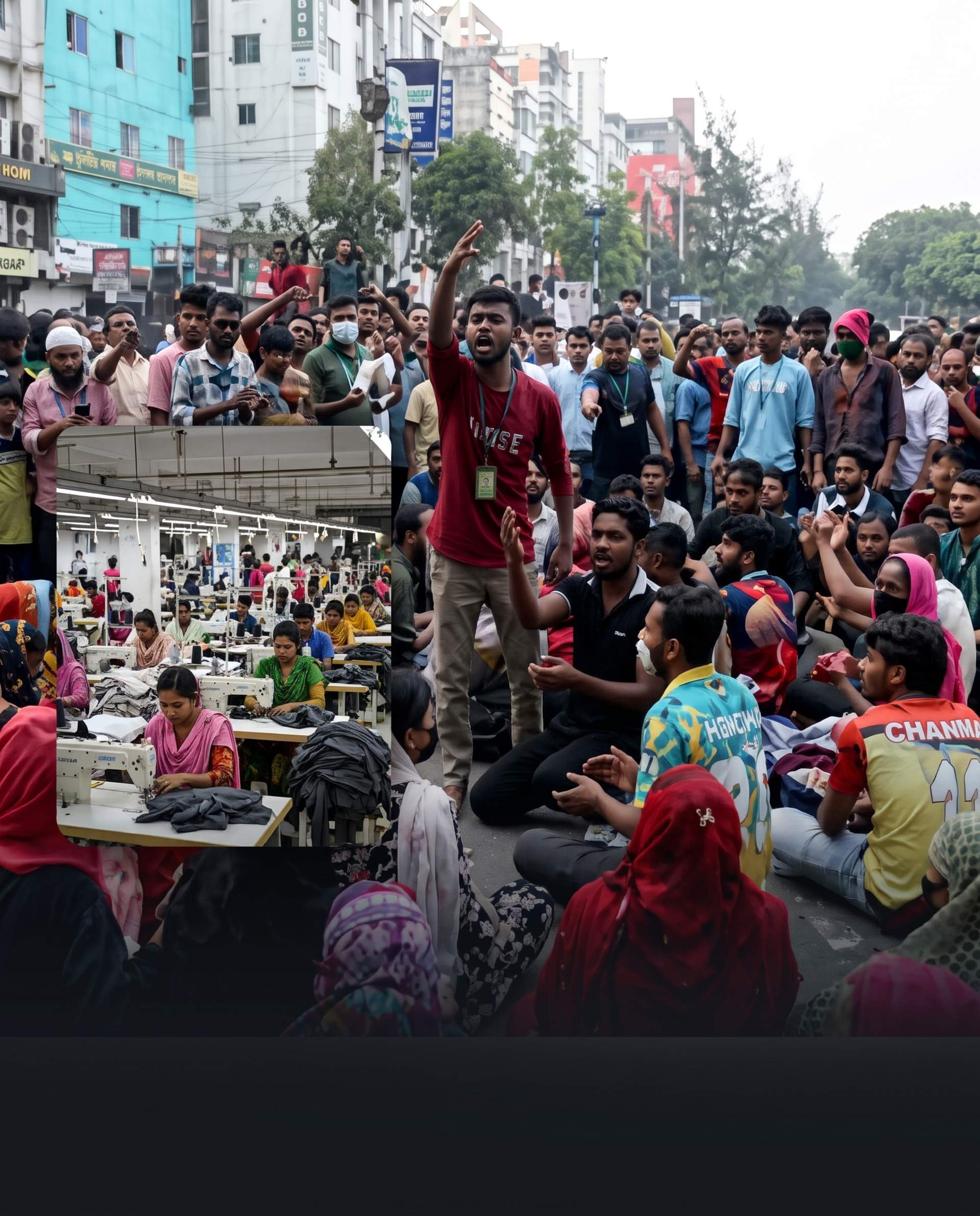
Bangladesh's garment industry is facing mounting pressure as workers continue protesting for higher wages, raising concerns about factory operations, export shipments and the country's position in the global clothing supply chain.
Workers are demanding a minimum monthly wage of Tk 30,000, more than double the existing minimum of Tk 12,500. They say rising costs of food, housing, transportation and other essentials have made their current earnings increasingly difficult to live on.
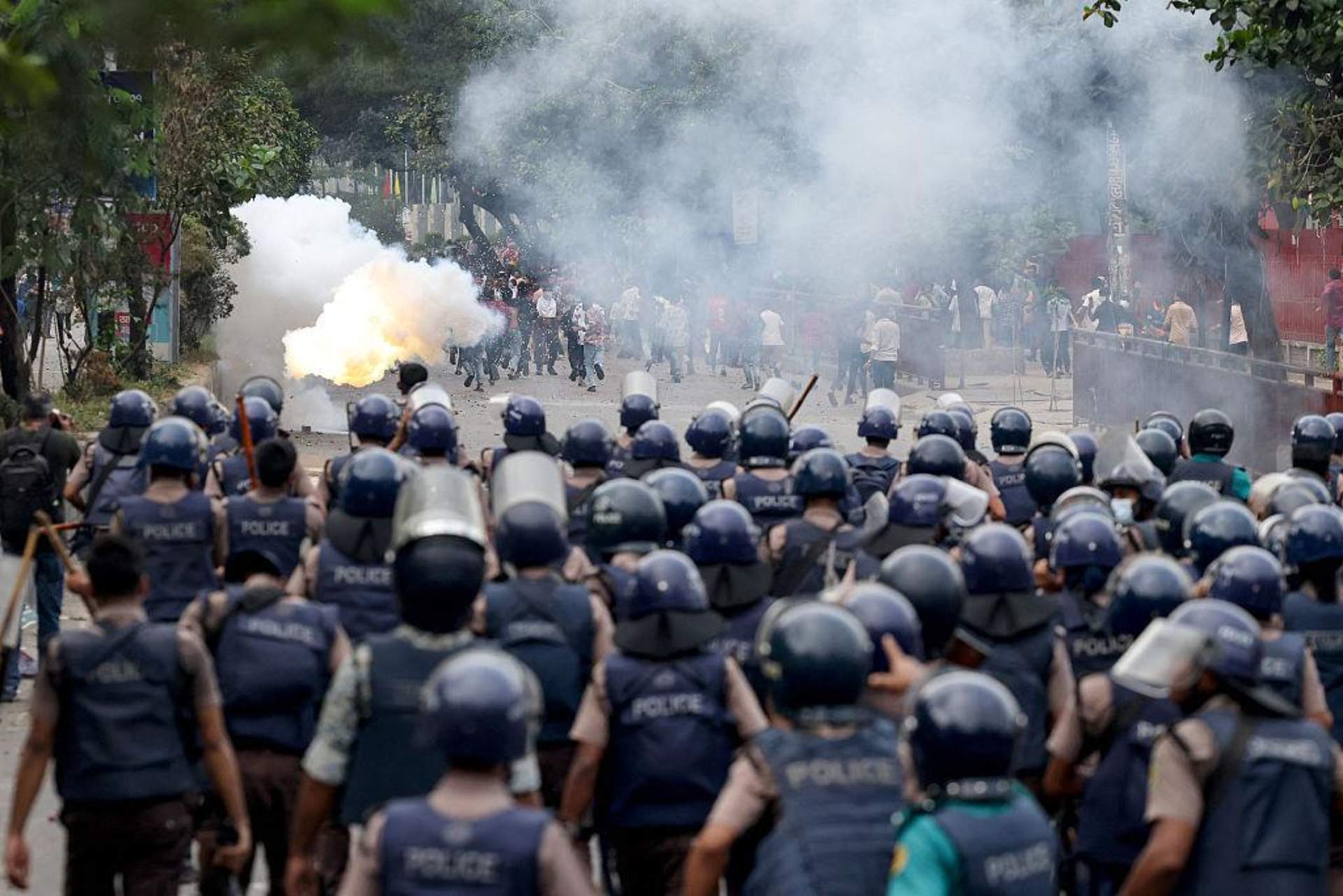
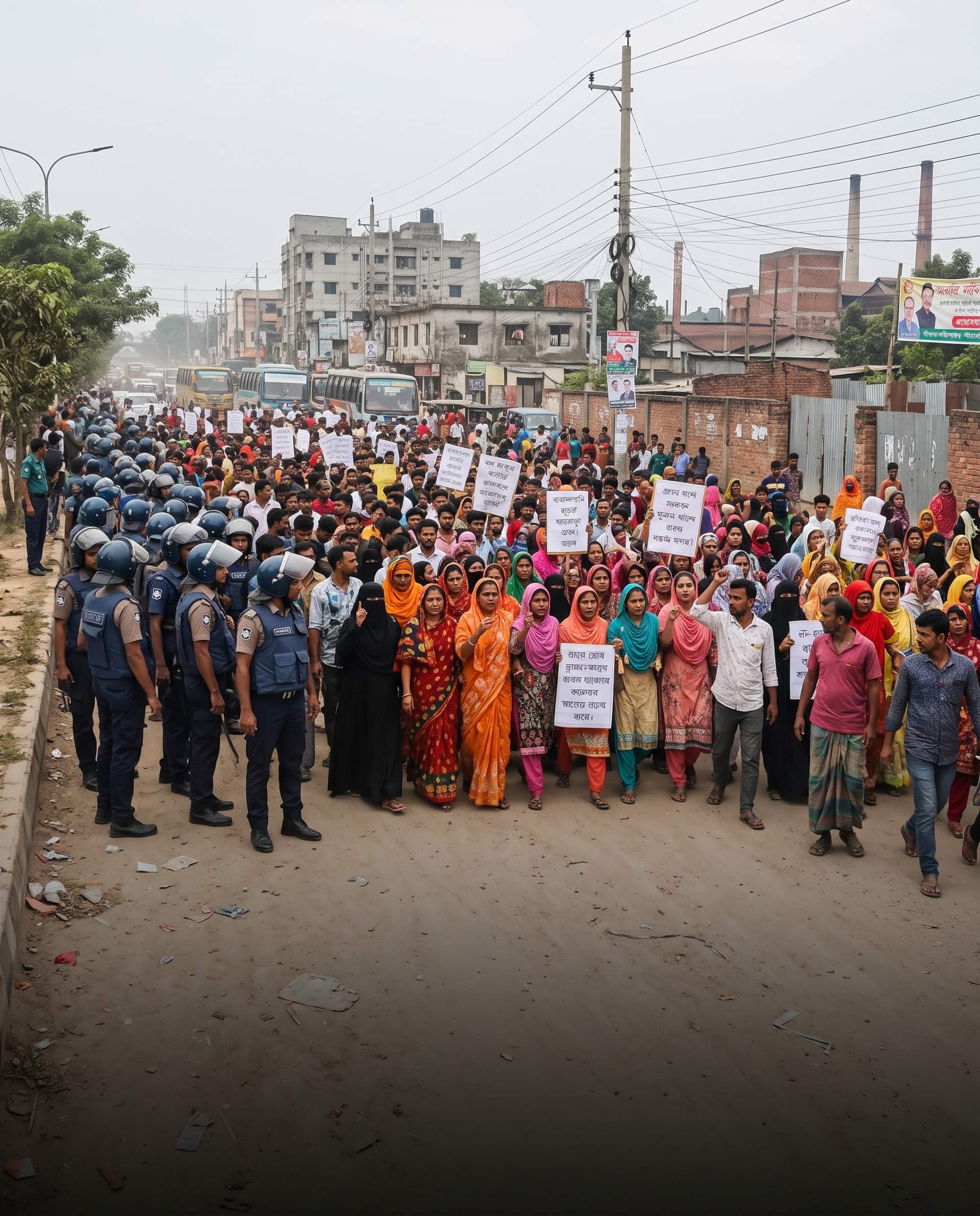
The demonstrations have affected industrial areas around Dhaka, including Ashulia, Gazipur, Mirpur and Narayanganj. Road blockades, clashes with police and factory disruptions have created difficulties for workers, manufacturers and transport operators.
According to Reuters, the protests entered their fourth day on November 3, with dozens of people injured during clashes. Nearly 700 factories had closed the previous day, although the situation varied across industrial zones.
Government forms wage board to address demands
The government established a six-member minimum wage board on November 1 to review the existing pay structure and recommend a revised minimum wage.
The board includes representatives of workers and employers, alongside government and independent representation. Its formation was intended to provide a formal mechanism for resolving the dispute through negotiations.
Labour Minister Ariful Haque Choudhury had previously urged workers to return to their workplaces following the announcement.
However, the formation of the board has not immediately ended the demonstrations.
Home Minister Salahuddin Ahmed said on November 3 that the government wanted to ensure a minimum wage that would improve workers' living standards. He also called for the reopening of affected factories and warned against attempts to exploit the unrest.
Factory operations and export orders under pressure
The garment manufacturers' associations initially considered keeping factories in affected areas closed indefinitely because of continuing labour unrest.
However, following a government request, manufacturers agreed to keep factories open on November 4 while monitoring developments.
The Bangladesh Garment Manufacturers and Exporters Association and other industry representatives remain concerned about the consequences of prolonged disruption.
The Business Standard reported on November 4 that some international buyers were seeking assurances about production conditions. Industry sources also indicated that certain buyers were reducing or reconsidering orders because of delivery concerns.
These developments could become particularly important during the production period for upcoming spring and summer clothing collections.
Bangladesh's ready-made garment industry employs approximately four million people and generates more than 80% of the country's export earnings, according to Reuters. Any prolonged interruption could therefore affect employment, foreign-exchange earnings and the country's relationships with international clothing brands.
What happens next?
The wage board's negotiations will be central to determining whether the dispute can be resolved.
Workers want a substantial increase that reflects the rising cost of living, while manufacturers face production costs, energy challenges and pressure from international buyers.
The immediate challenge is to restore stable factory operations without leaving workers' wage concerns unresolved.
The outcome of the wage negotiations will matter well beyond individual factories. It could influence Bangladesh's labour relations, export competitiveness and reputation as a major global garment manufacturing centre.

Comments
0