


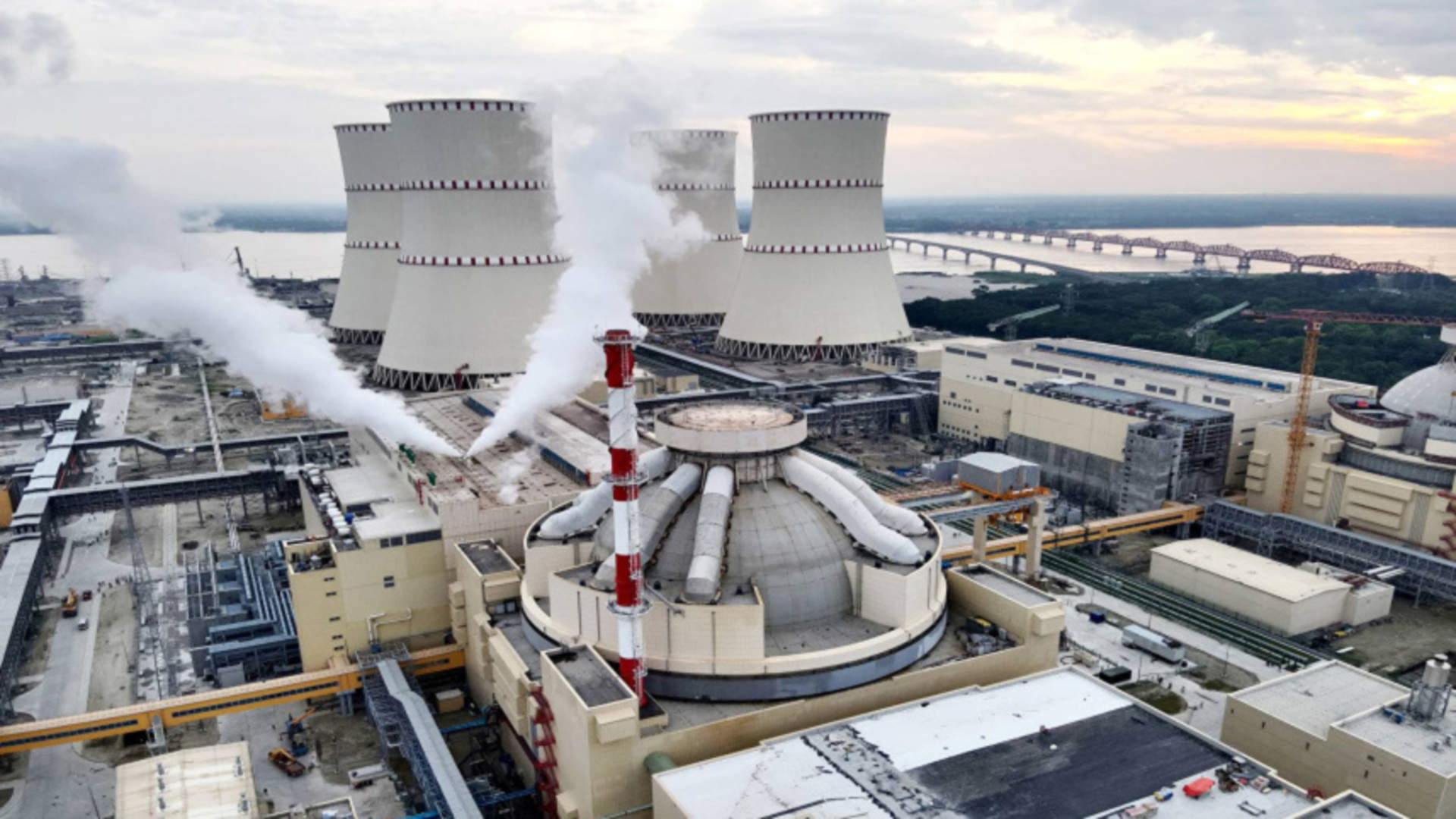
Bangladesh’s Rooppur Nuclear Power Plant supplied electricity to the national grid for the first time on November 17, marking a major step in the country’s effort to begin operating its first nuclear power station. The plant’s first unit delivered an initial 350 megawatts (MW) during an experimental grid connection that began at 3:16pm, according to a Bangladesh Atomic Energy Commission press release reported by The Daily Star.
The milestone means electricity generated at Rooppur has been transferred to the national transmission system for the first time. It does not mean the plant has entered full commercial operation. The connection is part of commissioning: a sequence of tests and regulatory checks designed to establish that the reactor, turbine-generator equipment and grid can operate together safely and reliably.
For Bangladesh, the event moves a long-delayed infrastructure project from reactor start-up and internal testing to a new phase in which its output can be assessed against the demands of the national electricity network.
A first connection, not the finish line
The November 17 trial followed weeks of preparation and staged testing at Unit 1. On October 29, the Bangladesh Atomic Energy Regulatory Authority (BAERA) authorised the unit to enter Stage C, the power start-up phase. Testing began on October 30, with engineers gradually increasing reactor pressure and temperature and checking the systems needed to produce electricity.
Those systems include the reactor and its primary and secondary circuits, the turbine-generator, electrical equipment, instrumentation and control systems, and protection and safety mechanisms. The purpose of the commissioning programme is to monitor how the equipment performs as reactor power rises, rather than to move immediately to full output.
The trial connection is also a test of the receiving network. Grid synchronisation involves matching the generator’s electrical output with the power system so electricity can be transferred without destabilising the network. Officials had said ahead of the test that they would monitor the grid’s response, including whether it could maintain stable frequency as power from the new plant was introduced.
The 350MW figure is therefore an initial trial output, not the unit’s full capacity. The first reactor is designed for a gross generating capacity of 1,200MW. Rooppur’s two reactors together are designed to produce 2,400MW when both are fully operational.
Why the grid test matters
A power station does not become commercially operational simply because its generator has been connected to the grid once. Engineers need to demonstrate that the plant can operate at different power levels, respond appropriately to operating conditions and deliver electricity consistently. The transmission system must also be able to accommodate the output while maintaining reliability for other generators and consumers.
That is particularly important for a nuclear unit, where commissioning is carried out through a controlled sequence of tests and regulatory hold points. The plant’s output is expected to increase in stages, with further technical checks and regulatory oversight before commercial operation. Officials cited in pre-connection reporting said it could take several more months for Unit 1 to reach full generation capacity. The precise schedule depends on the results of testing and the approvals required at each stage.
The Bangladesh Atomic Energy Regulatory Authority is the national regulator responsible for authorising the relevant stages. Its role is separate from the project operator’s responsibility to carry out commissioning and demonstrate that the plant and its systems meet the required conditions. The November 17 trial should therefore be understood as evidence of progress, not as a substitute for the remaining regulatory process.
A project years in the making
Rooppur is located in Ishwardi upazila of Pabna district, beside the Padma River. The project is being implemented by the Bangladesh Atomic Energy Commission, with Russian technical and financial assistance. Russia’s Rosatom, through its engineering subsidiary Atomstroyexport, is the principal contractor.
The facility consists of two Russian-designed VVER-1200 reactors, each with a planned gross capacity of 1,200MW. The first concrete for Unit 1 was poured in November 2017, followed by Unit 2 in July 2018. The project has experienced delays, and the commissioning process has taken place in several stages before the first experimental delivery to the grid.
The first unit reached initial nuclear criticality in October 2026, when a controlled chain reaction was started at very low power after regulatory clearance. That was a different milestone from electricity generation: criticality establishes a sustained nuclear chain reaction, while the later start-up and turbine tests prepare the plant to convert reactor heat into electrical power. Stage C approval at the end of October then cleared the way for power-ascension testing.
What it could mean for Bangladesh’s electricity supply
Once both units are operating, Rooppur is designed to add up to 2,400MW of generating capacity to Bangladesh’s power system. That could diversify the country’s electricity sources and provide large-scale generation that is not dependent on daily fuel deliveries in the same way as oil- or gas-fired stations.
But the contribution will build gradually. The initial 350MW trial supply is only a portion of the first unit’s planned output, and the second reactor has its own construction, fuel-loading, testing and licensing pathway. The plant will not instantly resolve Bangladesh’s wider electricity challenges, which also involve fuel availability, generation costs, transmission capacity, demand growth and the financial health of the power sector.
The cost of electricity from Rooppur and the commercial terms under which it will be supplied are also important to the project’s long-term impact. Before the plant becomes a routine part of the national supply mix, consumers and policymakers will need clarity on the price of its electricity, the cost of financing and operation, and how the plant will be integrated into the wider grid.
The November 17 connection is nonetheless a concrete technical achievement. It demonstrates that Unit 1 has reached the point where generated electricity can be transferred to the national grid under trial conditions. The next test is whether the plant can complete its commissioning programme, secure the necessary approvals and increase output reliably.
For now, Rooppur has crossed an important threshold—but commercial operation and full-capacity generation remain ahead.



Comments
0