

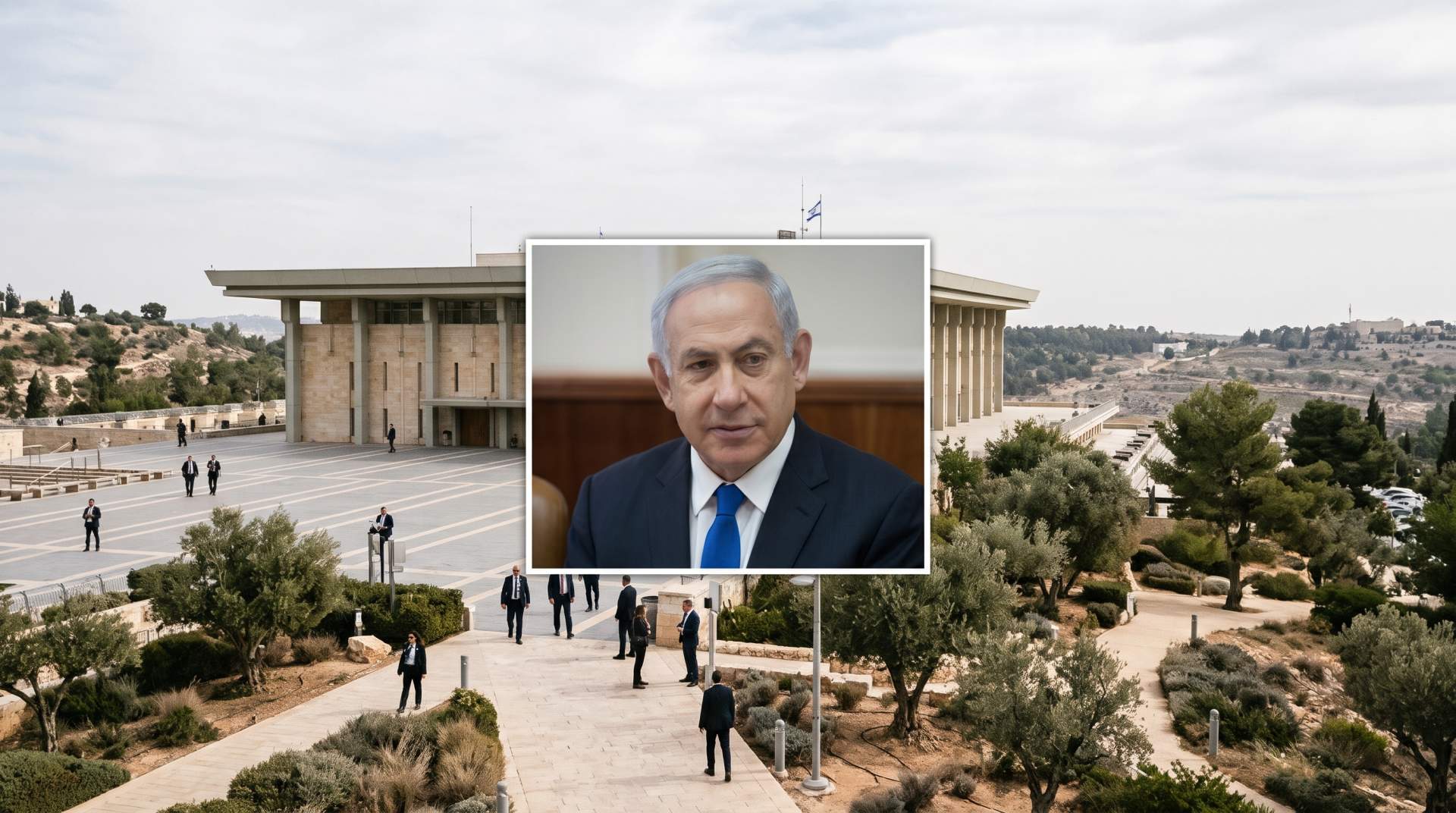
Israel’s election has left Prime Minister Benjamin Netanyahu facing a difficult path to securing another government, with partial results putting his bloc ahead of the opposition but still short of the parliamentary majority required to govern. The result has opened the prospect of prolonged coalition negotiations, with Arab-led parties potentially playing a decisive role in determining who leads the country.
As of the morning of October 28, partial results reported by The Times of Israel, citing figures from the Central Elections Committee, showed Netanyahu’s bloc with 56 seats and the opposition bloc led by Gadi Eisenkot with 48. Arab parties held 16 seats in the reported breakdown. A majority in Israel’s 120-member Knesset requires 61 seats.
The count remains incomplete, and the balance could change as additional ballots are processed. Neither the early projections nor the partial tally should be treated as a final determination of who will form the next government.
Why the election has produced uncertainty
The election has exposed a central challenge in Israeli politics: winning the largest share of seats does not necessarily mean having enough support to govern.
Netanyahu’s Likud party entered the election seeking to retain power through an alliance with right-wing and religious parties. His opponents, led by former military chief Gadi Eisenkot, sought to assemble a coalition capable of replacing him.
Exit polls released after voting ended on October 27 initially suggested a close contest, with major television networks projecting different seat distributions. Some showed the rival blocs tied, while others gave one side a narrow lead. Subsequent vote counting has provided a clearer picture but has not settled the question of who can command a parliamentary majority.
Netanyahu called for a strong right-wing government, while Eisenkot argued that voters had expressed a desire for political change. Neither position resolves the arithmetic required to form a coalition.
Israel’s president, Isaac Herzog, will play a formal role in the next stage by consulting political parties and selecting the candidate considered best placed to form a government. That decision depends on the prospects of securing sufficient parliamentary backing, rather than simply which party finishes first.


Comments
0Join the discussion
You must be logged in to leave a comment.