


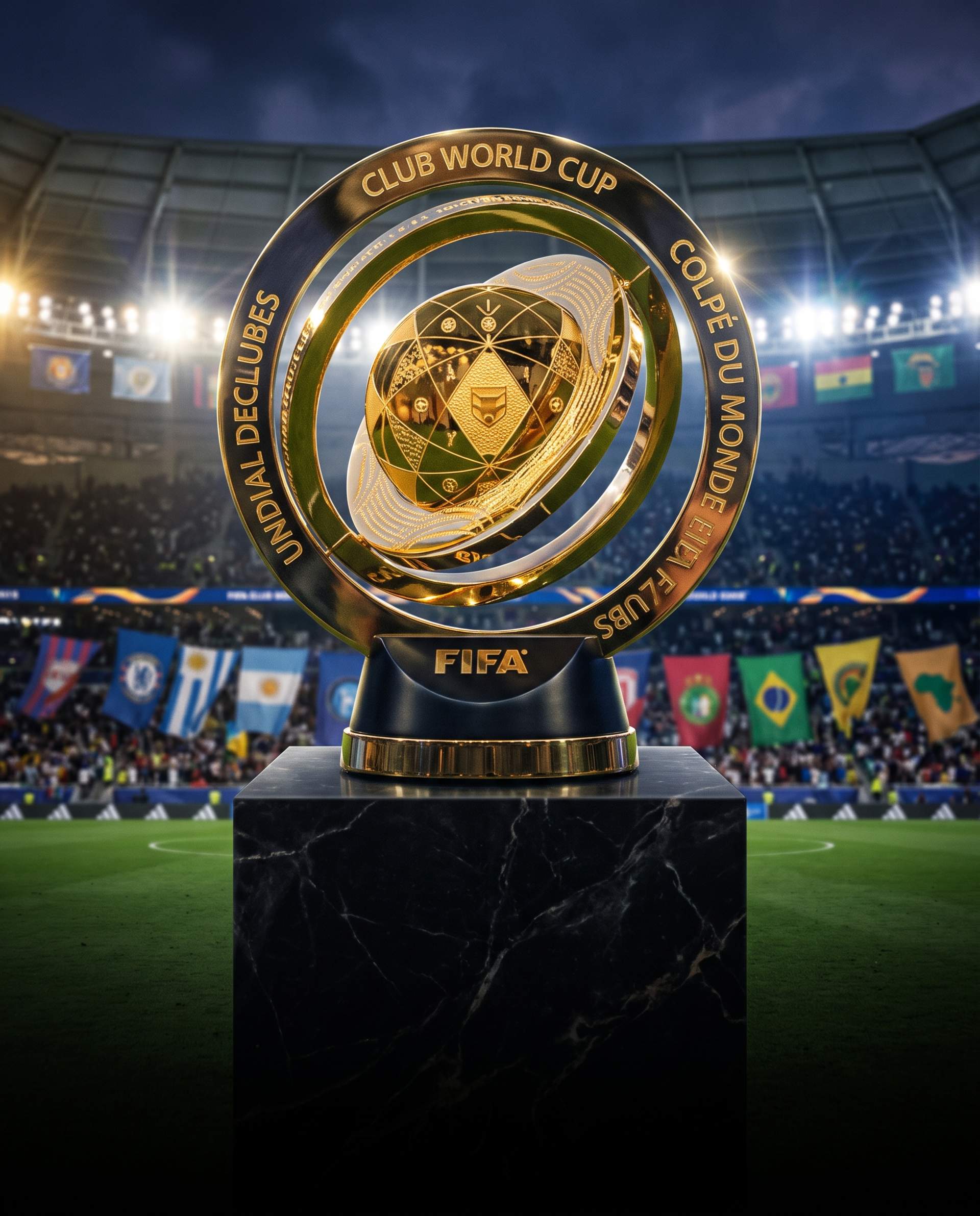
World football's governing body, FIFA, has officially confirmed an unprecedented one billion dollar financial prize package for the newly expanded 32-team Club World Cup, creating the richest tournament in club football history.
The landmark announcement, made at FIFA headquarters in Zurich, formalizes the prize distribution model for the month-long summer competition. Featuring twelve powerhouse clubs from Europe, six from South America, and champions from Africa, Asia, North America, and Oceania, the tournament replaces the traditional, low-profile seven-team winter playoff with a massive global spectacle designed to rival the FIFA national team World Cup in scale and revenue.
Lucrative Windfalls for Participating Clubs
The staggering financial allocations guarantee transformative paydays for qualified teams. Under the confirmed payout structure, every participating club will receive a guaranteed participation fee of roughly twenty-five to thirty million dollars simply for stepping onto the pitch for the group stages.
Performance incentives scale dramatically as teams advance through the knockout rounds. The eventual tournament champion is set to walk away with a top prize exceeding eighty million dollars in direct prize money, a figure that rivals the financial rewards of winning the UEFA Champions League.
For European heavyweights like Real Madrid, Manchester City, Bayern Munich, and Paris Saint-Germain, the payout offers a massive boost to balance sheets under strict financial fair play regulations. For clubs from South America, Africa, and Asia, such as Flamengo, Al Ahly, and Al Hilal, the windfall represents multiple years' worth of operating budget, offering the financial muscle to build world-class training facilities and retain top domestic talent.
How Continental Spots Were Decided
The qualification system for the 32 slots rewarded four-year continental excellence across each regional confederation. European qualification rewarded recent UEFA Champions League winners alongside top-ranked coefficient clubs, while South America's CONMEBOL spots were split between Copa Libertadores champions and four-year ranking leaders.
Asia, Africa, and North America received four direct berths each, ensuring that historic powerhouses like Urawa Red Diamonds, Wydad Casablanca, and Monterrey compete directly on the world stage against elite European royalty. An additional wildcard spot was assigned to the host nation's designated club representative, ensuring passionate home support across United States venues.
Debate Over Player Welfare and Fixture Congestion
While the eye-watering prize purse has delighted club chief executives and commercial sponsors, the tournament's summer scheduling has sparked intense pushback from international player unions and domestic league managers.
FIFPRO, the worldwide representative organization for professional footballers, warned that adding a seven-match tournament at the end of an already grueling fifty-game domestic and European season pushes athletes past the point of physical safety. Elite players face having less than three weeks of summer recovery before reporting back to domestic pre-season training camps.
In response to player welfare concerns, FIFA highlighted that tournament squad sizes have been expanded to twenty-six players, with five substitutions permitted across ninety minutes. FIFA President Gianni Infantino stressed that global football must not remain an exclusive European commercial monopoly, arguing that distributing commercial revenues worldwide is essential for growing the sport outside traditional wealthy leagues.
Broadcast Rights and Global Commercial Appeal
Funding the billion-dollar prize pool was made possible by major global broadcasting partnerships and corporate sponsorship deals across the United States, the Middle East, and East Asia. Streaming platforms and traditional networks engaged in bidding contests for exclusive multi-platform rights, eager to broadcast prime-time clashes between European champions and South American powerhouses.
With host venues confirmed across state-of-the-art stadiums in the United States, ticket pre-registrations have already shattered expectations. As the football calendar marches toward the inaugural expanded edition, the historic prize pool guarantees that the battle for global club supremacy will be fiercely contested both on the pitch and in the boardroom.
Comments
0