

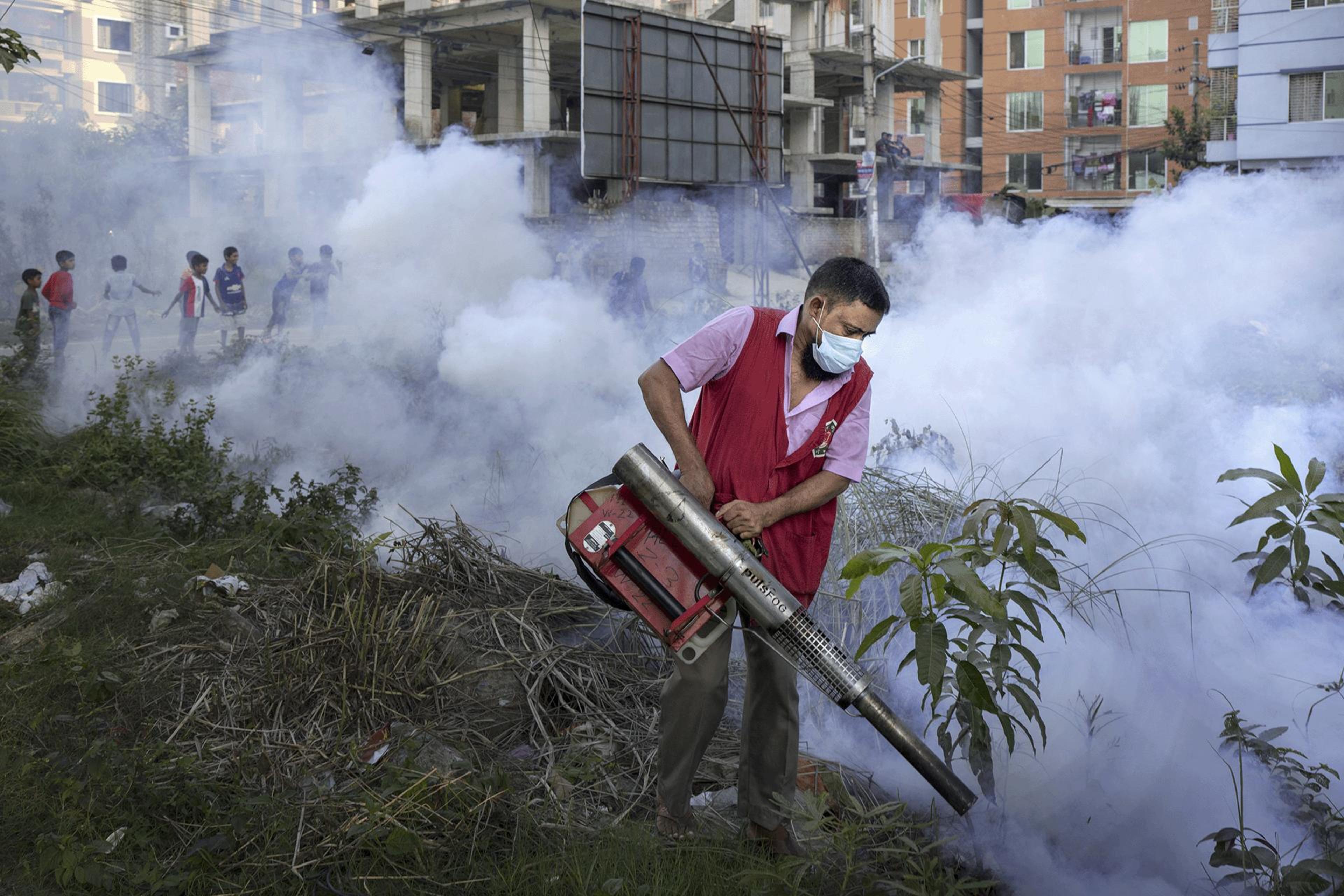
Bangladesh has spent years fighting dengue with mosquito spraying, public-awareness campaigns and emergency hospital care. Yet the disease continues to return, putting pressure on families, hospitals and public-health authorities.
The latest figures show why the problem cannot be treated as a seasonal inconvenience. On October 11, 2026, Bangladesh’s Directorate General of Health Services (DGHS) reported 99,275 dengue-related hospital admissions and 303 deaths since the beginning of the year. The daily dashboard also recorded 2,193 new admissions and four deaths in the preceding 24-hour reporting period. DGHS dengue dashboard.
The figures represent more than a public-health emergency. They raise difficult questions about urban planning, drainage, waste management, climate resilience and the way Bangladesh responds to recurring disease outbreaks.
Dengue is transmitted by infected Aedes mosquitoes. But the conditions that allow those mosquitoes to multiply are shaped by human decisions: how buildings are maintained, how rubbish is collected, whether drains function properly and how quickly authorities respond when breeding sites are identified.
That is why the country’s dengue problem cannot be solved through fogging alone. It requires a more consistent approach to prevention, surveillance and public accountability.
A growing outbreak with a familiar pattern
On October 6, Reuters reported that Bangladesh was considering clinical trials of a dengue vaccine as infections and deaths continued to rise. At that point, health ministry figures cited by the news agency showed more than 90,350 hospital admissions and 281 deaths since January.
By October 11, the DGHS dashboard showed that the cumulative totals had climbed further. The two reports provide a clear indication of the outbreak’s continuing burden, although daily figures can change as cases are reported and records are updated.



Comments
0Join the discussion
You must be logged in to leave a comment.