

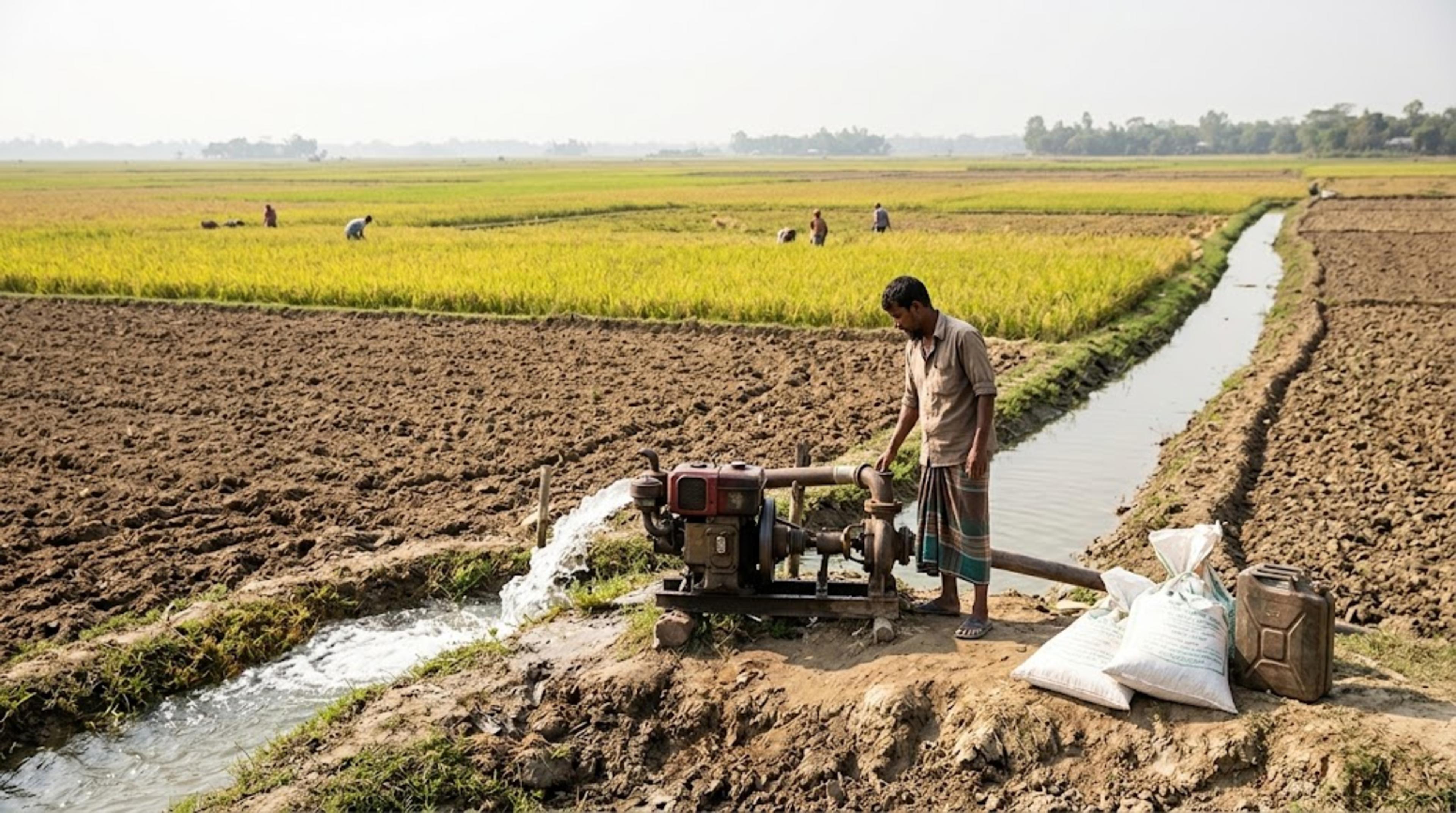
On paper, the harvest numbers underpinning Bangladesh food security in October 2026 look reassuringly solid. According to the latest production estimates from the Food and Agriculture Organization (FAO), Bangladesh is on track to harvest 6.19 crore tonnes of paddy this year, roughly 5 percent above the four-year national average, following a strong spring Boro harvest that nearly matched record output.
Look beyond the granary totals to the household kitchen and the village bazaar, however, and a far more fragile picture emerges. A UN-backed food security assessment reported by The Daily Star on Sunday, October 4 projects that the number of people in Bangladesh facing acute food insecurity will jump 18 percent to 1.81 crore between September and December 2026, up from 1.53 crore during the May-to-August period. Within that group, roughly 7.87 lakh citizens are projected to fall into emergency-level hunger.
The paradox of rising hunger amid full rice bins comes down to a collision of three forces: war-driven fertilizer bottlenecks in the Persian Gulf, a sharp domestic jump in diesel fuel costs, and a rapidly intensifying El Niño climate event in the Pacific Ocean. With farmers preparing to plant the winter Boro rice crop in December and January, policymakers in Dhaka have less than eight weeks to prevent an agricultural input squeeze from turning into a full-blown retail food shock in 2027.
Why Full Granaries Are Not Stopping Food Inflation
Food crises generally take one of two forms. In a supply crisis, floods, droughts, or export bans physically wipe out grain stocks, leaving markets empty. In an access crisis, food sits in wholesale markets, but cumulative inflation erodes family incomes so severely that working households can no longer afford a balanced diet.
Bangladesh in late 2026 is experiencing the second problem, and the warning signs are shifting toward the first. As Bangladesh Bank noted on September 30 when it held its benchmark policy interest rate at 9.50 percent, headline inflation remained stuck at 8.26 percent in August, while third-quarter FY26 economic growth slowed to 2.2 percent. When essentials stay expensive month after month, low-income families do not stop buying rice immediately; instead, they quietly strip protein and micronutrients from their plates by cutting back on eggs, milk, fish, and lentils.

Comments
0Join the discussion
You must be logged in to leave a comment.