BangladeshistBangladeshistBangladeshist
HomeBusinessEntertainmentGeneralOpinion
About UsContact UsPrivacy Policy
Terms of ConditionsFAQ
FacebookInstagramYouTubeTwitterTikTok
BangladeshistBangladeshist

© 2026 Bangladeshist. All rights reserved.

  1. Home
  2. Finance
  3. Bangladesh Seeks $3.77 Billion in World Bank Suppo…
Finance

Bangladesh Seeks $3.77 Billion in World Bank Support as Economic Pressures Persist

Bangladesh has requested $3.77 billion in World Bank financing for FY2026–27 and is discussing a separate $10 billion framework as energy costs, banking-sector weaknesses and subdued investment weigh on growth.

PlabonnSunday, October 25, 2026Source:TBS, World Bank, Bangladesh Bank10 min read
Bangladesh Seeks $3.77 Billion in World Bank Support as Economic Pressures Persist
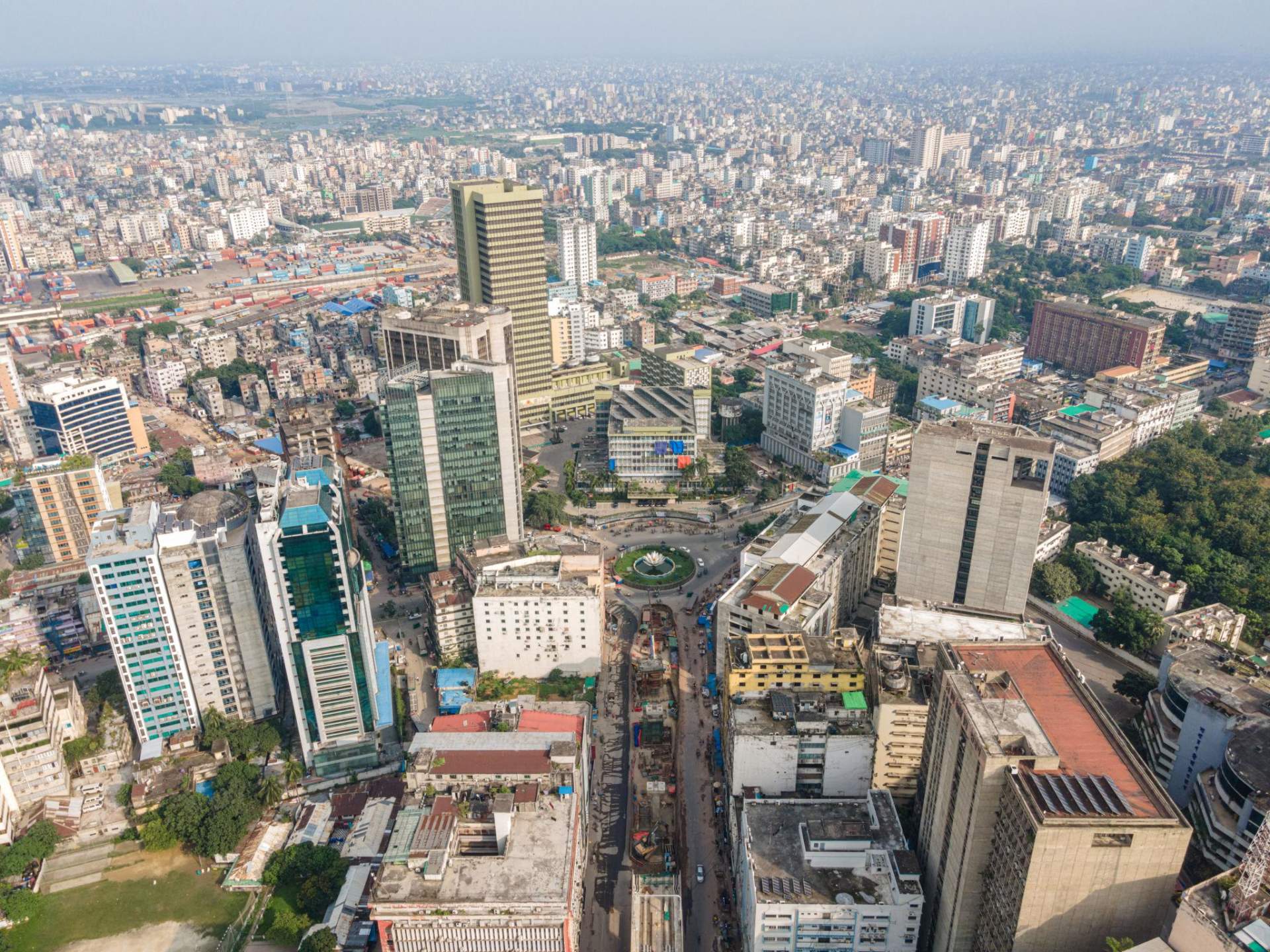
Photo: Collected

Bangladesh has requested $3.77 billion in World Bank financing for the 2026–27 fiscal year, seeking support for energy imports, food security, banking reforms and infrastructure projects as the economy continues to face high costs and weak investment.

The request includes $2.77 billion in proposed project financing and $1 billion in direct budget support, according to reports published on October 22. The government is also pursuing a separate proposal for an additional $10 billion in financing over three years through a proposed Resilience, Reform and Investment Partnership.

Neither request should be treated as fully approved funding. Discussions are continuing, and the final financing arrangements, conditions and amounts remain subject to further work.

The scale of the proposals highlights the challenge facing policymakers: securing enough resources to support economic activity while addressing structural weaknesses that have constrained growth.

Energy and food security at the centre of the request

Energy imports are among the immediate priorities. Bangladesh depends on imported liquefied natural gas (LNG) to support electricity generation and industrial production. Higher international fuel prices can increase import bills, place pressure on foreign exchange reserves and make it more expensive to maintain reliable energy supplies.

The government has requested $350 million in guarantee support to help facilitate longer-term LNG imports. Such arrangements can help improve payment security and reduce dependence on expensive spot-market purchases, although their effectiveness depends on financing terms, procurement decisions and global market conditions.

Food security is another priority. Fertiliser imports are important for agricultural production, and disruptions or higher import costs can affect farmers and food supplies.

The government has also identified major transport infrastructure projects, including the Dhaka–Chattogram rail corridor, a proposed Dhaka–Chattogram expressway and the Dhaka Inner Circular Ring Road.

These projects could improve transport capacity and reduce logistical constraints if they are properly designed, financed and implemented. However, the funding request does not mean that every proposed project has received final approval or secured its full financing.

Read More

All Stories in Read More →
Oil Hits a Six-Month High as Bangladesh Leans on Remittances and Reserves
Business

Oil Hits a Six-Month High as Bangladesh Leans on Remittances and Reserves

Brent crude hit $116.72 as Gulf attacks escalated. With remittance growth cooling and fuel prices already raised, Bangladesh’s reserves are holding, but the pressure is building.

9 min readOct 25
Japan’s $6.35 Billion Investment Plan Could Reshape Bangladesh’s Manufacturing Future
Business

Japan’s $6.35 Billion Investment Plan Could Reshape Bangladesh’s Manufacturing Future

Banking reform remains a major challenge

The proposed financing also includes support for Bangladesh's financial sector, where persistent weaknesses have undermined confidence and limited the banking system's ability to channel money into productive investment.

The World Bank has already approved $450 million for its Financial Sector Support Project II. Announced in June 2026, the programme aims to strengthen deposit protection, improve Bangladesh Bank's supervisory capacity and support reforms involving troubled banks.

That existing approval is separate from the government's wider financing request. The distinction matters because new commitments, previously approved loans and proposed projects represent different stages of the financing process.

Reforming the banking sector is important beyond the financial industry itself. Businesses depend on reliable access to credit to expand production, purchase equipment and hire workers. Weak banks can restrict that access, while unresolved financial-sector problems can discourage investors.

The government is also discussing a proposed $10 billion financing framework for the next three years. Under the reported plan, $4 billion would support urgent imports, including energy and fertiliser; $3 billion would go towards financial-sector recovery and banking reforms; $1.5 billion would support businesses and employment continuity; and another $1.5 billion would cover contingent, catalytic and co-financing instruments.

The proposal remains under discussion, and its eventual structure and financing sources have not been finalised.

Growth and jobs will depend on implementation

The financing discussions come as Bangladesh faces a difficult economic outlook.

In its October 6 Bangladesh Development Update, the World Bank projected economic growth of 3.4% in both fiscal years 2025–26 and 2026–27. It cited structural weaknesses in the energy and financial sectors, limited domestic revenue collection, softer investment and elevated inflation.

The report also highlighted growing pressure on employment and household purchasing power. These challenges make the quality of public spending and the pace of economic reform particularly important.

Additional external financing could help Bangladesh meet essential import needs and maintain investment in infrastructure and public services. But borrowing alone cannot guarantee stronger growth. The benefits will depend on the cost of financing, the conditions attached to it, the projects selected and the government's ability to deliver measurable results.

Bangladesh also needs to consider the long-term obligations created by additional borrowing. Loans that support productive investment or prevent costly economic disruptions can provide lasting value. Financing that is poorly targeted, delayed or used without adequate oversight may deliver weaker returns while adding to future repayment pressures.

Stronger revenue collection, transparent spending, credible banking reforms and more predictable energy supplies will therefore remain essential.

The next important steps are the outcome of negotiations with the World Bank, the proposed technical team's work on the longer-term financing framework and the government's progress on reforms. Until agreements are finalised, the requested amounts represent potential support rather than money that can be assumed to be immediately available.

For Bangladesh, the central test will be whether external financing can help ease immediate economic pressures while creating the conditions for stronger investment, more jobs and more sustainable growth.

Source: The Business Standard, World Bank, Bangladesh Bank

share:

Comments

0

Join the discussion

You must be logged in to leave a comment.

Loading comments…

Most Read

1

NASA Delays Artemis Moon Landing to 2028 Over Starship Issues

Oct 8
2

Benin Thrash India 27–0 at U18 School Football World Cup

Oct 22
3

E-Commerce Business Guide: How to Properly Set Up an Online Storefront

Jun 16
4

Lionel Messi Bids Adieu in Argentina's 3-0 Farewell Win

Oct 7
5

Toyota Solid-State EV Battery Enters Early Mass Production

Oct 10

Popular Tags

#Barcelona#UEFA Champions League#Artificial Intelligence#Bangladesh Economy#PSG#Arsenal#Bayern Munich#Saudi Arabia#European Union#Energy Security#Football#Real Madrid

Japan is reportedly preparing a $6.35 billion private-sector investment plan for Bangladesh over five years, with potential opportunities in manufacturing, automobiles and energy ahead of the two countries’ October summit.

14 min readOct 23
Oil Prices Surge Above $110 as Middle East Tensions Raise Risks for Bangladesh
Business

Oil Prices Surge Above $110 as Middle East Tensions Raise Risks for Bangladesh

Global oil prices rose above $110 a barrel for Brent crude as Middle East tensions heightened supply concerns. Here's how prolonged energy-price volatility could affect Bangladesh's imports, transport costs and households.

13 min readOct 22
More stories in Finance