

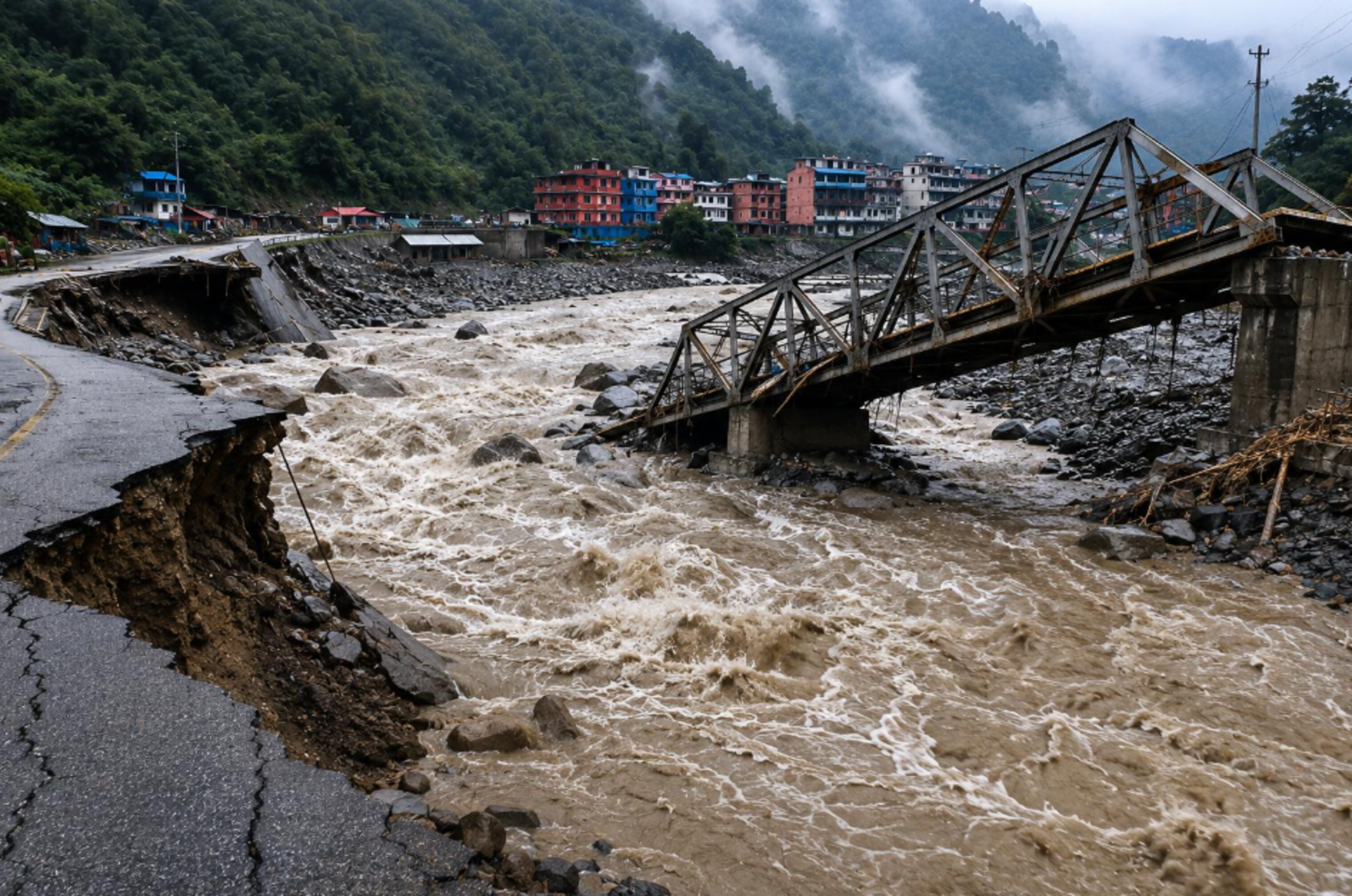
The UN’s loss-and-damage fund has taken its first major step towards supporting a country after a climate-related disaster. But Nepal’s recovery bill shows how far international climate finance remains from the scale of the crisis.
A new United Nations climate-finance decision has put a difficult question back at the centre of the global climate debate: what happens when a disaster-struck country needs billions of dollars to recover, but international support covers only a fraction of the cost?
On 22 October, the board of the Fund for Responding to Loss and Damage agreed to set aside $20 million for Nepal following devastating floods in August. The decision is a significant milestone for a fund created to help vulnerable developing countries address the consequences of climate change. It is not, however, an immediate cash transfer, nor does it come close to meeting Nepal’s estimated reconstruction needs. Reuters and AFP reported the decision on 22–23 October.
The contrast is stark. Nepal estimates that recovery and reconstruction following the disaster could cost more than $4.7 billion. The proposed $20 million represents less than half of one per cent of that total. For communities facing damaged roads, bridges, schools and energy infrastructure, the difference between an international pledge and the resources required to rebuild is enormous.
A landmark decision, but not the end of the process
The August disaster struck Nepal’s Bhotekoshi–Trishuli region after an ice-and-rock avalanche triggered destructive downstream flooding. The event caused extensive damage and loss of life, with official reporting describing thousands of people dead or missing and tens of thousands affected.
Nepal requested emergency assistance from the loss-and-damage fund on 31 August. After weeks of discussion, the board held an extraordinary meeting on 22 October and agreed to invite the government to submit a proposal for the money.




Comments
0Join the discussion
You must be logged in to leave a comment.